
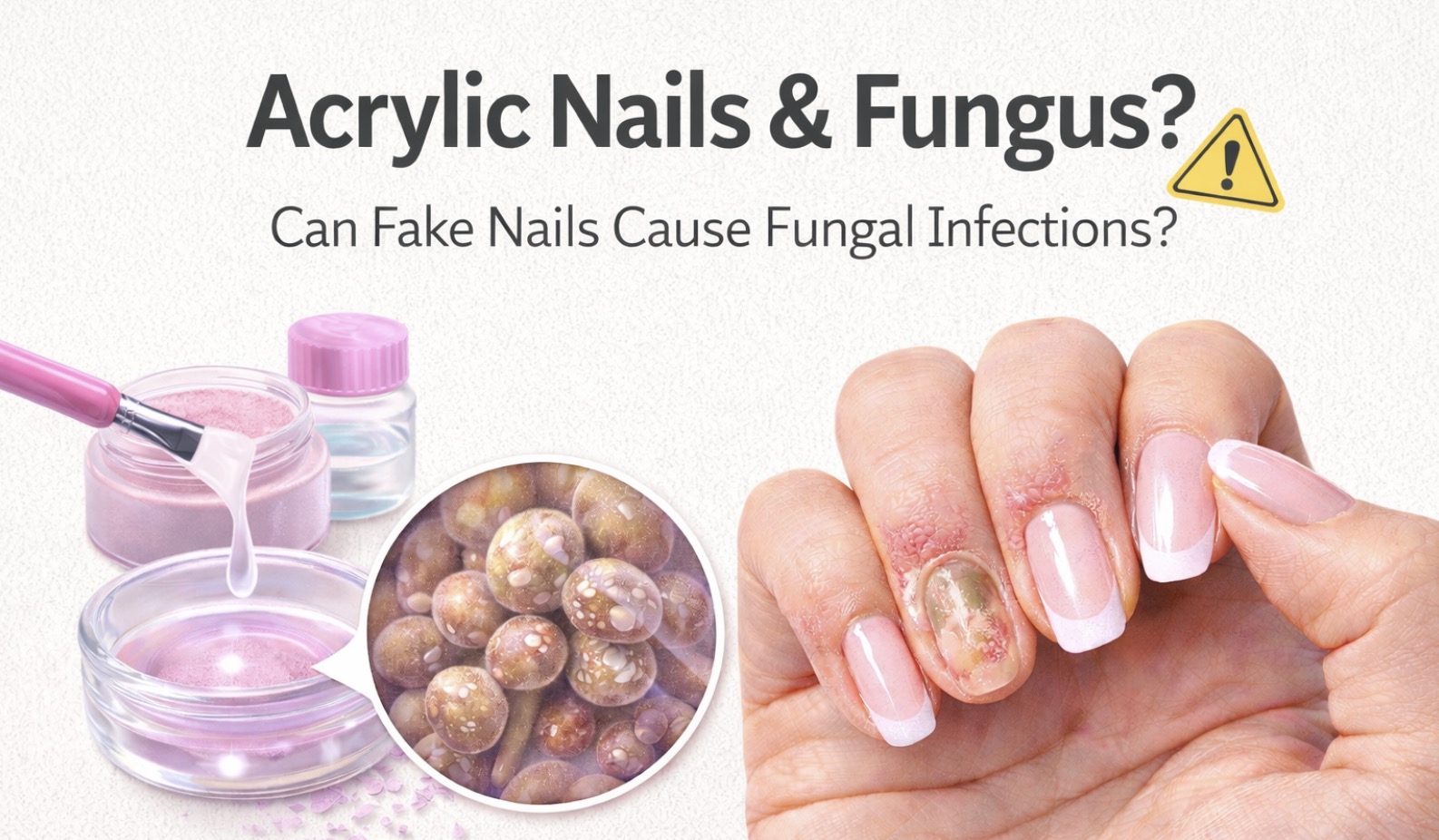
Acrylic nails can look so pretty, polished, and put-together, but if you have ever noticed lifting, discoloration, weird smell, or a suspicious greenish or yellowish patch under a fake nail, you are definitely not being dramatic for wondering what is going on. One of the biggest concerns people have with acrylics is whether fake nails can cause fungus or other nail infections.
The short answer is: yes, fake nails can raise the risk of fungal and bacterial problems, especially if moisture gets trapped underneath, the nail enhancement starts lifting, or the natural nail gets damaged. That does not mean every acrylic set will automatically lead to fungus, obviously, but it does mean your nails need a little extra care, attention, and honesty when something starts looking off.
In this guide, we’re going to talk through how acrylic nails can lead to fungal issues, what nail fungus actually looks like, the difference between fungus and other nail problems, warning signs you should not ignore, what to do if you suspect an infection, and how to keep your nails cute and healthy.
Can Acrylic Nails Cause Fungus?
Acrylic nails do not magically create fungus all by themselves, but they can absolutely create the kind of environment where fungal infections are more likely to happen.
Here’s why: when an acrylic nail starts to lift away from the natural nail, even a tiny bit, water, soap, sweat, and debris can sneak underneath. That trapped moisture can turn the space between the acrylic and your natural nail into a warm little hideout for microorganisms. Very not cute.
This is especially risky when:
- the acrylic is lifting
- you keep wearing the set even after damage starts
- water gets trapped underneath the nail
- the natural nail is already weak or injured
- tools or salon practices are not properly sanitized
- you try to glue down a lifted nail instead of removing it safely
If you do your own nails, using better-quality prep and maintenance tools like a gentle nail cleaning brush, a precise cuticle stick set, and clean lint-free nail wipes can help you keep an eye on your nails and avoid a lot of messy product buildup around lifted areas.

Beetles 15ml HEMA-Free Nail Glue Gel, TPO Free UV Nail Glue
Love easy Hema Free Builder Gel - Hypoallergenic Strong Base Coat | Long-Lasting Adhesion (30+ Days) for Professional Nails Gift for Women

Nail Allergies - Essentials: A quick fact-based guide. Spot it, stop it, handle it - read the whole thing before your next client.

Dr. G's Clear Nail Antifungal Treatment, 0.5 Fluid Ounce
Is It Actually Fungus, Though?
This is where it gets confusing. Not every weird-looking nail under acrylics is fungus.
Sometimes people say “fungus” to describe anything that looks green, yellow, lifted, or gross under a fake nail, but a few different things can be going on:
- fungal infection under or within the nail
- bacterial infection, especially green nail syndrome
- moisture damage from trapped water
- nail trauma from rough removal or impact
- allergic reaction causing irritation around the nail
So yes, acrylic nails can be linked to fungus, but not every discolored nail means fungal infection. That is why it is important to actually look at the symptoms instead of guessing.
What Nail Fungus Can Look Like Under Acrylic Nails
Fungal infections can look different from person to person, but common signs include:
- yellow, white, or brown discoloration
- nail thickening
- crumbly or brittle texture
- separation of the nail from the nail bed
- dullness or opacity
- odd smell coming from under the nail
Sometimes it starts as just one small patch that looks a little off. Other times the nail becomes more obviously damaged, thick, or discolored over time.
If you notice anything suspicious, it helps to remove the acrylic carefully so you can actually see what is happening underneath. A basic acrylic nail remover kit and easy soak-off nail clips can make removal much gentler than peeling and hoping for the best.
What Green Spots Under Acrylic Nails Usually Mean
If the nail looks green, greenish-black, or dark olive underneath the acrylic, that is often not classic nail fungus. It may be something called green nail syndrome, which is usually related to bacteria rather than fungus.
This can happen when moisture gets trapped under a lifted enhancement. The color can be dramatic and alarming, but it does not always mean fungal infection specifically.
Basically:
- yellow, white, brown, thick, crumbly can lean more fungal
- green or green-black staining often points more toward bacterial growth
Either way, it is still a sign that something is wrong and the nail needs attention.
Why Acrylic Nails Raise the Risk of Infection
Acrylic nails can increase your risk for nail problems because they make it harder to fully see, clean, and protect the natural nail underneath.
The biggest issues are:
Lifting
Once acrylic lifts, even a tiny bit, moisture and debris can slide underneath.
Trauma to the Natural Nail
Over-filing, aggressive buffing, picking, or rough removal can weaken the nail and make it more vulnerable.
Trapped Moisture
Long showers, hand washing, sweating, and cleaning can all introduce moisture that gets stuck under a loose acrylic.
Poor Salon Hygiene
If tools are not properly sanitized or the work area is not clean, that can add more risk.
Wearing Damaged Sets Too Long
This is such a common one. A lot of people notice lifting and try to ignore it for another week. That extra week can be exactly when the problem starts.
Early Warning Signs You Should Not Ignore
If you wear acrylics regularly, keep an eye out for:
- lifting near the cuticle or sidewalls
- discoloration under the nail
- white patches that do not grow out normally
- green, yellow, or brown spots
- nail separation from the bed
- odd smell under the nail
- pain, soreness, or tenderness
- redness or swelling around the nail folds
If a nail looks strange, do not just fill over it, paint over it, or glue it back down. I know that is tempting when you want your nails to stay cute, but that can make things worse.
Can You Get Nail Fungus From the Salon?
Potentially, yes. While many salons are very clean and professional, nail salons can be a source of fungal or bacterial spread if tools, files, foot tubs, or surfaces are not cleaned properly between clients.
Things to watch for include:
- reused files or buffers
- dirty workstations
- tools that do not appear disinfected
- technicians working over obviously lifted or damaged nails without addressing it
- rushed prep that damages the natural nail
If you prefer doing your own maintenance, a clean little kit with stainless steel nail tools, a gentle nail brush for cleaning nails, and soft cuticle oil can help you keep everything more controlled and less chaotic.
What to Do If You Think There Is Fungus Under Your Acrylic Nail
1. Remove the Acrylic Gently
You need to be able to actually see the natural nail. Do not keep the acrylic on top of a suspicious spot. And definitely do not glue down a lifted nail to “seal it.” That just traps the problem in.
2. Keep the Nail Clean and Dry
Once the acrylic is off, keep the nail as dry and clean as possible. Avoid covering it back up right away with more product.
3. Do Not Pick, Scrape, or Dig at It
Picking can damage the nail plate more and make irritation or infection worse.
4. Take Photos and Monitor It
This can actually help a lot if you end up seeing a doctor. You can track whether the area is growing out, darkening, spreading, thickening, or getting more painful.
5. See a Doctor if Needed
If the nail is painful, thick, spreading, green, crumbly, smelly, or just looks very wrong, it is a good idea to check in with a doctor or dermatologist instead of guessing.
Should You Use Over-the-Counter Nail Fungus Treatments?
Some people try over-the-counter products first, especially if the problem seems mild. There are lots of nail fungus treatment options, plus basic care products like a foot and nail care kit or a gentle nail strengthener treatment for recovery after the acrylic is removed.
But here is the thing: if you are not even sure it is fungus, treatment may not match the problem. Green bacterial issues, trauma, allergic reactions, and nail separation are all handled differently. So while home products can be part of the picture, they are not always the full answer.
How Long Should You Wait Before Wearing Acrylics Again?
If you suspect fungus or any kind of infection, the answer is: longer than you want to. I know. Tragic.
You should wait until:
- the nail is no longer actively discolored or irritated
- you know what caused the problem
- the nail plate looks healthier
- a doctor has cleared you, if you needed medical treatment
Covering a damaged or infected nail with fresh acrylic may hide the problem temporarily, but it does not solve it. It just makes it harder to see and easier to worsen.
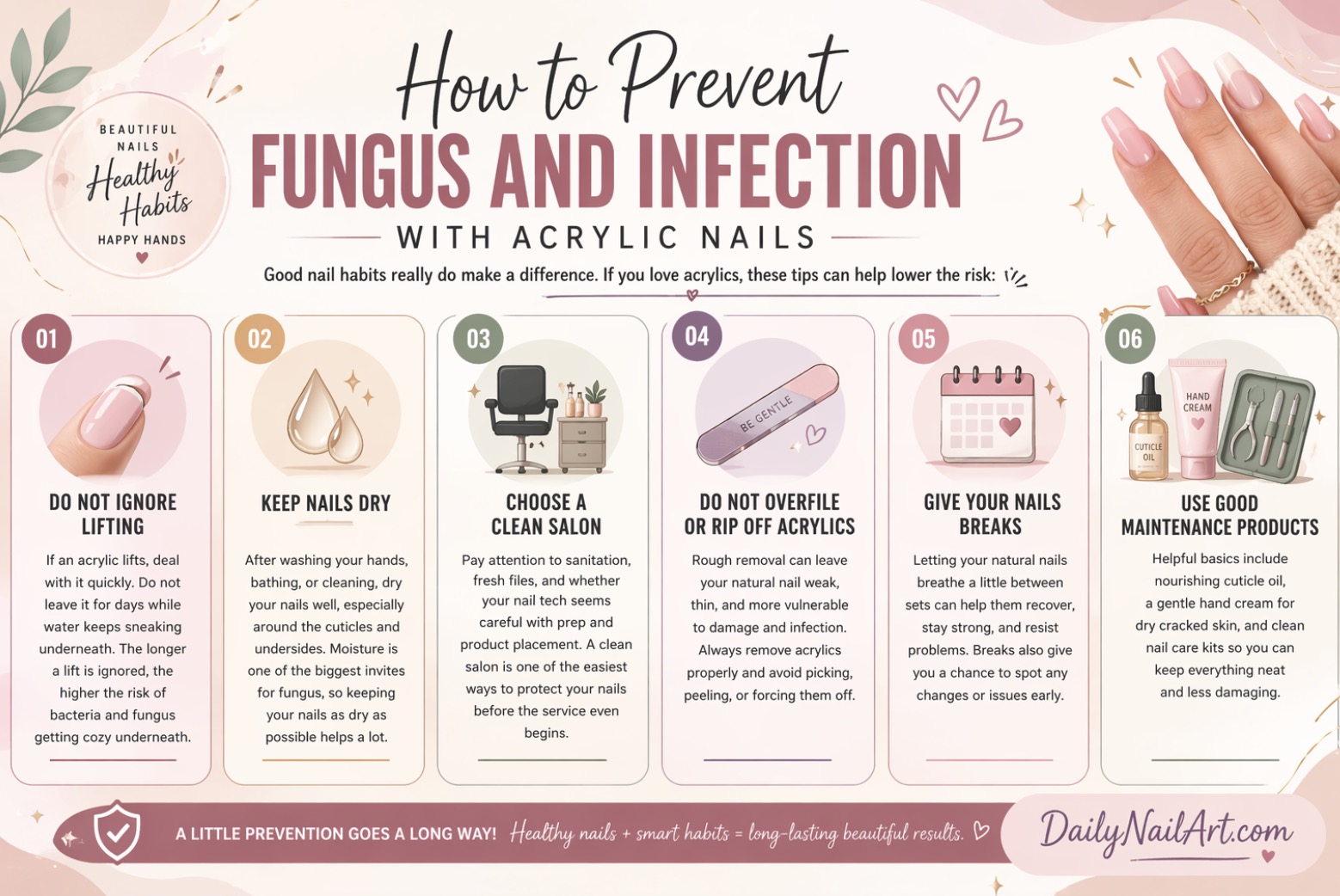
How to Prevent Fungus and Infection With Acrylic Nails
Good nail habits really do make a difference. If you love acrylics, these tips can help lower the risk:
Do Not Ignore Lifting
If an acrylic lifts, deal with it quickly. Do not leave it for days while water keeps sneaking underneath.
Keep Nails Dry
After washing your hands, bathing, or cleaning, dry your nails well, especially around the cuticles and undersides.
Choose a Clean Salon
Pay attention to sanitation, fresh files, and whether your nail tech seems careful with prep and product placement.
Do Not Overfile or Rip Off Acrylics
Rough removal can leave your natural nail weak, thin, and more vulnerable.
Give Your Nails Breaks
Letting your natural nails breathe a little between sets can help you spot problems earlier too.
Use Good Maintenance Products
Helpful basics include nourishing cuticle oil, a gentle hand cream for dry cracked skin, and clean nail care kits so you can keep everything neat and less damaging.
Can Fake Nails Cause Toenail Fungus Too?
Yes, artificial enhancements on toenails can create similar problems, especially because toes spend so much time in closed shoes, sweaty socks, or damp environments. If anything, trapped moisture can be even more of a problem there.
So if you wear acrylic or gel on your toenails and notice yellowing, thickening, smell, or separation, do not ignore that either.
Frequently Asked Questions
Can acrylic nails directly cause nail fungus?
They do not directly create fungus, but they can increase the risk by trapping moisture and hiding lifting or nail damage underneath.
Does a green spot under acrylic always mean fungus?
No. Green spots often point more toward bacterial growth, especially when moisture gets trapped under a lifted nail.
Should I put a new acrylic over a discolored nail?
No. Covering the problem can make it harder to monitor and may worsen moisture-related issues underneath.
Can I treat nail fungus at home?
Sometimes people try home or over-the-counter treatments first, but if you are not sure what is causing the discoloration, it is best to be cautious and get medical advice if things are worsening.
How can I lower the risk of fungus with acrylic nails?
Deal with lifting quickly, keep nails dry, choose clean salons, avoid rough removal, and do not ignore discoloration or smell.
Final Thoughts
Acrylic nails can absolutely be beautiful, but they also come with responsibilities. If moisture gets trapped, if lifting goes ignored, or if the natural nail gets damaged, fake nails can make it easier for fungal or bacterial problems to show up.
The biggest takeaway is this: if something under your acrylic looks off, do not just paint over it, fill over it, or pretend it is nothing. Cute nails are fun, but healthy nails are the real main character.
The sooner you remove the enhancement, keep the nail clean and dry, and get help when needed, the better your chances of protecting your natural nails and avoiding a much bigger problem later.
Beetles 15ml HEMA-Free Nail Glue Gel, TPO Free UV Nail Glue
Love easy Hema Free Builder Gel - Hypoallergenic Strong Base Coat | Long-Lasting Adhesion (30+ Days) for Professional Nails Gift for Women
Nail Allergies - Essentials: A quick fact-based guide. Spot it, stop it, handle it - read the whole thing before your next client.