
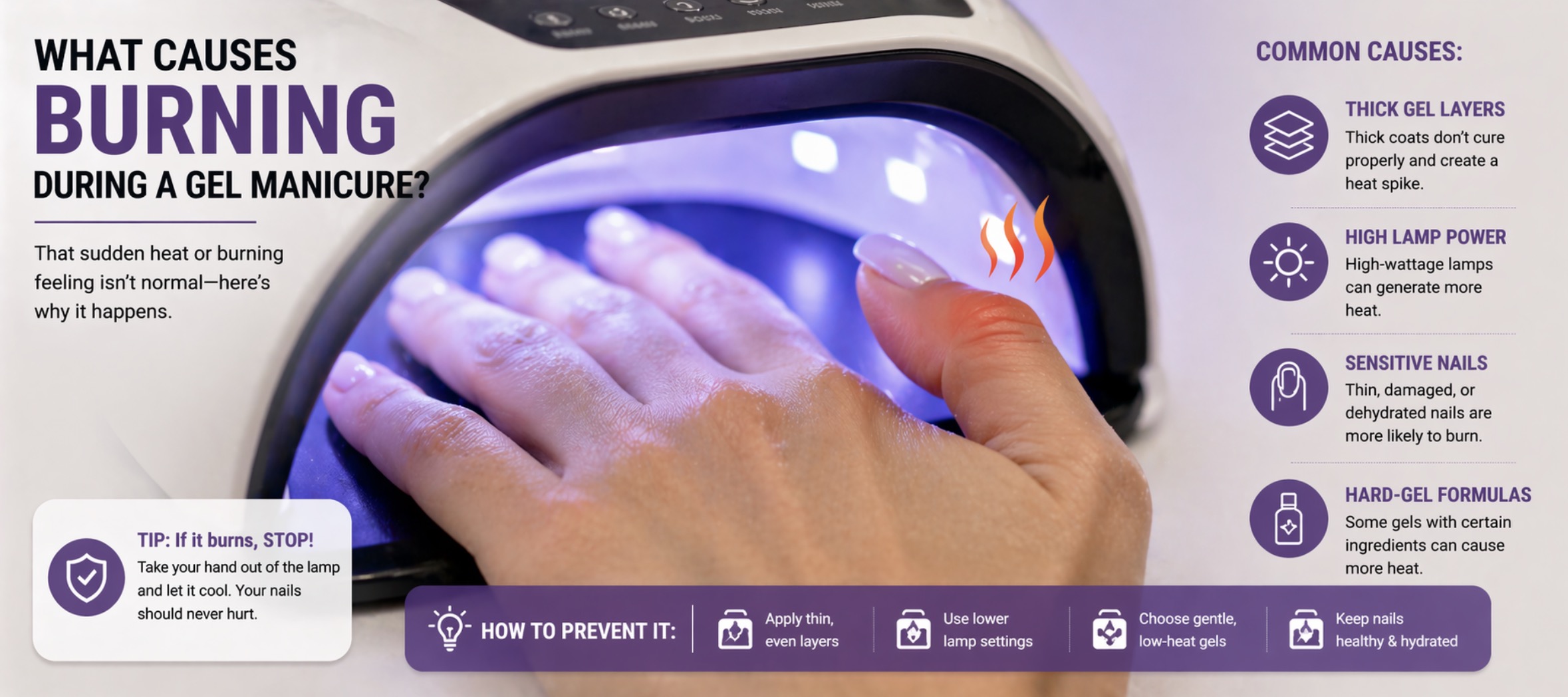
If you have ever slid your hand into the lamp during a gel manicure and instantly thought, “Oh. Oh no. Why is this spicy?” you are definitely not alone. That sudden burning, stinging, or intense hot flash feeling is one of the most common little mini-panics people have during gel nails. And honestly? It can feel dramatic enough to make you question every beauty choice that brought you to that exact moment.
The good news is that burning during a gel manicure does not always mean something horrible is happening. Sometimes it is a temporary heat spike. Sometimes it is caused by the product being applied too thickly. Sometimes the nail is already damaged or thin, which makes the heat feel way more intense. And sometimes, yes, irritation or allergy can also be part of the story.
If you have been searching for what causes burning during a gel manicure, this guide is here to explain what is actually going on in a simple, cute, not-too-scary way. We’re going to talk about why gel can burn under the lamp, what the difference is between a normal heat spike and a problem, what makes the burning worse, what to do if it happens, and how to lower the chances of it ruining your next set.
Because glossy nails are lovely. Feeling like your fingertips just touched the sun? Less ideal.
Cute little basics for a gentler gel manicure routine
If you want your gel routine to feel smoother, neater, and less likely to turn into a surprise hot flash under the lamp, these are the kinds of basics worth looking at:
- UV LED nail lamps for more controlled curing and a better gel setup
- Builder gel in a bottle if you want to compare smoother self-leveling formulas
- Gel cleanup brushes to keep product off the skin and cuticle area
- Lint-free nail wipes for cleaner prep and a neater application
- Cuticle oil for aftercare once the manicure is done
Why Gel Nails Can Burn Under the Lamp
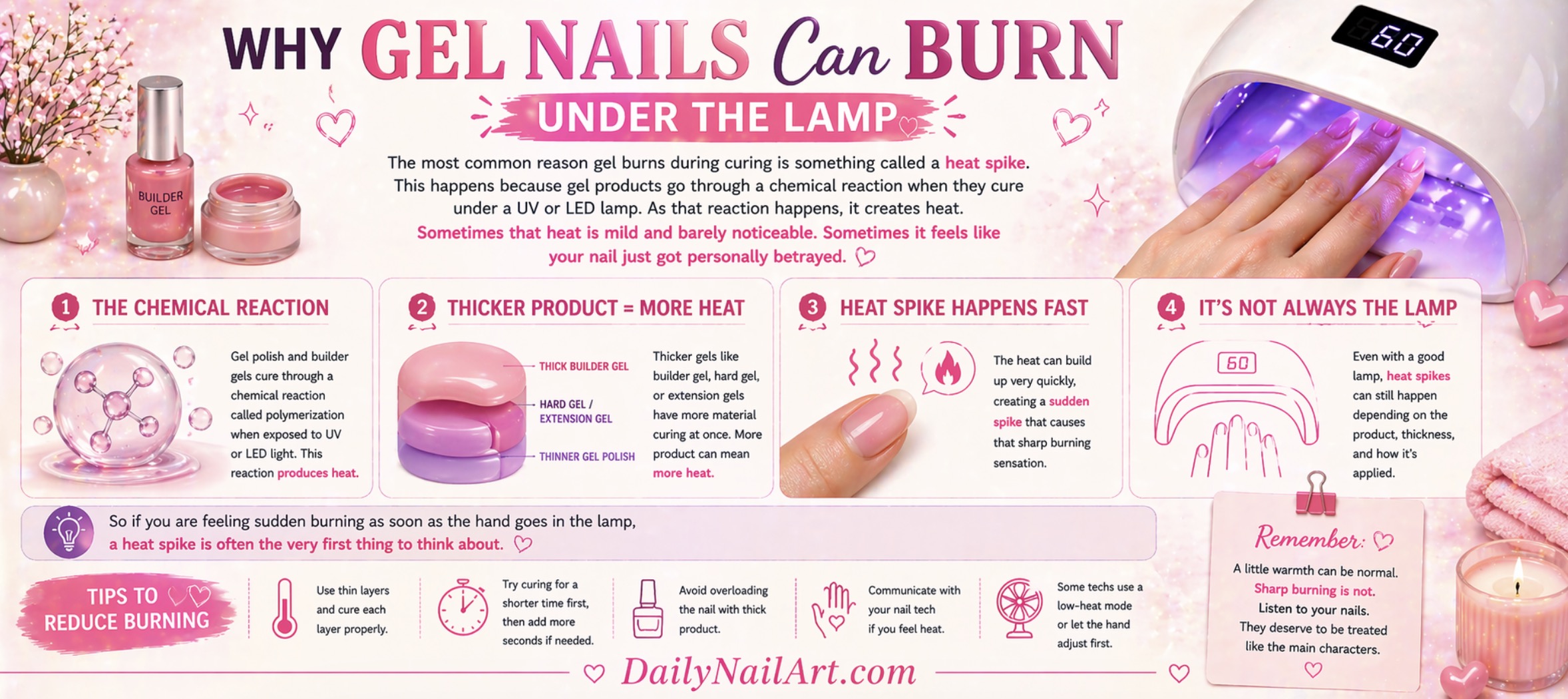
The most common reason gel burns during curing is something called a heat spike. This happens because gel products go through a chemical reaction when they cure under a UV or LED lamp. As that reaction happens, it creates heat. Sometimes that heat is mild and barely noticeable. Sometimes it feels like your nail just got personally betrayed.
This is especially common with thicker gel products like builder gel, hard gel, or extension gels, because there is more product curing at once. More product can mean more heat, and more heat can mean a much sharper burning sensation.
So if you are feeling sudden burning as soon as the hand goes in the lamp, a heat spike is often the very first thing to think about.
Nail Allergies - Essentials: A quick fact-based guide. Spot it, stop it, handle it - read the whole thing before your next client.

Beetles 15ml HEMA-Free Nail Glue Gel, TPO Free UV Nail Glue
Love easy Hema Free Builder Gel - Hypoallergenic Strong Base Coat | Long-Lasting Adhesion (30+ Days) for Professional Nails Gift for Women

Dr. G's Clear Nail Antifungal Treatment, 0.5 Fluid Ounce
What a Heat Spike Feels Like
A typical heat spike often feels like:
- a sudden hot flash under one or more nails
- a quick burning or stinging sensation
- an intense moment that usually eases once the nail starts finishing the cure
- more discomfort with thicker product than with thin gel polish layers
Sometimes it is just a little warm. Sometimes it feels like your finger is yelling. The good news is that a brief heat spike is pretty common and does not automatically mean something is seriously wrong.
The Most Common Causes of Burning During a Gel Manicure
1. The Gel Is Applied Too Thickly
This is one of the biggest reasons for burning. Thick layers of gel, especially builder gel or hard gel, can create a stronger curing reaction all at once. That stronger reaction means more heat under the lamp.
If you are doing your own nails, applying thinner layers usually helps a lot. A smooth, easy-to-control formula like some builder gel in a bottle options can feel easier to manage than thick blob-like applications that cure all at once in one dramatic little panic.
2. The Natural Nail Is Thin or Damaged
If the natural nail has been over-filed, peeled, picked at, or damaged from previous removals, it tends to be more sensitive to heat. In that situation, even a normal curing reaction can feel way more intense than it should.
This is why people often notice more burning after rough removal or when their nails already feel thin and stressed.
3. You’re Using Builder Gel, Hard Gel, or Extension Gel
Thicker structure products are much more likely to cause heat spikes than regular thin gel polish layers. They contain more product volume, and that means more curing reaction happening at once.
So if you only burn with builder gel but not with a simple color manicure, that difference makes sense.
4. The Lamp Is Strong or Curing Very Fast
A more powerful UV LED nail lamp can cure the product more effectively, but it can also make heat spikes feel sharper if the gel is thick or the nail is sensitive. That does not mean the lamp is bad. It just means the overall curing setup matters.
5. The Nail Has Been Over-Prepped or Over-Filed
If the nail surface was aggressively buffed or filed before the product was applied, the nail can become more reactive and feel more burning during cure.
6. Product Got on the Skin
If gel floods into the cuticle area or touches the skin, the curing process can feel more irritating overall. A slim gel cleanup brush and clean lint-free wipes can help keep application neater and less chaotic.
7. Irritation or Allergy May Be Involved
If the burning is not just during the cure but continues afterward with itching, redness, swelling, rash, or peeling skin, that may be more than a simple heat spike. In that case, irritation or an allergic reaction to the gel ingredients could be part of the picture.
Burning vs Allergy: How to Tell the Difference
This part matters a lot, because not every burning sensation means the same thing.
A heat spike is more likely if:
- the burning happens mainly while curing
- it is brief and fades once curing finishes
- it happens more with thicker gel products
- the skin around the nail looks normal afterward
Irritation or allergy is more likely if:
- the burning continues after the manicure
- your cuticles itch later
- the skin gets red, puffy, or rashy
- you notice peeling, cracking, or bumps
- it keeps happening every time you use gel
Basically, a brief spicy little lamp moment is one thing. Ongoing angry skin is another.
Why Builder Gel Burns More Than Regular Gel Polish
Builder gel usually burns more because it is thicker and used in a more structured layer. More gel = more curing reaction = more heat. It is not that builder gel is automatically bad. It is just more likely to create that intense hot flash feeling if you apply too much at once or if the nail is already thin.
That is also why people often experience burning only with overlays, apex-building, or extension work and not with regular gel color.
What to Do If It Starts Burning in the Lamp
Pull Your Hand Out for a Second
If the heat spike is intense, it is okay to remove your hand briefly instead of trying to suffer through it like beauty is a competitive sport. Giving the nail a second can help the sensation settle before you continue.
Put the Hand Back in Gradually
Some people do better easing the hand in and out for a moment instead of leaving it fully under the lamp through the sharpest part of the cure.
Let Your Nail Tech Know
If you are at a salon, say something. You do not get extra beauty points for silently pretending your finger is not in distress.
Check How Thick the Product Was Applied
If it keeps happening, the layers may be too thick or the nail may be more sensitive than usual.
How to Lower the Chance of Burning Next Time
There are actually a lot of little ways to make gel manicures feel gentler under the lamp.
Use Thinner Layers
This is one of the biggest things. Thinner product usually means less dramatic curing heat.
Be Gentle With Nail Prep
Over-filing the natural nail makes it more likely to react strongly during cure.
Choose a Smooth, Easy-to-Control Formula
Some builder and gel formulas are simply easier to apply neatly and thinly than others. Looking through builder gel in a bottle options can be helpful if you want something that feels easier to control.
Use a Reliable Lamp
A proper UV LED nail lamp that works well with your gel system matters a lot. The goal is a clean cure, not a weird guessy setup.
Keep Product Off the Skin
Neat application matters. A cleanup brush and a little patience can save you from a lot of unnecessary product-on-skin chaos.
Take a Break if Your Nails Feel Thin
If your natural nails are already damaged or tender, they may need a breather before another thick gel service.
When Burning Might Mean You Should Stop the Service
You should be more cautious if:
- the burning is extreme and keeps happening every time
- the skin around the nails is also reacting
- your cuticles get itchy afterward
- the fingers swell, peel, or become rashy
- your nails feel very sore even after curing is done
If the problem is clearly becoming a pattern, that is not something to just keep ignoring because the manicure turned out shiny.
What to Do Afterward if Your Nails Feel Sensitive
If the burning was more than just a little quick flash and your nails or surrounding skin feel sensitive afterward, gentle aftercare can help.
- avoid more filing and picking
- keep the surrounding skin moisturized
- use a nourishing cuticle oil once things are calm
- take a break from heavy product if the nail feels thin
If you also get redness, itching, or peeling skin, it is worth thinking beyond heat spike and considering irritation or allergy instead.
When to See a Doctor or Dermatologist
You should think about getting medical advice if:
- the burning keeps happening and seems worse each time
- the skin becomes itchy, swollen, or blistered
- the rash spreads beyond the nail area
- you are not sure whether it is heat, irritation, or an allergy
If there are ongoing skin symptoms, a dermatologist may recommend patch testing to check for nail product allergies.
Common Mistakes That Make Burning Worse
Applying a Big Thick Blob of Gel
More product means more heat, and more heat means more chance of a spicy little lamp crisis.
Over-Filing the Natural Nail
Thin stressed nails are much more likely to feel intense burning.
Ignoring the Difference Between Heat and Allergy
If the lamp moment is over quickly, that is one thing. If your fingers are itchy and rashy after, that is a different problem.
Leaving Product on the Skin
Messy cuticle flooding adds extra irritation risk and does not help the overall manicure look either.
Frequently Asked Questions
Why does my nail burn under the lamp during a gel manicure?
The most common reason is a heat spike, which happens when the gel cures and creates heat. Thick layers and sensitive nails make it more noticeable.
Is burning during gel nails normal?
A brief heat spike can be pretty common, especially with builder gel or thicker products. But intense or repeated burning should not be ignored.
Why does builder gel burn more than regular gel polish?
Builder gel is thicker and cures in a larger volume, which can create more heat under the lamp than thin gel polish layers.
Should I pull my hand out of the lamp if it burns?
Yes, you can. If the heat spike feels intense, it is okay to remove your hand briefly and then continue once the sensation calms down.
When does burning mean it might be an allergy?
If the burning is followed by itching, redness, swelling, peeling, rash, or ongoing irritation around the nails, it may be more than a normal heat spike.
Final Thoughts
Burning during a gel manicure usually happens because of a heat spike during curing, especially when thicker products like builder gel are involved or the natural nail is already thin and sensitive. It can feel intense, but it is often temporary.
That said, if the burning keeps happening, feels extreme, or comes with itching, swelling, redness, or peeling skin, it is worth looking more closely at your products, your application, and whether irritation or allergy might be involved too.
Because honestly, there is something very satisfying about understanding why your gel manicure got unexpectedly spicy, making a few smarter changes, and getting back to shiny nails without feeling like the lamp is personally out to get you.
Nail Allergies - Essentials: A quick fact-based guide. Spot it, stop it, handle it - read the whole thing before your next client.
Beetles 15ml HEMA-Free Nail Glue Gel, TPO Free UV Nail Glue
Love easy Hema Free Builder Gel - Hypoallergenic Strong Base Coat | Long-Lasting Adhesion (30+ Days) for Professional Nails Gift for Women