
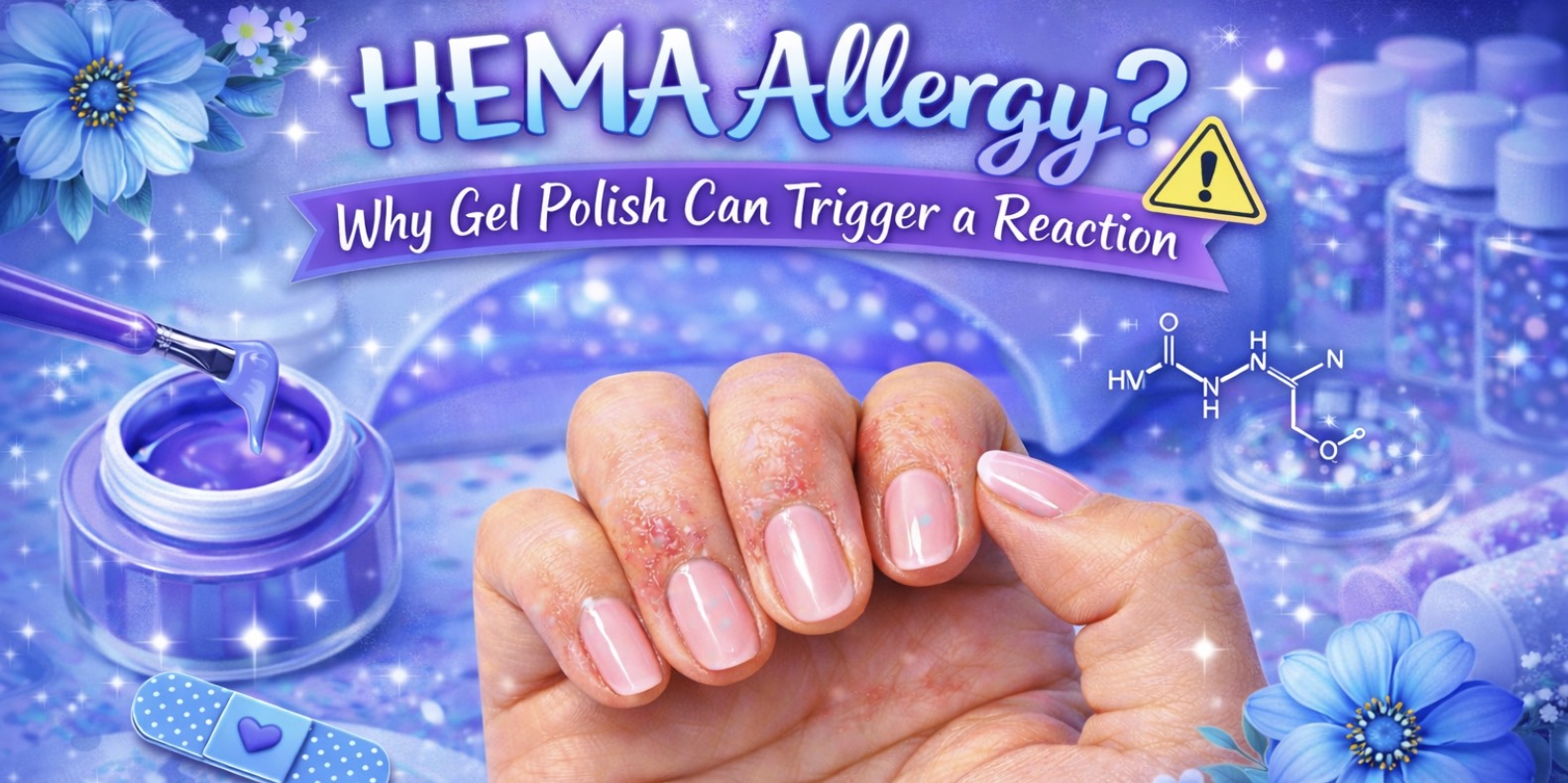
Gel nails can be so pretty. They’re glossy, long-lasting, and honestly make you feel a little more put together even when the rest of your life is giving “messy bun and iced coffee.” But if your fingers start itching, burning, swelling, or getting rashy after a gel manicure, there’s a good chance you may be dealing with something called a HEMA allergy.
If that term sounds a little scary and a little confusing, don’t worry, babe. We’re going to break it all down in a super simple way. This guide covers what HEMA is, why it’s used in gel polish, what a HEMA allergy can look like, how to spot the early warning signs, what to do if you think you’re reacting, and how to be extra careful moving forward.
What Is HEMA?
HEMA stands for hydroxyethyl methacrylate. Cute name? No. Important name? Unfortunately yes.
HEMA is a type of acrylate ingredient used in many gel nail products to help the product stick well, cure properly, and create that smooth glossy finish so many of us love. You’ll often find it in gel polish, builder gel, nail adhesives, gel extension products, and some at-home manicure kits.
The issue is that HEMA is also one of the ingredients most commonly linked to allergic reactions in nail products. When uncured gel touches the skin over and over, some people can become sensitized. Once that happens, even a tiny bit of exposure can trigger a reaction.
Nail Allergies - Essentials: A quick fact-based guide. Spot it, stop it, handle it - read the whole thing before your next client.

Beetles 15ml HEMA-Free Nail Glue Gel, TPO Free UV Nail Glue
Love easy Hema Free Builder Gel - Hypoallergenic Strong Base Coat | Long-Lasting Adhesion (30+ Days) for Professional Nails Gift for Women

Dr. G's Clear Nail Antifungal Treatment, 0.5 Fluid Ounce
What Is a HEMA Allergy?
A HEMA allergy is a type of allergic contact dermatitis. That means your immune system starts reacting to HEMA like it is a problem, even though the reaction is really your body overreacting to the ingredient.
The confusing part is that you may use gel polish for weeks, months, or even longer before you notice a problem. Then one day your skin suddenly says, “Absolutely not.” Once sensitization happens, reactions can come back again and again if you keep using products with HEMA.
That is why a lot of people feel like the allergy came out of nowhere. It usually did not. It built up quietly over time.
Why Gel Polish Can Trigger a Reaction
Usually, it is not the fully cured polish sitting nicely on the nail that causes the biggest issue. The main problem is uncured or under-cured product touching the skin.
This can happen when:
- gel polish floods into the cuticle area
- product gets on the sidewalls of the fingers
- the polish is not cured long enough
- the lamp is weak or not compatible with the gel formula
- DIY application is messy
- you file or remove gel and get product dust on the skin repeatedly
This is also why better tools and neater application matter so much. If you do your own nails, using a reliable UV LED nail lamp, a precise gel polish cleanup brush, and carefully choosing HEMA-free gel polish can help lower the chances of getting product all over your skin.
Early HEMA Allergy Symptoms You Should Never Ignore
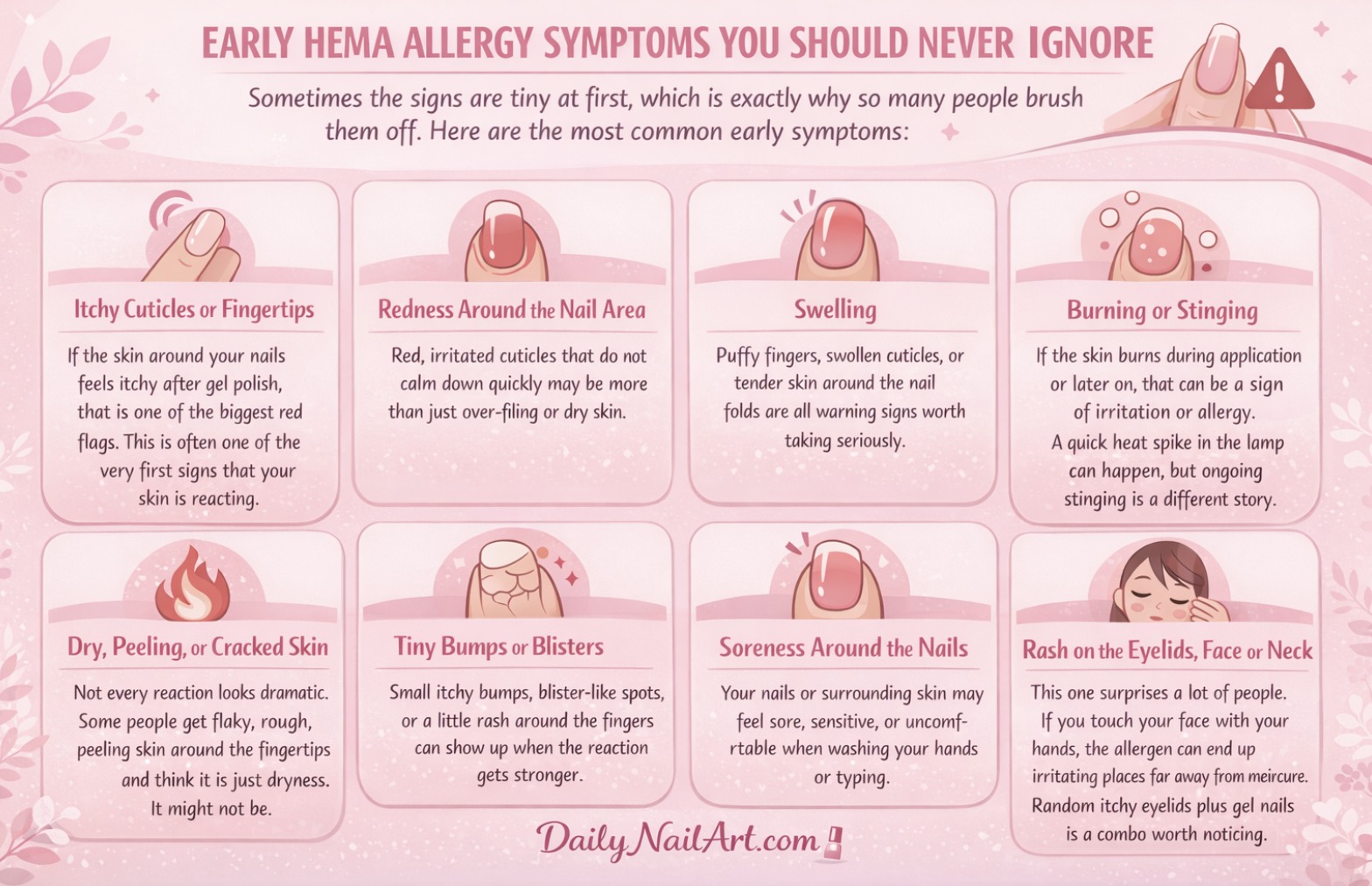
Sometimes the signs are tiny at first, which is exactly why so many people brush them off. Here are the most common early symptoms:
Itchy Cuticles or Fingertips
If the skin around your nails feels itchy after gel polish, that is one of the biggest red flags. This is often one of the very first signs that your skin is reacting.
Redness Around the Nail Area
Red, irritated cuticles that do not calm down quickly may be more than just over-filing or dry skin.
Swelling
Puffy fingers, swollen cuticles, or tender skin around the nail folds are all warning signs worth taking seriously.
Burning or Stinging
If the skin burns during application or later on, that can be a sign of irritation or allergy. A quick heat spike in the lamp can happen, but ongoing stinging is a different story.
Dry, Peeling, or Cracked Skin
Not every reaction looks dramatic. Some people get flaky, rough, peeling skin around the fingertips and think it is just dryness. It might not be.
Tiny Bumps or Blisters
Small itchy bumps, blister-like spots, or a little rash around the fingers can show up when the reaction gets stronger.
Soreness Around the Nails
Your nails or surrounding skin may feel sore, sensitive, or uncomfortable when washing your hands or typing.
Rash on the Eyelids, Face, or Neck
This one surprises a lot of people. If you touch your face with your hands, the allergen can end up irritating places far away from your manicure. Random itchy eyelids plus gel nails is a combo worth noticing.
What a HEMA Allergy Can Look Like in Real Life
Mild early symptoms can look like:
- a little itchiness around the cuticles
- mild redness after each manicure
- dry peeling skin near the fingertips
- slight swelling around one or two nails
A stronger reaction can look like:
- intense itching
- blistering
- raw or cracked skin
- swelling that makes the fingers feel tight
- painful irritated cuticles
- rash spreading beyond the hands
Basically, if your skin gets angrier every time you do gel nails, your body is trying to tell you something.
Why DIY Gel Nails Can Raise the Risk
This is not meant to scare you away from doing your own nails, because home manicures can be adorable and fun. But DIY sets can raise the risk of HEMA allergy because beginners are more likely to:
- get product on the skin
- use too much gel
- cure improperly
- mix products and lamps that do not work well together
- keep redoing nails often, which means more repeated exposure
If you love doing your own nails, neat tools can really help. A slim nail art brush set, gentle lint-free nail wipes, and a simple cuticle stick set can make application look cleaner and help keep gel off the skin.
Is It Definitely a HEMA Allergy?
Not always. There are a few things that can look similar, which is why this can get confusing fast.
It Might Be a HEMA Allergy If:
- you get itchy, rashy, or swollen skin after gel polish
- the reaction keeps happening every time you use gel
- it seems worse with each manicure
- the skin is reacting more than the nail itself
- you also react to builder gel, Gel-X, or nail glue
It Might Be General Irritation If:
- the skin was exposed once and just feels mildly annoyed
- the redness goes away pretty quickly
- there is no deep itchiness or recurring pattern
It Might Be Nail Damage If:
- your nail plate feels thin after removal
- there is peeling on the nail surface only
- the skin itself is not red, itchy, or swollen
If you are not sure, it is safest to stop using the product and treat it like a possible allergy until you know more.
What to Do If You Think You Have a HEMA Allergy
Remove the Gel Carefully
Do not leave the product on and hope it magically stops bothering you. Remove it gently as soon as you can.
A basic gel nail remover kit and easy soak-off clips can make removal a lot gentler than peeling and scraping like a tiny raccoon in a panic.
Stop Using HEMA Products
For now, stop using gel polish, builder gel, gel extensions, gel glue, and similar products until you know exactly what you are dealing with.
Wash Hands Gently
Use lukewarm water and a gentle cleanser to remove residue. Skip harsh scrubbing.
Protect the Skin Barrier
Give your skin some love. A nourishing cuticle oil and a rich hand cream for dry cracked skin can help soothe irritated skin while it recovers.
Do Not Keep Product-Hopping
This is such a common mistake. When people suspect an allergy, they sometimes keep testing new gel brands hoping one will magically be fine. Repeated exposure can make reactions worse, not better.
When to See a Doctor
Please check in with a doctor or dermatologist if:
- the swelling is noticeable or painful
- you have blistering, weeping, or cracking skin
- the rash spreads to the face, eyelids, or neck
- your fingers feel hot, very sore, or infected
- the reaction keeps coming back
- you want proper patch testing to find out what ingredient is causing it
Patch testing can help identify whether HEMA is the main trigger or whether another acrylate ingredient is also involved.
What Does HEMA-Free Mean?
HEMA-free means the product does not contain HEMA specifically. That sounds fabulous in theory, but it does not automatically mean the product is allergy-safe for everyone.
Some people who react to HEMA may still react to other acrylates. So while HEMA-free builder gel or HEMA-free gel polish may sound like a better option, it is not a guaranteed fix if you are already sensitized.
Basically, HEMA-free can be helpful, but it is not a magic little princess wand.
Can You Still Have Cute Nails Without Gel?
Yes, absolutely. A HEMA allergy does not mean your nail life is over. It just means your routine may need a little makeover.
If you want pretty nails without jumping straight back into gel, you can look into:
- regular air-dry polish
- gentle nail strengtheners
- short press-ons worn carefully
- simple glossy manicures with less product contact
Cute options like short press-on nails, a pretty regular nail polish set, or a soft nail strengthener treatment can help you still feel polished while your skin gets a break.
How to Lower the Risk in the Future
If you are not reacting right now but want to be extra careful, these habits can help:
- keep gel strictly off the skin
- clean up flooded cuticles right away
- use a lamp that matches your gel system
- follow full cure times exactly
- avoid overly messy DIY application
- do not keep switching between random cheap products
- wear gloves if handling uncured products often
Little details matter. A well-matched UV LED nail lamp, quality lint-free nail wipes, and tidy cleanup brushes can make a bigger difference than people realize.
Frequently Asked Questions
Can a HEMA allergy start suddenly?
Yes. You may use gel products many times before symptoms show up. Allergies often develop after repeated exposure over time.
Is HEMA-free gel always safe if I had a reaction before?
No. HEMA-free products remove one common trigger, but they can still contain other acrylates that may cause reactions.
Does itchy skin after gel polish always mean a HEMA allergy?
Not always, but it is definitely an important warning sign. If it keeps happening, it is worth taking seriously.
Can I keep doing gel nails if the reaction is mild?
That is usually not worth the risk. Mild symptoms can turn into stronger reactions with repeated exposure.
Can a dermatologist test for a HEMA allergy?
Yes. Patch testing can help identify whether HEMA or another related ingredient is causing the reaction.
Final Thoughts
HEMA allergy sounds very technical and very un-cute, but the big takeaway is simple: if your skin gets itchy, rashy, swollen, or irritated after gel polish, do not ignore it. Those early signs matter.
The sooner you stop exposure and take care of your skin, the better your chances of avoiding a bigger reaction later. Pretty nails should never come at the cost of angry fingers, puffy cuticles, or eyelid rashes that leave you confused and annoyed.
You can still have adorable nails. You may just need a gentler routine, better tools, and a little extra caution moving forward.
Nail Allergies - Essentials: A quick fact-based guide. Spot it, stop it, handle it - read the whole thing before your next client.
Beetles 15ml HEMA-Free Nail Glue Gel, TPO Free UV Nail Glue
Love easy Hema Free Builder Gel - Hypoallergenic Strong Base Coat | Long-Lasting Adhesion (30+ Days) for Professional Nails Gift for Women