
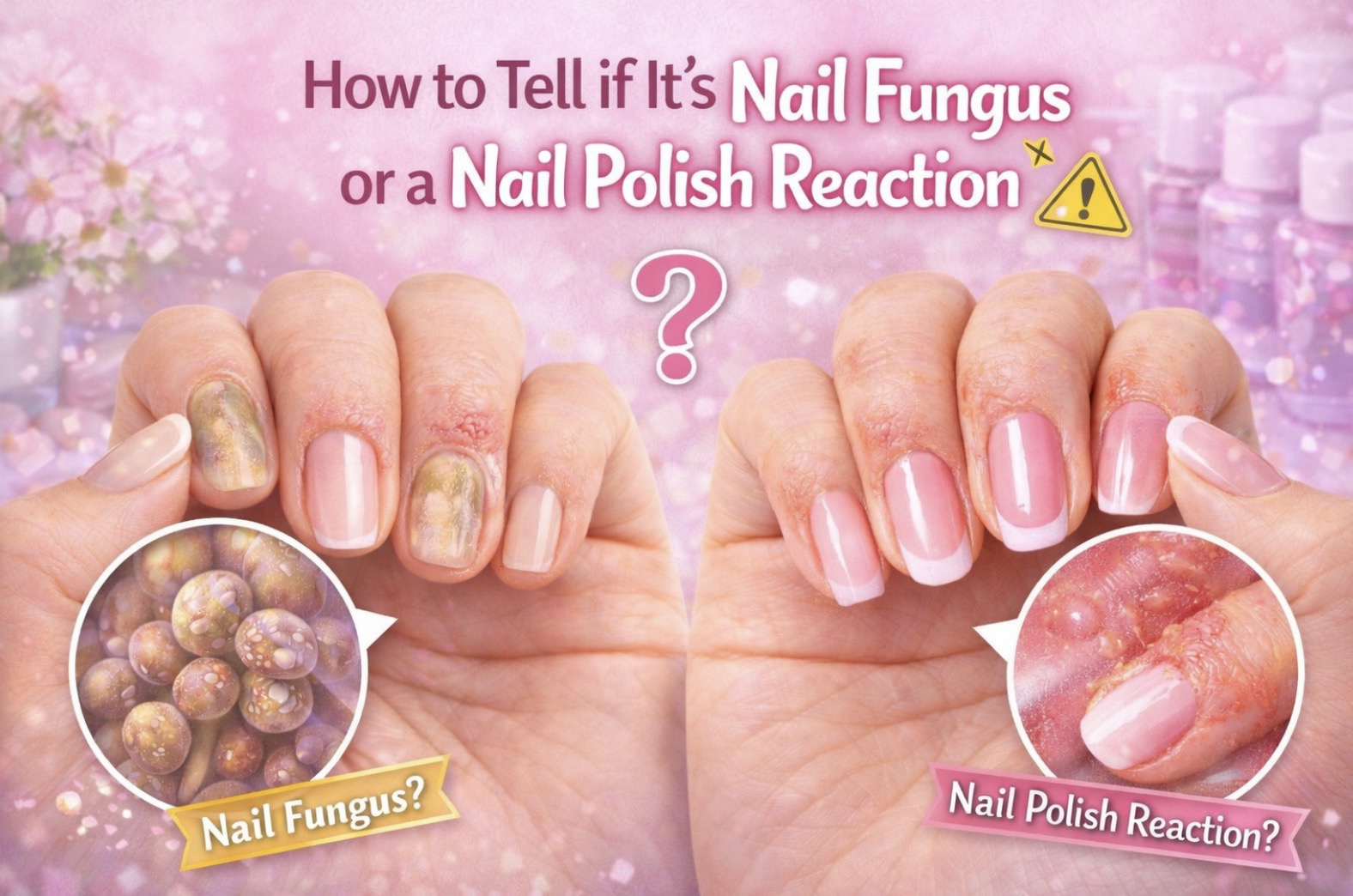
If your nails or the skin around them suddenly look weird after a manicure, it can be very confusing trying to figure out what you’re actually dealing with. Is it nail fungus? Is it a reaction to nail polish or gel? Is it just damage? Is your nail being dramatic? Honestly, sometimes it can be hard to tell.
The tricky part is that nail fungus and nail polish reactions can look similar at first, especially if you notice discoloration, peeling, irritation, or changes after wearing gel, acrylics, dip powder, or regular polish. But the cause, treatment, and next steps can be totally different, which is why it matters so much to know what signs to watch for.
In this guide, we’re going to break down the difference between nail fungus and nail polish reactions in a cute, simple, not-too-medical way. We’ll go over what each one usually looks like, how they happen, the early signs people miss, when to stop using products, and when it is time to get a doctor involved.
Why This Gets So Confusing
A lot of nail problems can overlap a little. You might see discoloration and assume fungus. You might feel itching and think allergy. You might notice peeling and assume nail damage. But sometimes more than one thing is happening at once, especially if your nails have been through a lot lately.
For example, someone can:
- have a polish or gel allergy that irritates the skin
- have lifting under acrylics that traps moisture
- develop a fungal or bacterial issue under an enhancement
- over-file the nail and end up with damage that looks alarming
So if your nail suddenly looks off, you are not silly for being unsure. This is one of those annoying beauty mysteries where the details really matter.

Beetles 15ml HEMA-Free Nail Glue Gel, TPO Free UV Nail Glue
Love easy Hema Free Builder Gel - Hypoallergenic Strong Base Coat | Long-Lasting Adhesion (30+ Days) for Professional Nails Gift for Women
Nail Allergies - Essentials: A quick fact-based guide. Spot it, stop it, handle it - read the whole thing before your next client.

Dr. G's Clear Nail Antifungal Treatment, 0.5 Fluid Ounce
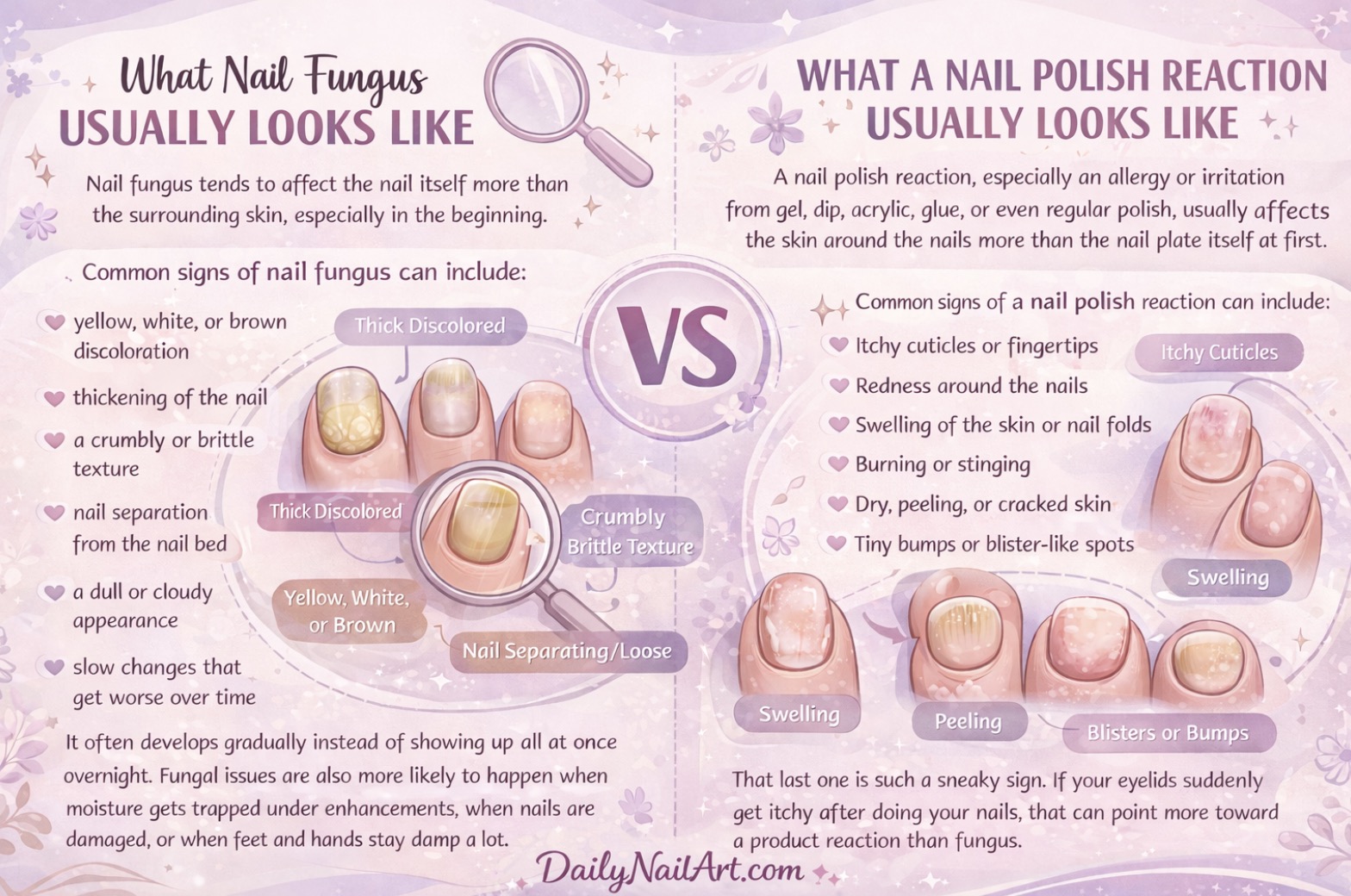
What Nail Fungus Usually Looks Like
Nail fungus tends to affect the nail itself more than the surrounding skin, especially in the beginning.
Common signs of nail fungus can include:
- yellow, white, or brown discoloration
- thickening of the nail
- a crumbly or brittle texture
- nail separation from the nail bed
- a dull or cloudy appearance
- slow changes that get worse over time
It often develops gradually instead of showing up all at once overnight. Fungal issues are also more likely to happen when moisture gets trapped under enhancements, when nails are damaged, or when feet and hands stay damp a lot.
What a Nail Polish Reaction Usually Looks Like
A nail polish reaction, especially an allergy or irritation from gel, dip, acrylic, glue, or even regular polish, usually affects the skin around the nails more than the nail plate itself at first.
Common signs of a nail polish reaction can include:
- itchy cuticles or fingertips
- redness around the nails
- swelling of the skin or nail folds
- burning or stinging
- dry, peeling, or cracked skin
- tiny bumps or blister-like spots
- rash on the eyelids, face, or neck from touching your skin
That last one is such a sneaky sign. If your eyelids suddenly get itchy after doing your nails, that can point more toward a product reaction than fungus.
The Biggest Difference: Nail vs Skin
If you want the easiest quick clue, here it is:
- Fungus usually changes the nail more than the skin
- A polish reaction usually irritates the skin more than the nail
That is not a perfect rule every single time, but it is a super helpful starting point.
So if your main issue is itching, rash, swelling, or angry cuticles, think reaction. If the main issue is discoloration, thickening, crumbling, or separation of the nail itself, think fungus or another nail condition.
Signs It Is More Likely Nail Fungus
- the nail is yellow, brown, or white
- it looks thicker than usual
- it feels crumbly or brittle
- the nail is lifting from the bed
- the change is mostly on the nail, not the skin
- it is not especially itchy
- the problem has been slowly getting worse over time
If you have been wearing acrylics or gel and moisture got trapped under a lifted area, that can increase the chances of fungal trouble. A gentle acrylic nail remover kit or a basic gel nail remover kit can help you safely get the enhancement off so you can actually inspect the natural nail underneath.
Signs It Is More Likely a Nail Polish Reaction
- your cuticles itch after every manicure
- the skin is red, inflamed, or puffy
- you feel burning or stinging during or after application
- your fingertips peel or crack
- you get little bumps or blisters around the nails
- the symptoms happen soon after using gel, dip, acrylic, or polish
- the reaction seems worse each time you use the product
If you do your own nails, tools that help keep product off the skin can matter a lot. A slim gel polish cleanup brush, neat nail art brushes, and a reliable UV LED nail lamp can help reduce messy application and under-cured gel sitting on the skin.
What If the Nail Is Green?
A green nail is its own little plot twist. Green discoloration under acrylics or gel is often not classic fungus. It can point more toward bacterial growth, especially if moisture got trapped under a lifted enhancement.
So if the nail is green, olive, or green-black, think possible bacterial issue rather than assuming fungus right away. Either way, it still means the nail needs attention and should not just be covered up with fresh product.
What If the Nail Hurts but the Skin Looks Fine?
If the nail itself feels sore but the surrounding skin is not itchy or rashy, it may be less about allergy and more about:
- trauma from bumping the nail
- over-filing
- rough removal
- nail lifting
- pressure from an enhancement that is too thick or tight
That is why it helps to look at the full picture instead of just one symptom.
Can You Have Both a Reaction and Fungus?
Unfortunately yes. So unfair.
For example, someone can have a gel allergy that irritates the skin and also have lifting that traps moisture under the enhancement. That can create a situation where the skin is reacting and the nail underneath becomes vulnerable to fungal or bacterial issues.
So if you are seeing both skin symptoms and nail changes, do not rule out the possibility that more than one problem is happening.
Common Things People Mistake for Fungus
Not every weird nail is fungal. People often mistake these for fungus:
- green nail syndrome from bacteria
- staining from dark polish
- nail plate damage from removal
- nail separation from trauma
- allergic contact dermatitis around the nail
- dryness and peeling from acetone or harsh prep
If you wear dark colors a lot, a simple regular nail polish set with a good base coat and a gentle nail strengthener treatment can sometimes help you give your nails a break from harsher systems while you figure out what they actually need.
How Fast the Problem Shows Up Can Be a Clue
Polish reactions often happen pretty quickly after exposure. You may notice itching, stinging, redness, or swelling the same day or within a day or two of using a product.
Fungal changes are often slower and more gradual. The nail may discolor or thicken over time instead of suddenly becoming itchy or inflamed right away.
So ask yourself:
- Did this show up right after a manicure?
- Is it getting worse every time I use the same kind of product?
- Did I notice lifting and trapped moisture first?
- Is the nail changing slowly over weeks?
Those little timeline details can tell you a lot.
What to Do If You Think It Is a Nail Polish Reaction
Stop Using the Product
If a product seems to be triggering itchiness, rash, or swelling, stop using it. Do not keep testing “just one more manicure” to see if it behaves better.
Remove the Product Gently
Take off the gel, acrylic, dip, or polish carefully. A soft soak-off clip set and a basic remover kit can make the process less chaotic.
Baby the Skin
Give your hands some love with a nourishing cuticle oil and a rich hand cream for dry cracked skin.
Watch for Worsening Symptoms
If you get blistering, major swelling, or rash beyond the hands, it is a good idea to check in with a doctor or dermatologist.
What to Do If You Think It Is Nail Fungus
Remove Any Enhancement
If acrylics or gel are covering the nail, remove them so you can see what is happening.
Keep the Nail Clean and Dry
Moisture is not your bestie here. Keep the nail dry and avoid covering it right back up.
Do Not Pick or Scrape
Digging at the nail can damage it more and make things worse.
Consider Treatment Carefully
Some people try home options first, like a basic nail fungus treatment or a simple foot and nail care kit. But if you are not sure it is actually fungus, it may be better to get medical advice instead of guessing.
When to See a Doctor
You should think about seeing a doctor or dermatologist if:
- the nail is thick, crumbly, or separating
- the discoloration is spreading
- the skin is blistered, very swollen, or painfully inflamed
- you have a green nail you are unsure about
- the problem keeps coming back
- you are not sure whether it is allergy, fungus, bacteria, or trauma
Honestly, if your nail looks truly strange and your gut says “this is beyond cute little home care,” that is a good enough reason.
How to Lower the Risk of Both Problems
The good news is that a few smart habits can help lower the risk of both fungal issues and product reactions:
- keep gel and acrylic off the skin
- do not ignore lifting
- use a compatible lamp with gel products
- do not over-file the natural nail
- keep nails clean and dry
- avoid ripping off enhancements
- pay attention to patterns your nails keep repeating
Helpful basics include clean lint-free nail wipes, a tidy cuticle stick set, a gentle nail cleaning brush, and a simple nail care kit to keep your routine neat and less stressful.
Frequently Asked Questions
How can I tell the difference between nail fungus and a polish reaction quickly?
A quick clue is this: fungus usually changes the nail itself, while a polish reaction usually irritates the skin around the nail more.
Does itchy skin mean it is probably a reaction?
Usually, itchiness points more toward irritation or allergy than fungus, especially if the cuticles and fingertips are involved.
Can fungus and a product reaction happen at the same time?
Yes. A product reaction can irritate the skin while lifting or trapped moisture under an enhancement can create a separate nail problem underneath.
Is green discoloration always fungus?
No. Green nails often suggest a bacterial issue rather than classic fungus, especially under lifted acrylics or gel.
Should I keep wearing polish if I am not sure what is wrong?
It is usually best to remove the product and let the nail be visible while you figure out what is happening.
Final Thoughts
If you are trying to figure out whether it is nail fungus or a nail polish reaction, the biggest thing to remember is to look at where the problem is happening. Nail changes tend to point more toward fungus or another nail condition. Skin itching, swelling, burning, and rash tend to point more toward a product reaction.
And of course, sometimes your nails decide to be extra complicated and do both. Love that for us.
The best move is to stop covering the problem up, remove the product carefully, and pay attention to the details. Cute nails are lovely, but healthy nails are always the better flex.
Beetles 15ml HEMA-Free Nail Glue Gel, TPO Free UV Nail Glue
Love easy Hema Free Builder Gel - Hypoallergenic Strong Base Coat | Long-Lasting Adhesion (30+ Days) for Professional Nails Gift for Women
Nail Allergies - Essentials: A quick fact-based guide. Spot it, stop it, handle it - read the whole thing before your next client.