
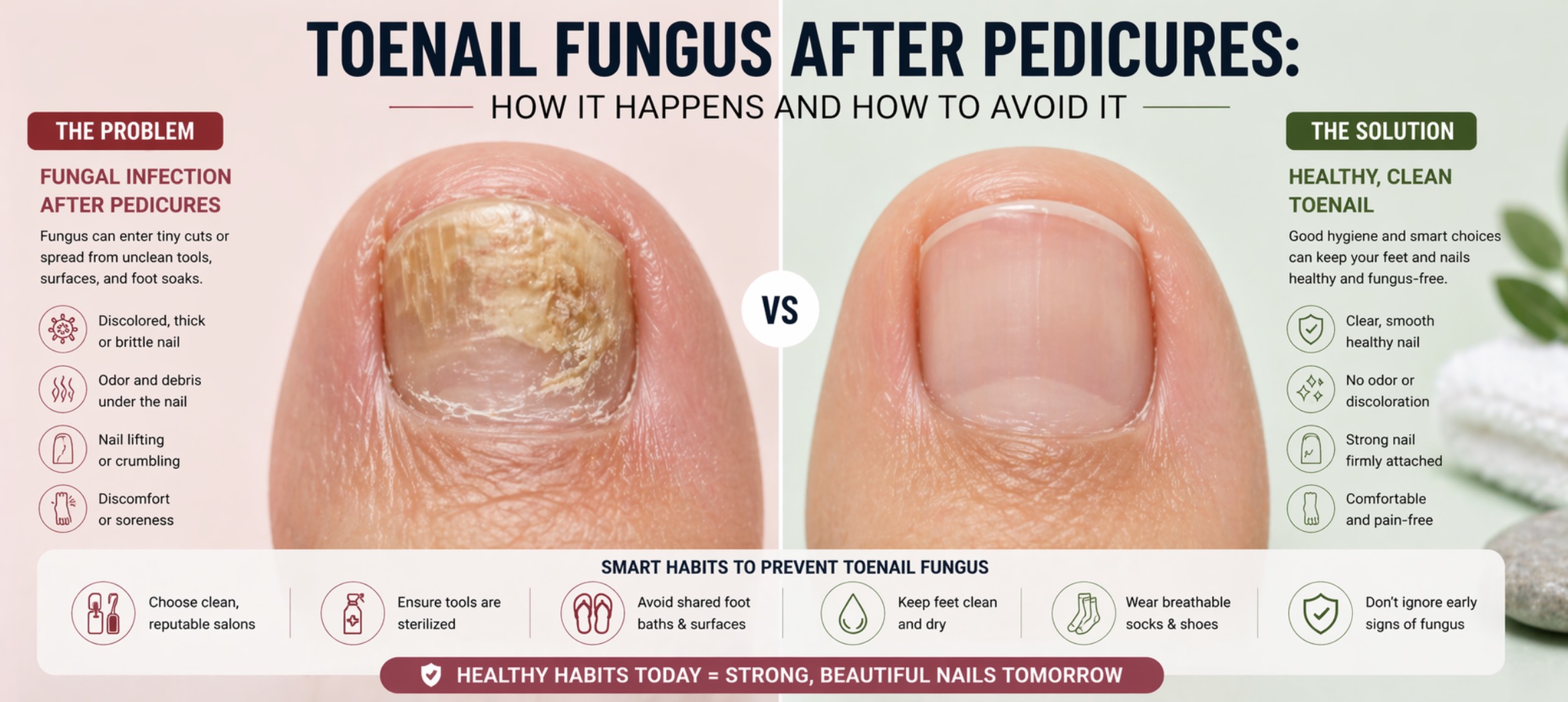
If you have ever left a pedicure feeling cute, polished, and ready to show off your toes, only to notice weird discoloration, thickening, or suspicious changes later, you are definitely not alone for wondering what happened. One of the biggest worries people have after a pedicure is whether they somehow picked up toenail fungus. And honestly? It is a fair question.
Pedicures are supposed to be relaxing, not the beginning of a tiny foot mystery. But toenail fungus can sometimes show up after a salon visit, especially if the nail was already damaged, the skin barrier was irritated, or the tools and footbath situation were not as clean as they should have been. It does not mean every pedicure is risky or that you need to fear cute toes forever. It just means a few habits and red flags matter more than people think.
If you have been searching for toenail fungus after pedicures: how it happens and how to avoid it, this guide is here to break it all down in a simple, not-too-scary way. We’re going to talk about what toenail fungus looks like, how it can happen after a pedicure, what signs to watch for, how to lower your risk, what to do if you think you have it, and how to keep your toes looking cute without turning every salon visit into a stress spiral.
Because pretty toes are lovely. Mystery toenail drama? Absolutely not the summer plan.
Cute little foot-care basics for cleaner pedicure routines
If you want a gentler, cleaner toe-care routine before and after pedicures, these are the kinds of basics worth looking at:
- Foot and nail care kits for simple at-home maintenance between salon visits
- Nail cleaning brushes for gentle nail hygiene without harsh scrubbing
- Toe separators if you like doing cleaner at-home polish touch-ups
- Foot-care products for fungal concerns if you are exploring general toe-care options
- Toe-friendly nail polish options if you want a break from heavier salon treatments
Can You Really Get Toenail Fungus After a Pedicure?
Yes, it is possible. But the important little detail is that the pedicure itself does not magically create fungus out of nowhere. Usually, toenail fungus happens when a fungus gets access to the nail through a vulnerable moment, like a tiny break in the skin, a damaged nail, moisture buildup, or contact with contaminated tools or surfaces.
So when people say they got toenail fungus “from a pedicure,” what often happened is that the salon visit may have created the conditions that made infection easier. That could mean:
- tools were not cleaned properly
- foot tubs were not as sanitary as they should have been
- the nail or surrounding skin got nicked or irritated
- the nail was already damaged and more vulnerable than usual
- moisture and occlusion gave fungus an easier chance to settle in
Basically, fungus usually needs an opening or a helpful little opportunity. A bad pedicure can sometimes provide one.

Toenail Fungus Treatment Extra Strength for Ingrown and Discolored Nails | Athletes Foot Treatment, Restorative Nail Repair for Damaged Nails, Toenail Softener Tea Tree Oil & Oregano Oil

DERMAVIA+ Toenail Fungus Treatment Extra Strength Pen - Tolnaftate with Tea Tree for Finger & Toenail - Cures Athlete's Foot - Helps Damaged, Yellow, Discolored Nails - 30 Nail Patches - 3 Pack, 12ML

SILKA Max Strength Antifungal Liquid for Toenail Health with Brush Applicator, Results in 1 Week, Nail Fungus Treatment for Damaged Toenails, Athlete's Foot Treatment, Tolnaftate 1% 0.45 Fl Oz

Lunavia Antifungal Pen – Cures Most Athlete’s Foot, Jock Itch, and Ringworm - 25% Undecylenic Acid with added Tea Tree, Jojoba, Clove Bud Oils & Aloe - 3-Pack Twist Pen (9ML Volume)
What Toenail Fungus Usually Looks Like
Toenail fungus usually affects the nail itself more than the surrounding skin, at least in the beginning. Common signs include:
- yellow, white, or brown discoloration
- thickening of the nail
- a crumbly or brittle texture
- the nail lifting from the nail bed
- a dull, cloudy, or rough-looking surface
- changes that slowly get worse over time
Sometimes it starts as a tiny patch or a subtle color change. Other times the nail becomes obviously thicker, more brittle, or harder to trim. It is usually not a one-day dramatic situation. Fungus tends to be annoying and gradual, which is part of why people ignore it at first.
How Toenail Fungus Can Happen After a Pedicure
There are a few common ways a salon visit can create the perfect little opportunity for fungus to move in.
Shared Tools That Weren’t Clean Enough
If files, clippers, nippers, or foot tools are not cleaned properly between clients, that can create a risk. Toenails and surrounding skin are tiny little ecosystems, and shared tools are not the place where you want mystery leftovers from someone else’s foot life.
Unsanitary Foot Tubs
Warm, wet environments can be an issue if foot tubs are not disinfected correctly. If a tub is not cleaned thoroughly between clients, it can become the exact opposite of relaxing.
Over-Aggressive Cuticle or Skin Work
If the skin around the toes gets nicked, cut, or over-filed, it can leave the area more vulnerable. Tiny breaks in the skin are all a fungus or bacteria sometimes needs.
Damaged or Weakened Nails
If the toenail was already traumatized, cracked, lifted, or thinned out, it can be more likely to develop problems afterward.
Polish Covering Up Early Changes
Sometimes the fungus was already starting, but polish or gel on the toes made it harder to notice right away. Then when the polish comes off later, suddenly the nail looks very suspicious.
Does Every Pedicure Put You at Risk?
No, definitely not. Plenty of people get regular pedicures with zero issues. A clean salon, careful technique, healthy nails, and a little awareness can go a long way.
The real concern is less “pedicures are bad” and more “some pedicure habits and salon conditions can raise the risk.” That is a very different vibe, and a much more manageable one.
Who Is More Likely to Get Toenail Fungus After a Pedicure?
Some situations can make fungus more likely, including:
- already damaged or weakened nails
- frequent moisture exposure
- tight shoes that trap heat and sweat
- small cuts or broken skin near the toes
- leaving polish on too long and not checking the natural nail
- using salons with questionable hygiene
Basically, the more stressed or vulnerable the nail already is, the more careful you want to be.
Toenail Fungus vs Nail Polish Staining
This part confuses a lot of people. Dark toe polish, especially if you wear it without a base coat or leave it on a long time, can stain the nail and make it look yellowish. That is not the same thing as fungus.
Polish staining is more likely if:
- the color change is more surface-level
- the nail is not thick or crumbly
- there is no lifting or texture change
- the staining does not keep getting worse
Fungus is more likely if:
- the nail thickens
- the texture changes
- the nail lifts or becomes crumbly
- the color change keeps progressing
If you are not sure, it is smart not to just paint over it and hope for the best.
Early Signs You Should Not Ignore
Toenail fungus is easier to deal with when you catch it early. These are the signs people tend to brush off too long:
- a weird yellow patch after polish removal
- one toenail looking slightly thicker than the others
- rough texture that does not seem normal
- a nail edge starting to lift
- persistent discoloration that does not grow out normally
If something keeps looking “a little off” for weeks, it is worth paying attention.
What to Do If You Think You Have Toenail Fungus After a Pedicure
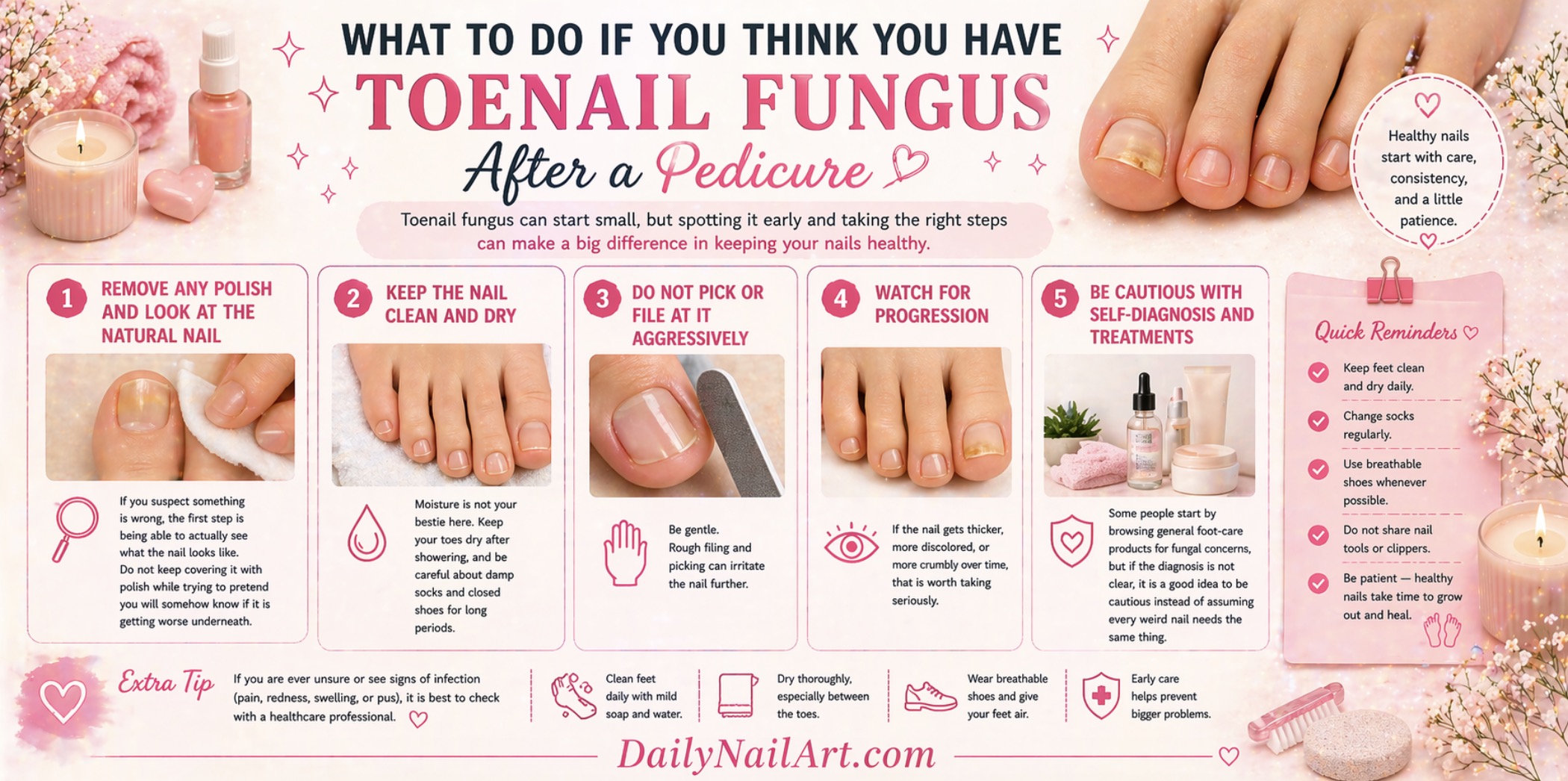
Remove Any Polish and Look at the Natural Nail
If you suspect something is wrong, the first step is being able to actually see what the nail looks like. Do not keep covering it with polish while trying to pretend you will somehow know if it is getting worse underneath.
Keep the Nail Clean and Dry
Moisture is not your bestie here. Keep your toes dry after showering, and be careful about damp socks and closed shoes for long periods.
Do Not Pick or File at It Aggressively
Be gentle. Rough filing and picking can irritate the nail further.
Watch for Progression
If the nail gets thicker, more discolored, or more crumbly over time, that is worth taking seriously.
Some people start by browsing general foot-care products for fungal concerns, but if the diagnosis is not clear, it is a good idea to be cautious instead of assuming every weird nail needs the same thing.
When to See a Doctor
You should think about seeing a doctor or dermatologist if:
- the nail keeps getting thicker or more damaged
- the discoloration is spreading
- the nail is painful
- the nail is lifting a lot
- you are not sure if it is fungus, trauma, or something else
- home care does not seem to be helping
Honestly, if the nail is clearly not just a tiny cosmetic issue anymore, it is worth getting a real opinion instead of continuing the toe mystery alone.
How to Avoid Toenail Fungus After Pedicures
This is the part that matters most if you still want to enjoy pedicures without stressing every time your polish comes off.
Choose a Clean Salon
Pay attention to whether the salon looks tidy, whether tools appear clean, and whether the tech seems careful rather than rushed.
Do Not Let Anyone Cut Too Aggressively
The cuticle area and surrounding skin do not need to be attacked. Gentle is better.
Be Careful With Foot Tubs
If the foot bath situation looks questionable, trust your instincts. Warm bubbly water is only cute when it is actually clean.
Do Not Ignore Nail Damage
If a toenail is already bruised, cracked, lifted, or damaged, that is not the time to casually throw more salon pressure on it.
Take Polish Off Periodically
Even if you love keeping your toes polished, it is a good idea to check your natural nails once in a while instead of leaving them covered forever.
Keep Feet Dry After Pedicures and Daily Life
Dry your feet well after washing and especially between the toes. Cute sandals can be fun. Damp trapped feet? Not so much.
Safer At-Home Toe Care Between Pedicures
Even if you still enjoy salon pedicures, a little at-home care can help lower the risk of problems.
Helpful basics include:
- a simple foot and nail care kit
- a gentle nail cleaning brush
- toe separators if you do your own polish touch-ups
- a prettier but simpler toe polish routine that lets you actually monitor the nails
Basically, a little quiet, clean maintenance goes a long way.
Can Gel Pedicures Make Toenail Fungus Harder to Notice?
Yes, definitely. Gel or long-lasting polish on the toes can hide early changes because you are not seeing the natural nail regularly. That does not mean gel pedicures automatically cause fungus, but they can make it easier to miss what is happening underneath until the issue is more obvious.
That is one reason it can be smart to give your toes occasional polish-free check-ins.
Frequently Asked Questions
Can I really get toenail fungus from a pedicure?
Yes, it is possible, especially if the salon tools or foot tubs are not clean, or if the nail or surrounding skin gets damaged during the service.
What does toenail fungus look like after a pedicure?
It often shows up as yellow, white, or brown discoloration, thickening, crumbly texture, or lifting of the nail over time.
How can I lower the risk of fungus after pedicures?
Choose a clean salon, avoid aggressive skin or cuticle trimming, keep feet dry, and take polish off occasionally so you can check the natural nail.
Is yellow toenail discoloration always fungus?
No. Sometimes it can just be nail polish staining, especially if there is no thickening, crumbling, or lifting.
When should I see a doctor about a toenail after a pedicure?
If the nail is getting thicker, more discolored, painful, crumbly, or clearly worsening over time, it is a good idea to get medical advice.
Final Thoughts
Toenail fungus after pedicures can happen, but it usually comes down to a mix of hygiene, moisture, nail damage, and opportunity. The good news is that there is a lot you can do to lower the risk by choosing clean salons, being gentle with your nails, and actually paying attention to your natural toenails once in a while.
If something looks off after a pedicure, do not just keep painting over it and hoping for the best. A weird toenail is not a character flaw, but it is something worth noticing early.
Because honestly, there is something very satisfying about keeping your toe routine cute, calm, and smart enough that your pedicures stay in their relaxing little self-care era instead of turning into a full nail mystery later.

Nail Allergies - Essentials: A quick fact-based guide. Spot it, stop it, handle it - read the whole thing before your next client.

Beetles 15ml HEMA-Free Nail Glue Gel, TPO Free UV Nail Glue
Love easy Hema Free Builder Gel - Hypoallergenic Strong Base Coat | Long-Lasting Adhesion (30+ Days) for Professional Nails Gift for Women
