
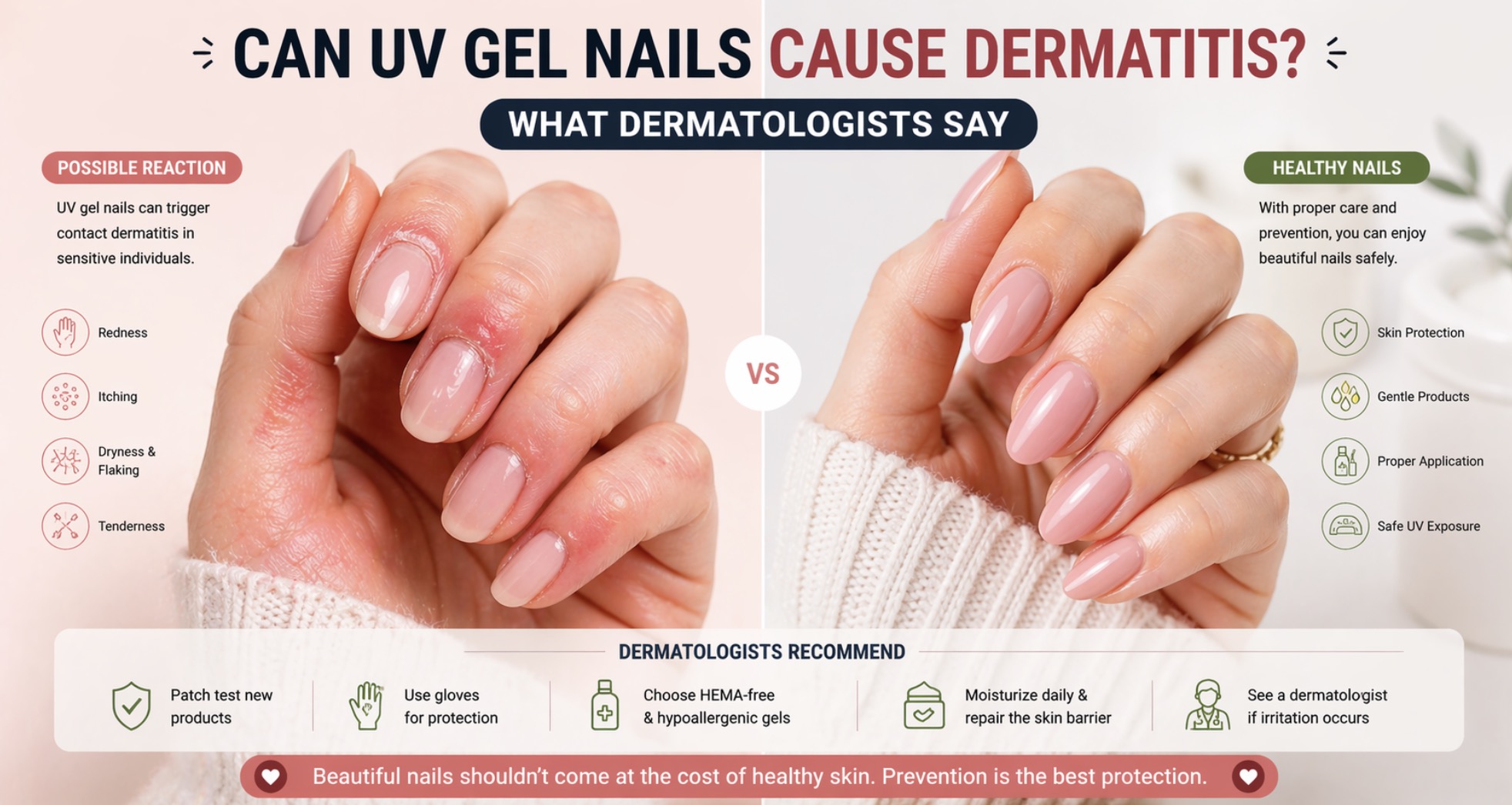
If your skin gets itchy, red, flaky, or weirdly irritated after a gel manicure, you are absolutely not being dramatic for asking questions. One of the most common concerns people have after using gel polish is whether UV gel nails can cause dermatitis. And honestly? That concern is very fair.
The short answer is yes, gel nail products can absolutely trigger dermatitis in some people, especially when the skin is exposed to certain nail chemicals over and over again. The tricky part is that a lot of people think the problem is the UV lamp itself, when in many cases the bigger issue is the gel product, the ingredients in it, or uncured gel touching the skin.
If you have been searching for can UV gel nails cause dermatitis? what dermatologists say, this guide is here to break it all down in a simple, not-too-scary way. We’re going to talk about what dermatitis actually is, why gel nails can trigger it, what symptoms to watch for, what dermatologists usually mean when they talk about gel allergies and acrylates, how to tell dermatitis apart from other nail problems, and what to do if your hands are clearly not loving your manicure routine.
Because glossy nails are cute. Angry, itchy fingers? Very much not the dream.
Cute little basics for a gentler gel routine
If you are trying to be more careful with sensitive skin or just want a cleaner, gentler gel routine overall, these are the kinds of basics worth looking at:
- HEMA-free gel polish if you are trying to avoid one commonly discussed gel ingredient
- UV LED nail lamps for proper curing and a more controlled gel routine
- Gel cleanup brushes to help keep product off the skin
- Lint-free nail wipes for a neater, less messy gel application
- Hand cream for dry cracked skin to support the skin barrier while irritated skin calms down
What Is Dermatitis, Exactly?
Dermatitis is basically inflammation of the skin. It can make the skin look red, dry, itchy, swollen, flaky, sore, or rashy. Around nails, dermatitis often shows up on the cuticles, fingertips, sides of the fingers, or the skin just around the nail folds.
With gel nails, the kind people usually mean is contact dermatitis, which comes in two main forms:
- Irritant contact dermatitis, which happens when something irritates the skin barrier
- Allergic contact dermatitis, which happens when your immune system reacts to a specific ingredient
Both can look pretty similar at first, which is why nail-related skin reactions can feel so confusing.
Kerasal Nail Renewal, Restorative Nail Repair for Damaged Nails, 0.33 oz

Fungi-Nail Anti-Fungal Liquid Solution, 1 Fl Oz

Toenail Fungus Treatment : Extra Strength 25% Undecylenic Acid Toe and Fingernail Fungus Removal - Fast Acting Fungal Nail Revitalizer with Tea Tree Oil (0.5 Fl Oz (Pack of 2))

SILKA Max Strength Antifungal Liquid for Toenail Health with Brush Applicator, Results in 1 Week, Nail Fungus Treatment for Damaged Toenails, Athlete's Foot Treatment, Tolnaftate 1% 0.45 Fl Oz
Can UV Gel Nails Actually Cause Dermatitis?
Yes, they can. But the important little detail is that the problem usually is not just “UV light” all by itself. In many cases, the bigger issue is the gel product touching the skin, especially before it is fully cured.
Dermatologists often focus on the chemicals used in gel systems, especially acrylates and methacrylates, because those ingredients are well-known triggers for allergic contact dermatitis in some people.
So when people say “UV gel nails caused dermatitis,” what is often really happening is:
- uncured gel touched the skin
- the product was under-cured
- the person became sensitized to a gel ingredient over time
- the skin barrier was already irritated and reacted even more
The lamp can be part of the system, yes, but the actual product exposure is usually the bigger drama queen here.
What Dermatologists Usually Mean When They Talk About Gel Nail Reactions
When dermatologists talk about reactions from gel nails, they are often talking about allergic contact dermatitis from acrylates. One ingredient that comes up a lot is HEMA, which stands for hydroxyethyl methacrylate. Very un-cute name. Very commonly discussed in nail allergy conversations.
That is why so many people start looking into HEMA-free gel polish or HEMA-free builder gel once they start noticing reactions.
But very important little reality check: HEMA-free does not automatically mean allergy-proof. It just means one common ingredient has been removed. Other acrylates can still be involved.
What Dermatitis From Gel Nails Can Look Like
Dermatitis from gel nails does not always look wildly dramatic at first. Sometimes it starts very small and very easy to ignore. Common signs include:
- itchy cuticles
- red skin around the nails
- dry, flaky, or peeling fingertips
- swollen nail folds
- burning or stinging
- tiny bumps or blister-like spots
- cracked skin around the nails
- rash on the eyelids, face, or neck from touching your skin
That last one surprises a lot of people. But yes, a nail product allergy can show up away from the nails because your hands touch your face constantly.
Early Signs People Ignore Too Often
These are the little things that people tend to brush off at first:
- your cuticles itch after every gel set
- the skin feels dry and tight for days
- you get redness around the nails that keeps happening
- one or two fingers always seem more irritated afterward
- your eyelids randomly get itchy after doing your nails
Those patterns matter. A lot.
Why Gel Nails Can Trigger Dermatitis
There are a few common ways this happens.
Uncured Gel Touched the Skin
This is one of the biggest reasons. If gel floods into the cuticles or sidewalls and touches the skin, that repeated exposure can irritate the skin or contribute to sensitization over time.
The Gel Was Not Fully Cured
If the lamp is weak, incompatible, old, or the product is applied too thickly, the gel may not cure properly. Under-cured product can be a huge problem.
A reliable UV LED nail lamp makes such a difference here.
The Skin Barrier Was Already Irritated
Over-filing, harsh acetone, picking, cuticle damage, and constant hand washing can all make the skin more vulnerable and more reactive.
Repeated Exposure Over Time
Some people use gel for months or even longer before their skin suddenly starts reacting. That is because allergies can develop after repeated exposure, not always on day one.
Does the UV Lamp Itself Cause the Rash?
This is where things get a little nuanced. The lamp itself is not usually the main cause of contact dermatitis. The bigger issue is usually the gel chemistry and whether the product got on the skin or stayed under-cured.
That said, if the lamp is not curing your product properly, it absolutely becomes part of the problem. A lamp that does not work well with your gel system can leave more uncured material sitting on the nail and skin, which is very much not what we want.
Dermatitis vs Gel Allergy vs Simple Irritation
These can overlap a lot, which is why people get confused.
Simple irritation might look like:
- slight redness
- a little dryness
- mild stinging that fades
Dermatitis often looks like:
- ongoing redness
- itching
- flaking or cracking
- swelling
- rashy skin
An allergic pattern often looks like:
- repeat reactions after gel exposure
- worsening symptoms over time
- more intense itching
- spread beyond the hands in some cases
Basically, if it keeps happening or gets worse each time, that is a big clue this is not just random dryness.
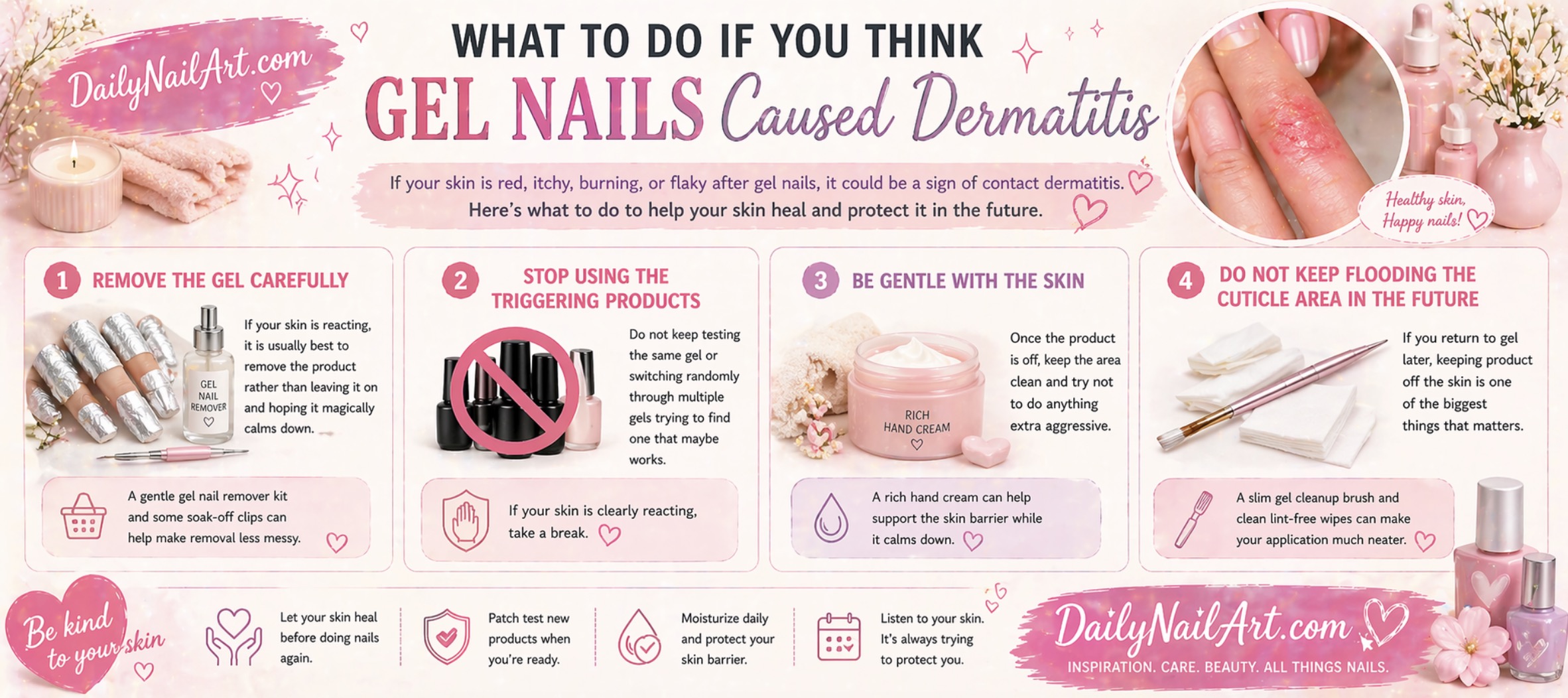
What to Do If You Think Gel Nails Caused Dermatitis
Remove the Gel Carefully
If your skin is reacting, it is usually best to remove the product rather than leaving it on and hoping it magically calms down. A gentle gel nail remover kit and some soak-off clips can help make removal less messy.
Stop Using the Triggering Products
Do not keep testing the same gel or switching randomly through multiple gels trying to find one that maybe works. If your skin is clearly reacting, take a break.
Be Gentle With the Skin
Once the product is off, keep the area clean and try not to do anything extra aggressive. A rich hand cream can help support the skin barrier while it calms down.
Do Not Keep Flooding the Cuticle Area in the Future
If you return to gel later, keeping product off the skin is one of the biggest things that matters. A slim gel cleanup brush and clean lint-free wipes can make your application much neater.
When to See a Dermatologist
You should seriously think about seeing a dermatologist if:
- the itching is strong or keeps returning
- the skin is cracked, bleeding, or blistered
- the rash spreads beyond your hands
- the symptoms keep coming back after gel use
- you want patch testing to find out what ingredient is causing it
Patch testing can be really helpful when you need to know whether acrylates or another ingredient are the real issue.
Can You Still Wear Gel Nails If You Have Dermatitis?
Maybe, but this is where you need to be careful and realistic. If the skin is actively reacting, the answer is usually no for now. The area needs a break.
Some people later try:
- HEMA-free systems
- cleaner, more precise application methods
- simpler gel overlays with less skin exposure
- switching away from gel completely
And honestly, for some people, the easiest answer is just taking a break and wearing something simpler like a pretty regular nail polish set or some short press-on nails while the skin recovers.
How to Lower the Risk in the Future
If you still want to use gel in the future and your skin is not actively reacting right now, these habits can help reduce the risk of problems.
Keep Product Off the Skin
This is probably the biggest thing. Gel belongs on the nail plate, not all over the cuticle area.
Use Thin Layers
Thicker gel can be harder to cure properly and easier to flood into the skin.
Use a Compatible Lamp
A proper UV LED lamp matters so much more than people think.
Do Not Ignore Early Itching
If your fingers keep getting itchy after gel, do not keep pretending it is just one random weird manicure moment every time.
Support the Skin Barrier
Moisturized skin is usually happier skin. A gentle hand cream can help keep the skin around the nails less dry and stressed.
Common Mistakes People Make
Assuming It Is the Lamp Alone
The lamp matters, but usually the bigger issue is the gel product itself and exposure on the skin.
Keeping the Gel On Anyway
If your skin is clearly reacting, leaving the product on usually is not the cute little brave choice. It is just more exposure.
Trying New Gels Repeatedly Without Letting the Skin Recover
This can make the whole situation even more frustrating.
Ignoring Mild Symptoms Because the Nails Still Look Good
If your nails are gorgeous but your fingers are miserable, the manicure is not actually going well.
Frequently Asked Questions
Can UV gel nails really cause dermatitis?
Yes. Gel nail products can trigger dermatitis, especially when uncured product touches the skin or when someone becomes allergic to acrylate ingredients over time.
Is the UV lamp or the gel product the real problem?
Usually the bigger issue is the gel product and skin exposure, especially if the gel is under-cured or gets on the cuticles and fingertips.
What does dermatitis from gel nails look like?
It often looks like itching, redness, swelling, flaking, peeling, burning, or cracked skin around the nails and fingertips.
Can HEMA-free gel stop the problem?
Not always. HEMA-free can help some people avoid one common ingredient, but other acrylates can still trigger reactions.
When should I see a dermatologist?
If the reaction keeps coming back, gets worse, causes cracking or blistering, or spreads beyond the hands, it is a good idea to get professional advice and possibly patch testing.
Final Thoughts
Yes, UV gel nails can absolutely be linked to dermatitis, but in many cases the bigger issue is not just the lamp itself. It is the gel chemistry, skin exposure, and whether the product is being applied and cured properly.
If your fingers keep getting itchy, rashy, red, or flaky after gel manicures, do not ignore those signs just because the nails look cute. Your skin is allowed to have opinions, and sometimes it has very strong ones.
Because honestly, there is something very satisfying about understanding what your nails and skin are actually reacting to, making smarter choices, and protecting your hands before one little irritation turns into a full-blown manicure breakup.
Love easy Hema Free Builder Gel - Hypoallergenic Strong Base Coat | Long-Lasting Adhesion (30+ Days) for Professional Nails Gift for Women

Beetles 15ml HEMA-Free Nail Glue Gel, TPO Free UV Nail Glue

Beetles HEMA-Free Builder Gel with Base and No Wipe Top Coat 3PCS 15ML
