
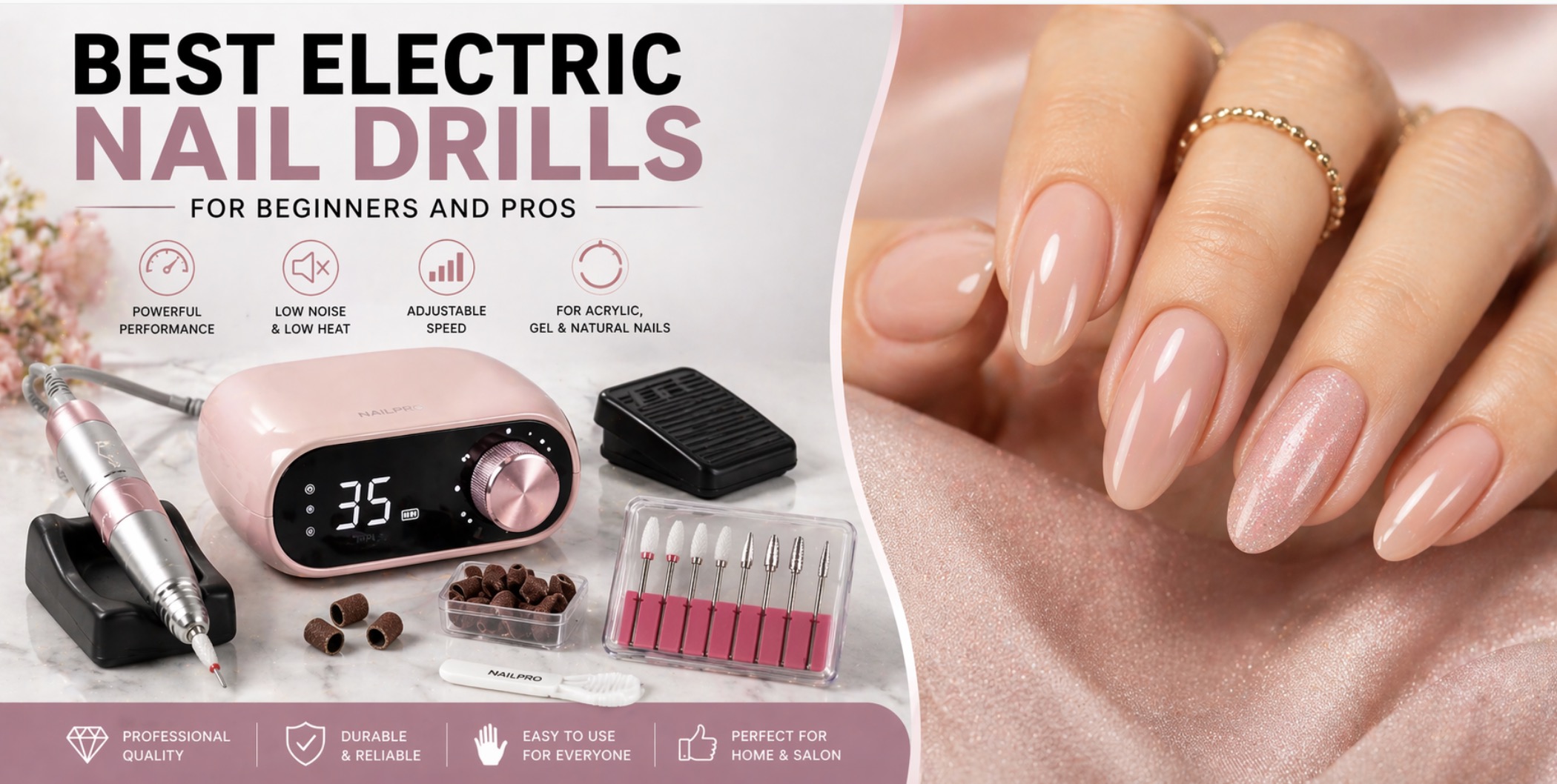
If you have ever watched someone remove bulk, smooth an acrylic set, clean up the cuticle area, and shape everything to perfection in what feels like two magical little minutes, chances are you were watching an electric nail drill do its thing. And honestly? It is very easy to become a little obsessed.
A good e-file can make your nail routine feel faster, cleaner, and way more professional, whether you are a beginner learning at home or a nail tech doing clients all day. But shopping for the best electric nail drills for beginners and pros can get overwhelming fast. Some look cute but weak. Some sound powerful but seem intimidating. Some come with a million bits and accessories, but you still end up wondering if the actual drill itself is any good.
The truth is, the best nail drill for you depends on your skill level, the types of services you do, how often you use it, and how comfortable you want the whole setup to feel. A beginner usually does not need the same kind of machine a busy salon tech would want, and a pro probably does not want a tiny little starter drill that struggles through acrylic removal.
This guide is here to make the whole thing less confusing. We’re going to talk about what an electric nail drill actually does, what features matter most, what beginners should look for, what pros usually care about more, common mistakes to avoid, and how to choose a drill that fits your nail routine without making the learning curve feel terrifying.
Cute little e-file essentials for a smoother nail setup
If you want a nail drill setup that feels more polished, more efficient, and less chaotic, these are the kinds of products worth looking at first:
- Electric nail drills for shaping, refining, and faster product removal
- Rechargeable nail drills if you want something cordless and easier to move around
- Nail drill bit sets for cuticle work, surface refining, and product removal
- Nail dust collectors to make filing feel cleaner and less messy
- Nail desk lamps for better visibility while you work
What Is an Electric Nail Drill?
An electric nail drill, also called an e-file, is a tool with a powered handpiece that spins interchangeable bits. It is used to shape nails, remove product, refine acrylic or builder gel, smooth bulk, prep the nail area, and sometimes clean around the cuticle more efficiently than hand filing alone.
Depending on the bit and speed, an e-file can help with:
- removing acrylic or hard gel bulk
- refining builder gel structure
- smoothing the nail surface
- shaping free edges
- cleaning up around the cuticle area
- removing lifting before fills
Basically, it is one of those tools that can save so much time once you know how to use it properly.

SAVILAND Nail Drill Professional 40000RPM 30S Fast Removal for Acrylic Nail | Low noise running, 4000mAh battery Long-Lasting, Complete drill bit set, Salon&mobile tech use, LCD display, Gradient Purple

MelodySusie USB Nail Drill PC120I for Gentle Nail Prep | 20000RPM, Adjustable Speed, Forward/Reverse, Inline Control, Cuticle Smoothing, Gel Polish Removal, Beginners

COSLUS C40 Electric Nail Drill Professional, Precise Speed Dial, Purple | Nail File Machine for Acrylic Gel Dip Powder Removal, Compact Manicure Tools, Beginner-friendly Polishing Set, Home

COSLUS C20 Cordless Nail Drill Electric File, All-in-One Kit, Purple | Portable Professional for Acrylic Gel Dip Powder Nails, Rechargeable Manicure & Pedicure Machine, Salon Home, Lightweight
Why People Love Nail Drills So Much
If you do acrylic, builder gel, hard gel, dip, or frequent gel removal, a good nail drill can make the whole process feel faster and way less physically annoying than endless hand filing.
People usually love e-files because they can help with:
- faster product removal
- smoother refining
- less hand fatigue from constant filing
- more precise prep and finish work
- a more pro-feeling overall setup
And honestly, there is something very satisfying about a drill that glides smoothly instead of making you battle a thick acrylic overlay for 45 emotional minutes.
What Beginners Should Look for in an Electric Nail Drill
If you are new to e-files, you do not need the most intense, industrial little machine ever. What you need is something that feels manageable, smooth, and beginner-friendly.
Easy Speed Control
A beginner drill should let you work slowly and comfortably, not jump straight into terrifyingly fast speeds. Smooth control matters a lot when you are learning.
Low Vibration
A drill that vibrates a lot can feel harder to control and more tiring to use. A smoother handpiece usually feels much easier for beginners.
A Comfortable Handpiece
If the handpiece feels huge, heavy, or awkward, it can make learning harder than it needs to be. A lightweight handpiece is way less intimidating.
Forward and Reverse Function
This is super helpful, especially if you are left-handed or want more flexibility depending on which hand you are working on.
Beginner-Friendly Bit Selection
You do not need seventeen mysterious bits you will not use. A simple nail drill bit set with a few core bits is usually enough to start.
What Pros Usually Want in an Electric Nail Drill
If you are doing nails all day or working through a lot of acrylic and hard product, your needs change a little. Pros usually care more about power, durability, and comfort over long use.
Stronger Torque
Pros often want a drill that does not slow down or struggle under pressure, especially when removing bulk from acrylic or hard gel.
Long-Term Comfort
If you are holding the handpiece all day, comfort matters a lot. A smooth, low-vibration handpiece can make a huge difference.
Reliable Performance Over Time
A pro usually wants something dependable, not a cute little drill that gets tired and dramatic after a few weeks of regular use.
Good Speed Range
You want enough speed to work efficiently, but with control. More speed is not automatically better if the drill feels unstable or harsh.
If you are comparing options, looking at both electric nail drills and rechargeable nail drills can help you decide whether portability or heavier-duty performance matters more for your routine.
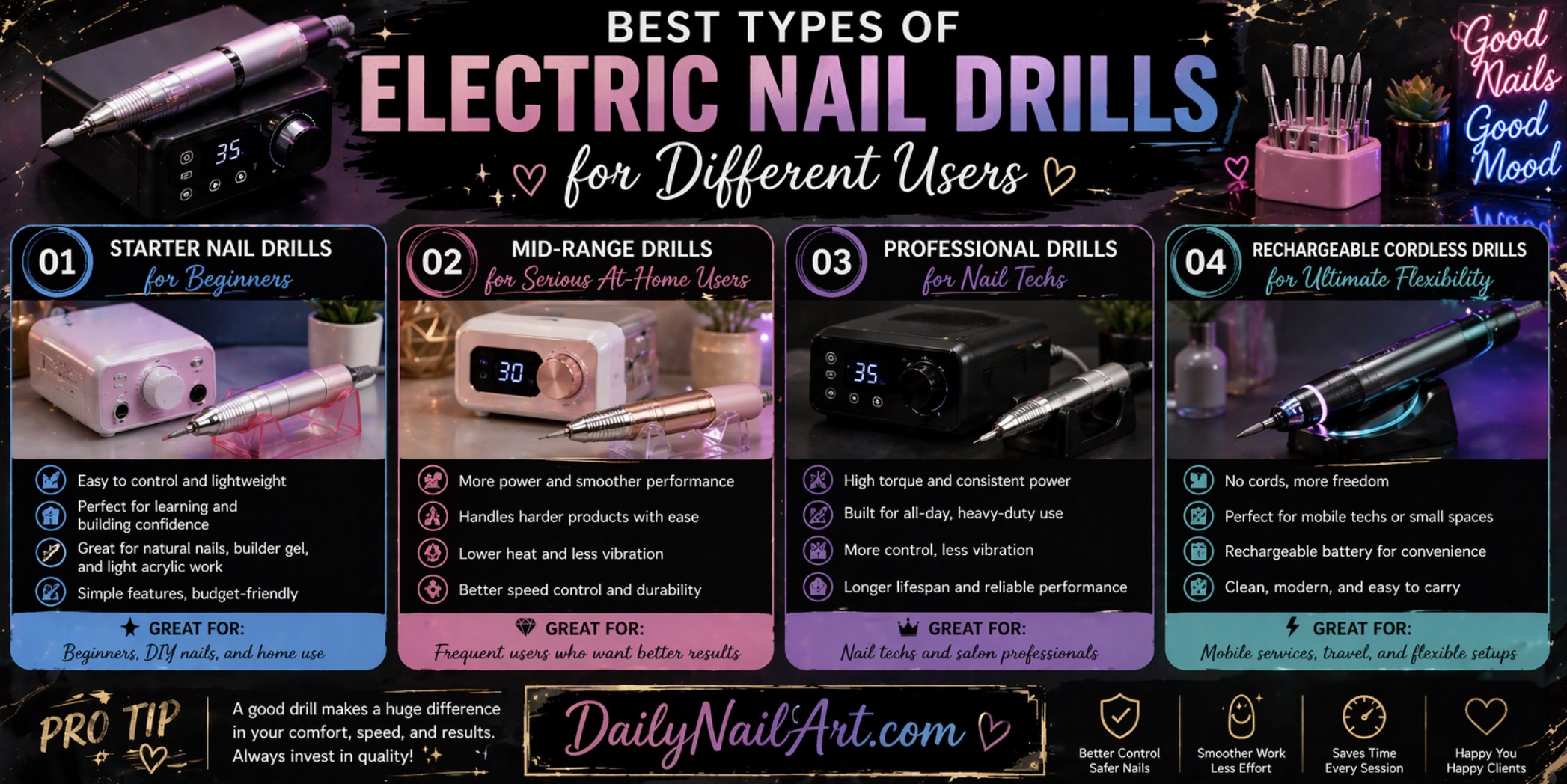
Best Types of Electric Nail Drills for Different Users
Starter Nail Drills for Beginners
These are usually best if you are learning at home, doing your own nails, or just starting to work with builder gel or acrylic. You want something easy to control, not too bulky, and not wildly intimidating.
Mid-Range Drills for Serious At-Home Users
If you do your nails often, work with harder products, or want a smoother, more polished-feeling setup, a step up from the most basic beginner drill can be really worth it.
Professional Drills for Nail Techs
These are better if you are doing clients regularly and need something with more consistent power, comfort, and durability.
Rechargeable Cordless Drills
These are great if you like a cleaner desk setup, move your workspace around, or do mobile services. A lot of people love browsing cordless rechargeable nail drills for that reason.
What Nail Drill Bits Actually Matter?
The drill itself matters, obviously, but the bits are a huge part of how it performs. A simple starter nail drill bit set can give you the basics, but it helps to understand what they are for.
- Barrel bits are often used for surface work and product refining
- Safety bits are nice for beginners because the tip is gentler
- Cuticle bits help clean around the nail folds and cuticle area
- Mandrel bits hold sanding bands for prep and surface work
- Ceramic or carbide bits are common for removing product bulk
If you are new, safety-focused bits and lighter refining bits are usually a smarter place to start than super aggressive removal bits.
What Makes a Nail Drill Feel Smooth Instead of Scary?
A lot of the fear around nail drills comes from imagining them being harsh or hard to control. But a good drill should feel smooth and steady, not jumpy and aggressive.
Things that help a drill feel better include:
- low vibration
- balanced handpiece weight
- easy speed adjustments
- clean bit fit
- not forcing pressure while filing
Honestly, one of the biggest beginner mistakes is thinking you need to push hard. You really do not. Let the drill and bit do the work.
Common Beginner Mistakes With Electric Nail Drills
Going Too Fast Too Soon
This is such a classic mistake. Just because a drill can go fast does not mean you should use full speed while learning.
Pressing Too Hard
An e-file should glide. Pressing too hard can make the process rougher, less controlled, and harder on the nail.
Using the Wrong Bit for the Job
Different bits do different things. A product removal bit is not the same as a gentle cuticle clean-up bit.
Staying in One Spot Too Long
Keep the bit moving. Lingering in one area too long can create heat and make the experience uncomfortable.
Skipping Dust Control
If you are doing a lot of filing, pairing your e-file with a nail dust collector can make the whole process feel much cleaner.
Are Nail Drills Safe for Beginners?
Yes, they can be, as long as you go slowly, use the right bits, and treat it like a skill you are learning instead of something you should magically master in five minutes.
It is usually smartest to:
- start on low speed
- practice on tips or your own nails first
- use gentler bits
- focus on control instead of speed
- work in good lighting
A bright nail desk lamp helps more than people think, especially while you are still building confidence.
What Else You Might Want With Your Nail Drill
A few extras can make the whole setup feel smoother and more professional:
- a good bit set
- a dust collector for cleaner filing
- a bright desk lamp
- a comfy arm rest
- a simple nail care kit for prep and cleanup
None of those are mandatory, but together they can make your nail routine feel way more polished and less messy.
How to Choose the Right Nail Drill for Your Routine
If You Mostly Do Your Own Builder Gel Nails
You probably want a beginner-friendly drill with smooth speed control, low vibration, and enough power for light refining and removal.
If You Do Acrylic Sets at Home Regularly
Look for something a little stronger that can handle bulk removal more comfortably without feeling harsh.
If You Are a Nail Tech Doing Clients
Prioritize comfort, durability, smoother performance, and a handpiece that still feels good after long use.
If You Want a Cleaner, Cordless Setup
A rechargeable nail drill may be the better fit, especially for mobile work or smaller nail desks.
Frequently Asked Questions
Are electric nail drills good for beginners?
Yes, as long as you choose one with easy speed control, low vibration, and a beginner-friendly setup. Starting slowly and using gentler bits makes a huge difference.
What is the difference between a beginner nail drill and a professional nail drill?
Beginner drills are usually simpler, lighter-duty, and easier to control, while pro drills often focus more on stronger performance, durability, and comfort during long use.
Do I need a rechargeable nail drill?
Not necessarily, but rechargeable drills are great if you want a cleaner desk setup, more portability, or do mobile services.
What bits should beginners start with?
Beginners usually do best with safety bits, simple refining bits, sanding bands, and gentle cuticle bits instead of aggressive product removal bits right away.
Can I use an electric nail drill for builder gel and acrylic?
Yes. Nail drills are commonly used for both builder gel and acrylic, especially for shaping, refining, and removing bulk product more efficiently.
Final Thoughts
The best electric nail drills for beginners and pros are the ones that feel smooth, comfortable, and right for the kind of nail work you actually do. You want a drill that fits your skill level, handles your services well, and makes your routine feel easier instead of more stressful.
If you are a beginner, focus on control, comfort, and simple bits instead of trying to buy the most intense machine you can find. If you are a pro, comfort, durability, and stronger performance matter way more over time.
Because honestly, there is something very satisfying about using a drill that makes your nail routine feel cleaner, faster, and just a little more professional in the prettiest little power-tool way.
Nail Allergies - Essentials: A quick fact-based guide. Spot it, stop it, handle it - read the whole thing before your next client.

Beetles 15ml HEMA-Free Nail Glue Gel, TPO Free UV Nail Glue
Love easy Hema Free Builder Gel - Hypoallergenic Strong Base Coat | Long-Lasting Adhesion (30+ Days) for Professional Nails Gift for Women
