
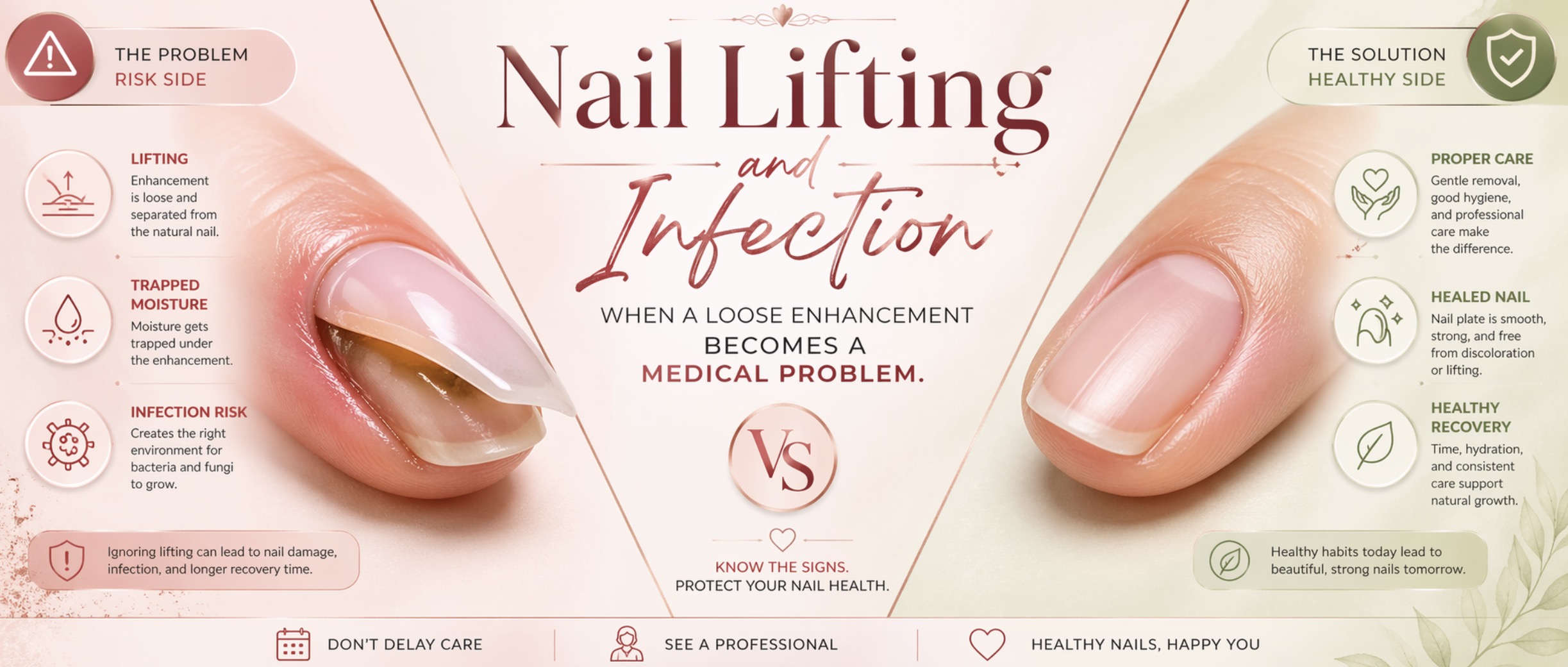
That tiny little gap under your acrylic, gel extension, Gel X tip, builder gel overlay, or press-on nail might look harmless at first. Maybe it is just a little lift near the cuticle. Maybe one corner is starting to pop. Maybe your nail still looks cute from far away, so you are tempted to ignore it until your next fill. But babe, nail lifting is one of those things that can go from “minor nail annoyance” to “please do not pretend this is fine” very quickly.
When a nail enhancement lifts, it creates a tiny pocket between the natural nail and the product. That pocket can trap moisture, soap, lotion, dust, bacteria, and fungus. And once moisture gets trapped under an enhancement, the area can become the perfect little hiding place for germs. Not cute. Not glam. Definitely not the manicure moment we wanted.
This guide breaks down nail lifting and infection in a beginner-friendly way: what lifting looks like, why it happens, when it becomes a medical concern, what warning signs to watch for, and how to protect your natural nails if your enhancement starts coming loose.
Helpful essentials for safer nail maintenance
If you wear acrylics, builder gel, Gel X, or press-ons, these little nail-care helpers can make removal, cleaning, and aftercare feel much easier:
- Gel nail removal kits for safer soak-off routines at home
- Soak-off nail clips to help remove product without picking or ripping
- Cuticle oil for damaged nails to support dry, stressed skin around the nail
- Soft nail cleaning brushes for gentle hand and nail hygiene
- Disposable nail files and buffers for cleaner personal or salon nail care
What Is Nail Lifting?
Nail lifting happens when the nail product separates from the natural nail plate. This can happen with acrylic nails, gel extensions, Gel X, builder gel, dip powder, hard gel, or even press-on nails. Instead of the product sitting tightly and smoothly against the natural nail, a gap opens up.
Sometimes lifting starts near the cuticle. Other times it appears at the sidewall, free edge, or corner of the nail. It may look like a cloudy pocket, a raised edge, a white area under the product, or a little shadow where the product no longer looks fully attached.
A tiny bit of lifting might not hurt at all, which is why many people ignore it. But the problem is not just how it looks. The problem is what can get trapped inside that little pocket.
Why a Loose Enhancement Can Become a Problem
When an enhancement lifts, it creates a space where water and debris can sneak in. Every time you wash your hands, shower, do dishes, apply lotion, sweat, or use cuticle oil, moisture can move into that gap. Once moisture is trapped, it may not dry completely because the enhancement covers the area.
That damp, covered space can allow bacteria or fungus to grow. This is why a lifted nail should not be treated like a cute little inconvenience. It is a sign that the enhancement is no longer sealed properly.
In some cases, lifting can also pull on the natural nail and irritate the nail bed. If the lifted product catches on hair, fabric, or clothing, it can cause more separation or even tear the natural nail. Ouch, and absolutely no thank you.

SILKA Max Strength Antifungal Liquid for Toenail Health with Brush Applicator, Results in 1 Week, Nail Fungus Treatment for Damaged Toenails, Athlete's Foot Treatment, Tolnaftate 1% 0.45 Fl Oz
Kerasal Fungal Nail Renewal, Restorative Repair for Damaged Nails, .33 oz | Restorative nail repair with Urea helps improve the appearance of damaged, discolored nails with quick visible results.

Nail-Aid - 5-in-1 Damaged Nails Multi-Repair for Fingernails or Toenails

NONYX Fungal Nail Clarifying Gel | Clinically Proven for Discolored, Thick, Brittle, Yellow, Lifted, and other signs of Fungus-Damaged Toenails | 90% of Nails Improve | Over 8 million sold
Common Signs Your Nail Enhancement Is Lifting
Nail lifting can be subtle at first. Look closely at your manicure in good lighting and check for changes around the edges.
Signs of lifting may include:
- a small gap between the product and natural nail
- a white, cloudy, or shadowy area under the enhancement
- one corner lifting away from the nail
- product separating near the cuticle
- sidewalls that look raised or uneven
- water feeling trapped under the nail after washing hands
- hair catching under the lifted edge
- the nail feeling loose, bendy, or unstable
If you notice lifting, do not glue it back down over moisture or debris. That can trap the problem inside and make things worse.
When Nail Lifting Becomes a Medical Concern
Lifting becomes more concerning when it is paired with pain, swelling, redness, discharge, odor, discoloration, warmth, or spreading separation. A loose enhancement is not automatically infected, but it can create the conditions where infection becomes more likely.
You should take lifting seriously if the nail area starts to feel sore, hot, throbbing, or tender. You should also pay attention if the skin around the nail becomes puffy, red, shiny, or painful. These can be signs that the issue is no longer just cosmetic.
Also, if the nail turns green, yellow, brown, black, or develops a strange spot under the product, do not cover it with more polish and hope for the best. Discoloration under enhancements deserves attention.
Warning Signs You Should Never Ignore
Some nail symptoms are big red flags. If you see these, it is time to stop treating the nail like a regular manicure problem.
- pain that gets worse instead of better
- redness spreading around the nail
- swelling around the cuticle or sidewall
- pus or fluid coming from the nail fold
- a bad smell from under the enhancement
- green, yellow, brown, or dark discoloration
- the natural nail separating from the nail bed
- throbbing or pressure under the nail
- skin that feels hot to the touch
- fever or feeling unwell along with nail symptoms
If any of these show up, skip the DIY repair and contact a qualified healthcare professional. Nail infections can need proper treatment, and waiting too long can make recovery harder.
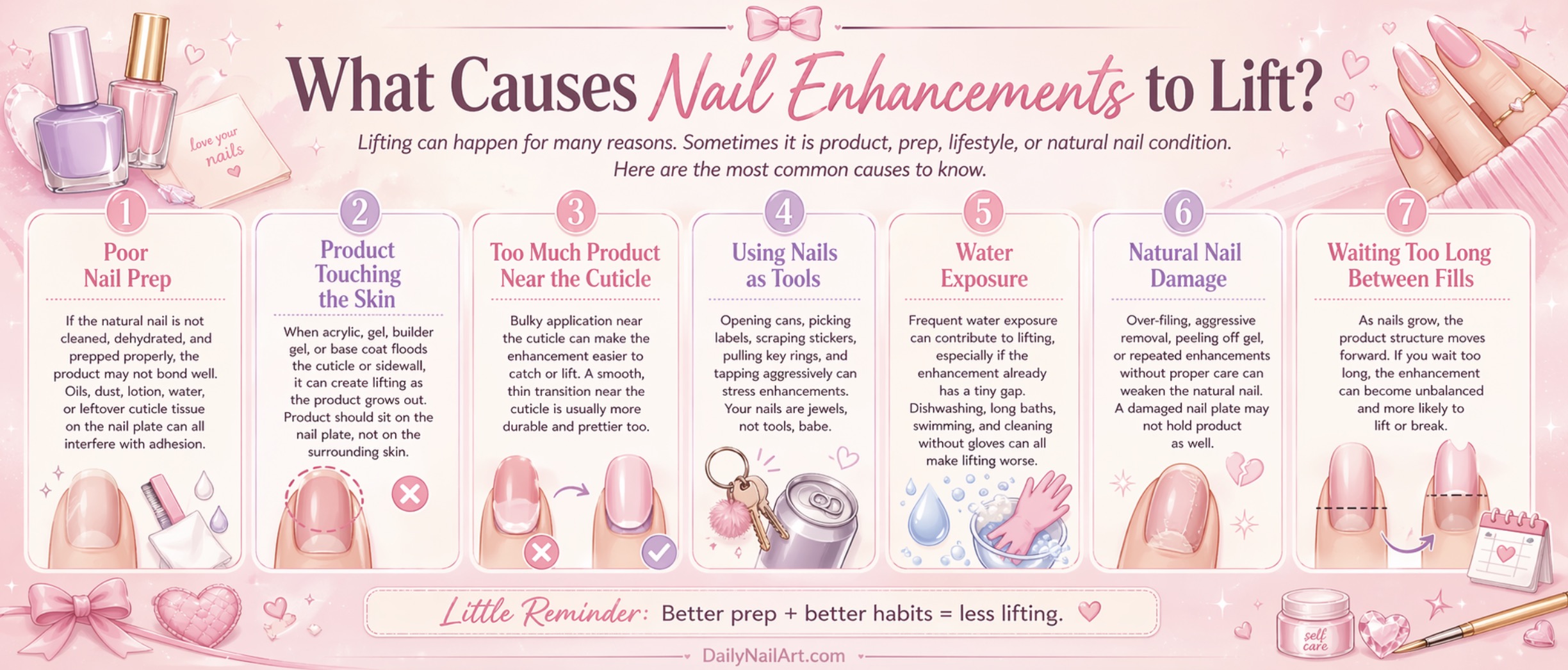
What Causes Nail Enhancements to Lift?
Lifting can happen for many reasons. Sometimes it is a product issue. Sometimes it is prep. Sometimes it is lifestyle. And sometimes your natural nail simply needs a break.
Poor Nail Prep
If the natural nail is not cleaned, dehydrated, and prepped properly, the product may not bond well. Oils, dust, lotion, water, or leftover cuticle tissue on the nail plate can all interfere with adhesion.
Product Touching the Skin
When acrylic, gel, builder gel, or base coat floods the cuticle or sidewall, it can create lifting as the product grows out. Product should sit on the nail plate, not on the surrounding skin.
Too Much Product Near the Cuticle
Bulky application near the cuticle can make the enhancement easier to catch or lift. A smooth, thin transition near the cuticle is usually more durable and prettier too.
Using Nails as Tools
Opening cans, picking labels, scraping stickers, pulling key rings, and tapping aggressively can stress enhancements. Your nails are jewels, not tools, babe.
Water Exposure
Frequent water exposure can contribute to lifting, especially if the enhancement already has a tiny gap. Dishwashing, long baths, swimming, and cleaning without gloves can all make lifting worse.
Natural Nail Damage
Over-filing, aggressive removal, peeling off gel, or repeated enhancements without proper care can weaken the natural nail. A damaged nail plate may not hold product as well.
Waiting Too Long Between Fills
As nails grow, the product structure moves forward. If you wait too long, the enhancement can become unbalanced and more likely to lift or break.
Can a Lifted Acrylic Nail Cause Infection?
Yes, a lifted acrylic nail can increase the risk of infection because it can trap moisture and debris underneath. Acrylic nails are not automatically dangerous, but lifting changes the situation. Once the seal is broken, the space under the acrylic can become harder to clean and dry.
If you see lifting under acrylic, avoid adding glue, polish, or more acrylic over the area. That may hide the problem instead of fixing it. The safest move is usually to have the lifted product properly removed or repaired by a trained nail professional, especially if there is no pain, redness, or discoloration. If symptoms suggest infection, a healthcare professional should evaluate it.
Can Lifted Gel Nails Cause Infection?
Lifted gel nails can also trap moisture. This can happen with gel polish, hard gel, builder gel, Gel X, or soft gel extensions. If gel begins lifting around the cuticle or sidewall, water can sneak underneath and stay there.
Gel lifting can be especially tempting to pick at because it may peel in little flexible pieces. Please do not peel it. Peeling gel can remove layers of the natural nail and make the nail plate weaker, thinner, and more vulnerable to future lifting.
Can Press-On Nails Lift and Trap Moisture?
Press-ons can lift too, especially if they are applied over oil, lotion, water, or uneven nail surfaces. Adhesive tabs may loosen faster with water exposure, while glue-on press-ons can create pockets if the glue does not cover the nail evenly.
If a press-on feels loose, remove it gently instead of forcing it to stay. You can use press-on nail removal supplies to help soften adhesive and protect your natural nails during removal.
Why You Should Not Glue a Lifted Nail Back Down
This is one of the biggest nail mistakes. If your enhancement is lifting, gluing it back down might seem like an easy fix, but it can trap moisture, bacteria, fungus, soap, lotion, or debris underneath. Once sealed in, that trapped gunk can keep irritating the nail.
Glue is not a magic reset button. It does not clean the nail. It does not disinfect the pocket. It does not remove moisture. It only hides the gap for a while.
If the nail is lifted, the safest approach is to remove or professionally repair the product properly. If there are signs of infection, do not reapply product until the nail has been checked and healed.
What to Do If You Notice Nail Lifting
First, do not panic. A lifted nail does not always mean you have an infection. But you should act early so it does not turn into one.
Step 1: Stop Picking at It
Picking can tear the natural nail and make the lifted area bigger. Even if the edge is annoying, resist the urge to peel, pull, or snap it off.
Step 2: Keep It Dry
Try to keep the nail as dry as possible until you can remove or repair it. Wear gloves for dishes, cleaning, and wet chores. After handwashing, dry around and under the nail gently.
Step 3: Do Not Seal Over It
Avoid adding glue, gel, acrylic, top coat, or polish over the lifted area. Covering it can trap moisture and hide warning signs.
Step 4: Book a Removal or Repair
If there are no infection symptoms, a nail tech may be able to safely remove the lifted product and replace it if the natural nail looks healthy. If there is pain, redness, swelling, pus, odor, or discoloration, skip the nail appointment and contact a healthcare professional first.
Step 5: Watch for Changes
Check the nail daily. If it becomes painful, discolored, swollen, warm, or starts draining fluid, treat it as a medical concern.
Safe Removal Matters So Much
One of the best things you can do for a lifted nail is remove the product safely. Ripping off acrylic, peeling gel, or forcing off press-ons can damage the nail plate and make the area more vulnerable.
For soak-off products, a soak-off nail removal kit can be helpful. These usually include clips, wraps, or tools that make removal more controlled. For hard gel or acrylic, professional removal is often safer because improper filing can thin the natural nail.
If your nail is painful or looks infected, do not do aggressive removal at home. A professional may need to assess the safest way to handle it.
What Infection Under a Lifted Nail Can Look Like
Infection under or around a lifted enhancement can show up in different ways. It might look like a green spot, yellow discoloration, cloudy patches, swelling around the cuticle, redness at the sidewall, or fluid near the nail fold.
Sometimes the nail smells unpleasant. Sometimes the area throbs. Sometimes the skin around the nail feels tight, shiny, or warm. Any of these signs means the issue may be more than simple lifting.
Do not try to diagnose the exact type of infection based only on photos online. Bacterial infections, fungal infections, irritation, trauma, and allergic reactions can sometimes look similar. A healthcare professional can help identify what is actually happening.
Nail Lifting vs Onycholysis
Nail lifting can refer to enhancement product lifting from the natural nail. Onycholysis is when the natural nail itself separates from the nail bed. These are related but not the same.
If the product is lifting, the enhancement is separating from the nail plate. If the natural nail is lifting from the skin underneath, that is more concerning and may need medical attention, especially if there is discoloration, pain, or spreading separation.
Onycholysis can happen from trauma, allergic reactions, infections, skin conditions, over-filing, repeated product exposure, or other health factors. If your natural nail is separating from the nail bed, it is a good idea to stop enhancements and get it checked.
What About Green Nail Spots?
A green spot under an enhancement is often associated with trapped moisture and bacterial growth. It can appear after acrylics, gel, or press-ons lift and allow water to sit under the product. The color may look green, blue-green, or dark green.
If you notice green discoloration, remove the product safely and do not cover it with new product. Keep the nail clean and dry, and contact a healthcare professional if there is pain, swelling, spreading color, odor, or drainage.
Should You Remove All Your Nails If One Is Lifting?
Not always. If only one nail is lifting and the others are secure, you may only need to address that one nail. But if multiple nails are lifting, your whole set may have an adhesion issue. That could be from prep, product compatibility, application, water exposure, or natural nail condition.
If several nails are lifting, it is worth removing the set and reassessing. Continuing to wear a lifting set can increase the chance of moisture getting trapped under more than one nail.
Can You Put a New Enhancement Over a Recently Lifted Nail?
Only if the natural nail is healthy, dry, clean, and free from symptoms. If there is pain, redness, swelling, green discoloration, yellowing, odor, or any suspicious change, do not apply new product over it.
Covering a questionable nail with a fresh enhancement may make it harder to monitor and could trap moisture again. Sometimes the prettiest thing you can do is give the nail a little recovery era.
How to Prevent Nail Lifting
Prevention starts with good prep, careful application, proper maintenance, and gentle everyday habits.
Keep Nails Dry Before Application
Avoid soaking nails right before enhancements. The nail plate can absorb water, and product may not adhere as well. Start with clean, dry nails.
Do Proper Cuticle Prep
Cuticle tissue left on the nail plate can cause lifting. Gentle prep helps product bond better. Avoid cutting living skin aggressively because that can increase irritation and infection risk.
Apply Product Carefully
Keep gel, acrylic, glue, and base coat off the skin. Product touching the cuticle or sidewalls can create lifting and irritation.
Use the Right Size Tips
Tips or press-ons that are too small can pull at the sidewalls. Tips that are too large can overlap the skin. Both can cause problems. Proper fit matters.
Schedule Fills on Time
Do not wait forever between fills. As the nail grows, the balance changes, and the enhancement becomes more likely to lift or break.
Wear Gloves for Wet Chores
Dishwashing, cleaning, and long water exposure can weaken adhesion. A cute pair of cleaning gloves is honestly a nail-care essential.
Stop Using Nails as Tools
Use a spoon, scraper, scissors, or keychain tool instead of your nails. Your manicure will thank you.
Products That Can Help With Prevention and Aftercare
A few simple products can make nail care easier, especially if you wear enhancements often.
A cuticle oil pen is great for keeping the skin around your nails flexible and moisturized. A soft nail brush helps with gentle cleaning. Cleaning gloves can protect your nails from water and detergents. And if you remove nails at home, nail soak-off clips can help you avoid picking and peeling.
Remember, these are maintenance helpers, not medical treatments. If infection symptoms are present, product shopping is not the solution. Getting the nail checked is.
What Not to Do With a Lifted Nail
Some quick fixes can make things worse. Avoid these common mistakes:
- do not glue a lifted enhancement back down
- do not paint over discoloration
- do not ignore pain or swelling
- do not rip the enhancement off
- do not dig under the nail with sharp tools
- do not apply new gel or acrylic over a suspicious nail
- do not keep wearing a loose nail because it still looks cute
A lifted nail is your manicure’s way of saying, “Hey bestie, something needs attention.” Listen early.
When to See a Doctor
You should consider seeing a doctor, dermatologist, urgent care provider, or qualified healthcare professional if you have pain, swelling, pus, spreading redness, warmth, strong odor, fever, green or yellow discoloration, nail separation, or symptoms that are not improving.
You should also get help sooner if you have diabetes, circulation problems, immune system concerns, or a history of serious infections. Nail infections may seem small, but they can become more serious for some people.
This article is for informational purposes only and is not a diagnosis or treatment plan. When in doubt, let a professional look at it. Your nails are cute, but your health is the priority.
How Long Should You Wait Before Getting Nails Again?
It depends on what caused the lifting and whether the natural nail is healthy. If it was simple product lifting with no symptoms, you may be able to reapply after proper removal and prep. If there was infection, irritation, nail plate damage, or onycholysis, you may need to wait until the nail has healed and grown out.
A healthy nail should not be painful, red, swollen, wet, draining, smelly, or discolored before new product goes on. If the nail still looks questionable, give it more time and get professional guidance.
How to Care for Your Natural Nail After Removing a Lifted Enhancement
Once the lifted product is removed, keep the nail clean, dry, and protected. Avoid covering it immediately if it looks irritated or damaged. Use gentle handwashing, dry thoroughly, and avoid harsh picking or buffing.
You can apply cuticle oil around the skin if there are no open wounds or signs of infection. Keep the nail short so it does not snag. If the nail feels thin or bendy, avoid hard enhancements until it feels stronger.
If the nail has discoloration, pain, swelling, drainage, or separation, do not rely only on at-home care. Get it checked before deciding what to do next.
Beginner Checklist for Lifted Nails
Here is a simple little checklist to follow when you notice lifting:
- Stop picking or peeling the lifted area.
- Keep the nail as dry as possible.
- Do not glue the enhancement back down.
- Check for redness, swelling, pain, odor, pus, or discoloration.
- Book safe removal or repair if there are no infection signs.
- Contact a healthcare professional if symptoms look suspicious.
- Do not apply new product over an unhealthy-looking nail.
Simple, practical, and very nail-health-girlie approved.
Frequently Asked Questions
Is a lifted nail always infected?
No. A lifted nail is not always infected, but it can increase the risk of infection because moisture and debris can get trapped under the enhancement.
Can I glue a lifted acrylic nail back down?
It is not a good idea. Gluing it back down can trap moisture, bacteria, fungus, or debris under the nail. It is safer to have the product properly removed or repaired.
What does infection under a lifted nail look like?
Possible signs include pain, swelling, redness, warmth, pus, odor, green or yellow discoloration, or nail separation. A healthcare professional can help confirm what is happening.
Should I remove a lifted gel nail at home?
If there are no signs of infection and the product is soak-off gel, gentle removal may be possible with the right supplies. If the nail is painful, swollen, discolored, or draining fluid, get professional help instead.
Can I put polish over a lifted nail?
No, it is better not to cover a lifted or suspicious nail. Polish can hide changes and may trap moisture if the enhancement is still loose.
How do I prevent nail lifting?
Good prep, proper application, correct tip sizing, regular fills, gentle removal, gloves for wet chores, and not using your nails as tools can all help reduce lifting.
Final Thoughts
Nail lifting might start as a tiny little gap, but it deserves attention. Once an enhancement is loose, moisture can sneak underneath and create the perfect environment for irritation, bacteria, or fungus. That does not mean every lifted nail is an emergency, but it does mean you should not ignore it, glue it down, or cover it with more product.
The safest approach is simple: keep it dry, stop picking, avoid sealing over the lifted area, remove or repair it properly, and watch closely for warning signs. If you notice pain, swelling, pus, odor, discoloration, warmth, or spreading redness, it is time to get medical advice.
Because a manicure should make you feel polished and pretty — not worried about what is hiding under a loose nail. Protect the natural nail first, then bring back the sparkle when it is truly safe.
Nail Allergies - Essentials: A quick fact-based guide. Spot it, stop it, handle it - read the whole thing before your next client.

Beetles 15ml HEMA-Free Nail Glue Gel, TPO Free UV Nail Glue
Love easy Hema Free Builder Gel - Hypoallergenic Strong Base Coat | Long-Lasting Adhesion (30+ Days) for Professional Nails Gift for Women
