
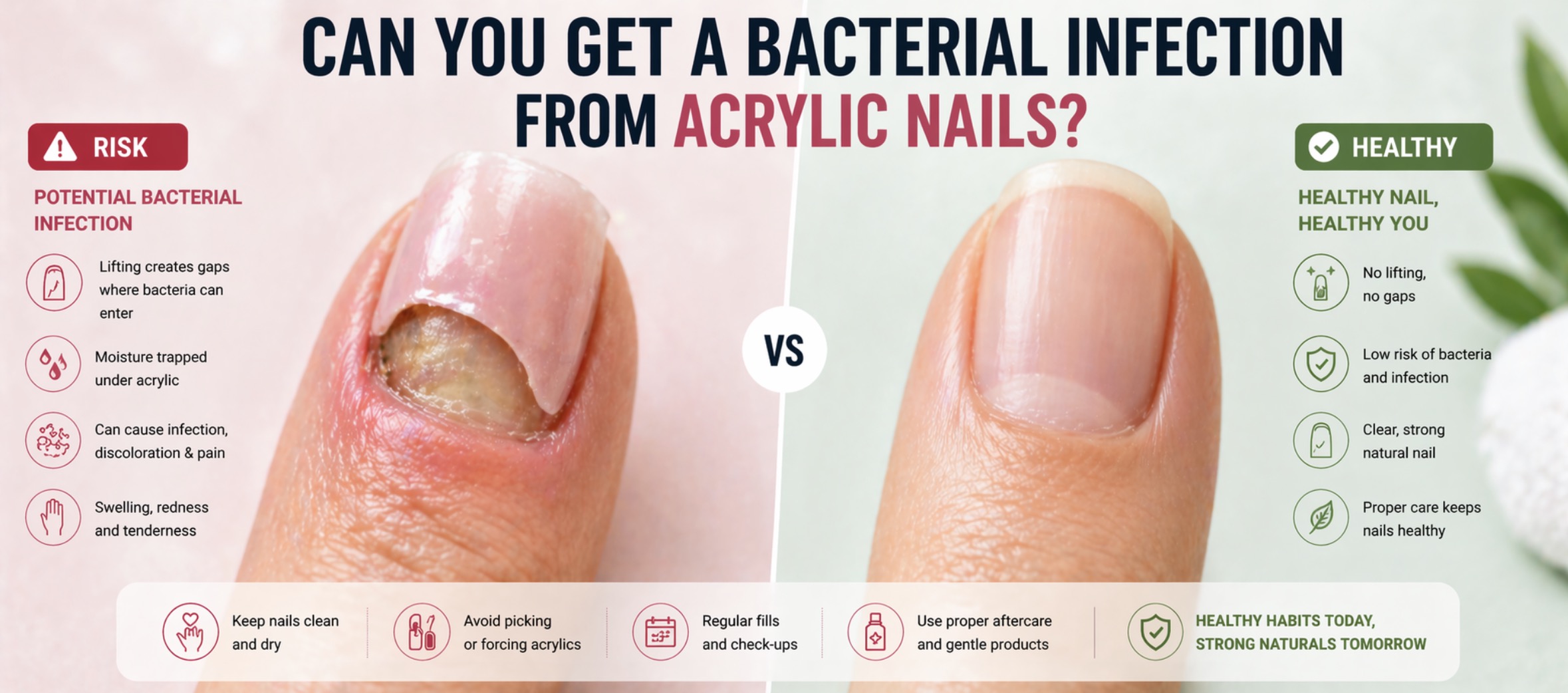
If you have ever looked at a sore, swollen, greenish, or just plain suspicious nail under acrylics and thought, “Wait… can acrylic nails actually cause a bacterial infection?” the answer is: yes, they can absolutely raise the risk. And honestly, that is something more people should talk about.
Acrylic nails themselves are not automatically dirty or dangerous just because they exist. Plenty of people wear them with zero major issues. But when acrylics start lifting, trap moisture, cover up damage, or get applied over already stressed nails, they can create the exact kind of little hidden environment that bacteria love. Which is very unfortunate, because cute nails should not come with a bonus mystery science experiment underneath.
If you have been searching for can you get a bacterial infection from acrylic nails, this guide is here to break it all down in a simple, helpful, not-too-scary way. We’re going to talk about how bacterial infections can happen with acrylics, what signs to watch for, how this differs from fungus, what to do if you think something is wrong, when to get medical help, and how to lower the risk without giving up pretty nails forever.
Because glossy acrylics are fun. Green spots, soreness, and angry nail beds? Not exactly the beauty vibe.
Cute little basics for cleaner acrylic aftercare
If you want a cleaner acrylic routine and gentler removal when something looks off, these are the kinds of basics worth looking at:
- Acrylic nail remover kits for gentler take-off when a nail needs to be checked
- Soak-off nail clips to make removal feel less messy and less chaotic
- Nail cleaning brushes for gentle nail hygiene and cleaner natural nail care
- Cuticle oil for aftercare once the nail is calm and ready for recovery support
- Nail care kits for basic at-home maintenance between sets
Can Acrylic Nails Really Lead to a Bacterial Infection?
Yes, they can. Acrylic nails do not create bacteria out of thin air, but they can absolutely create the kind of environment where bacteria have an easier time causing trouble.
The biggest issue is usually lifting. Once an acrylic starts lifting away from the natural nail, even a tiny bit, moisture, soap, debris, oil, and bacteria can get trapped underneath. That small hidden space becomes hard to clean, hard to dry, and very easy to ignore because the acrylic is still covering everything up from the top.
That is exactly why bacterial problems can show up under acrylics, especially when the set is old, damaged, loose, or left on too long.

Fungi-Nail Anti-Fungal Liquid Solution, 1 Fl Oz | Kills Toe Fungus with Tolnaftate & Clinically Proven to Cure and Prevent Fungal Infections
AIJIMEI Acrylic Liquid Monomer 120ml for Acrylic Powder Liquid 4 Fl.oz Acrylic Nail System Acrylic Nail Tools with Acrylic Brush and Dappen Dish

Mia Secret 8 oz / 240ml ADVANCED EMA LIQUID MONOMER - PROFESSIONAL ACRYLIC NAIL LIQUID FOR ACRYLIC POWDER

Young Nails Extreme Low Odor Nail Liquid Monomer for Acrylic Nail Powder - Professional Liquid Monomer, Acrylic Nails at Home, Extreme Low Odor, MMA Free, Non-Yellowing, 6 Fl Oz
How Bacterial Infections Happen Under Acrylic Nails
There are a few main ways this starts.
Lifting Creates a Hidden Gap
This is the biggest one. Once the acrylic separates from the natural nail, even slightly, the seal is broken. Water gets in. Moisture stays there. Bacteria get a cozy little invitation.
Moisture Gets Trapped Underneath
Hand washing, showering, cleaning, sweat, and daily life can all introduce moisture. If the acrylic is not fully sealed anymore, that dampness can stick around under the enhancement.
The Nail or Skin Was Already Damaged
Over-filing, rough prep, aggressive removal, cuticle trauma, or picking can all leave the nail and surrounding skin more vulnerable.
Unsanitary Tools or Salon Practices
If the tools, files, brushes, or work surface were not handled cleanly, that can raise the risk too.
Covering Up a Problem Instead of Fixing It
If a nail already looks strange and someone just fills over it, glues it down, or applies fresh acrylic over a suspicious area, that can make a bad situation much easier to hide and much harder to solve.
What Kind of Bacterial Infection Can Happen?
One of the most commonly talked-about bacterial problems under acrylics is what people often call green nail syndrome. That greenish discoloration is usually linked to bacteria, especially when moisture has been trapped under a lifted enhancement.
Other bacterial infections can affect the skin around the nail too, especially if the cuticle or nail fold was damaged. In that case, the skin may become red, swollen, sore, and infected around the edge of the nail.
So yes, bacterial issues can happen both:
- under the nail plate or enhancement
- around the nail fold and cuticle area
What a Bacterial Infection Under Acrylics Might Look Like
Symptoms can vary depending on where the infection is and how severe it is, but common signs include:
- green, green-black, or dark olive discoloration
- yellowish or odd patches under the acrylic
- lifting or separation of the natural nail
- bad smell or trapped debris
- soreness or tenderness
- redness or swelling around the nail
- pain when pressing the nail
- warmth around the nail fold
Sometimes the nail itself is not very painful, but the discoloration is obvious. Other times the area feels sore, irritated, or clearly infected.
Green Nail Syndrome: The Bacterial Problem People Mistake for Fungus
If the color under your acrylic is green, that often points more toward a bacterial issue than classic nail fungus. A lot of people use the word “fungus” for basically any gross-looking nail situation, but green staining under acrylics is very often linked to trapped moisture and bacteria instead.
That green stain can range from pale green to dark green or green-black. It usually shows up in the exact area where moisture has been sitting under lifted product.
Bacterial Infection vs Fungus: What’s the Difference?
This is one of the biggest points of confusion, so let’s make it simple.
Bacterial issues under acrylics often look like:
- green or dark green staining
- a problem under a lifted area
- more sudden weirdness after moisture gets trapped
Fungal nail problems usually look more like:
- yellow, white, or brown discoloration
- thickening of the nail
- crumbly texture
- slower changes over time
That does not mean you should try to diagnose everything at home based only on color, but green under acrylics is a huge clue that bacteria may be involved.
Can the Skin Around the Acrylic Nail Get Infected Too?
Yes, definitely. Bacterial infections do not only happen under the acrylic. If the cuticle area or sidewalls get nicked, irritated, or exposed to contaminated tools or trapped moisture, the skin around the nail can get infected too.
That may look more like:
- redness around the nail fold
- swelling
- pain or tenderness
- throbbing discomfort
- sometimes pus
If the surrounding skin is inflamed, that is a different kind of warning sign from the classic green stain underneath the acrylic, but it still matters just as much.
Early Signs You Should Not Ignore
Acrylic problems are much easier to deal with when you do not ignore the weird early clues. Watch for:
- lifting near the cuticle or sidewalls
- trapped bubbles or gaps under the acrylic
- a strange smell
- green or yellow staining
- one nail feeling more sore than the others
- redness or swelling around one finger
If something is looking “a little off,” that is not the moment to just cover it with a fill and hope your nail magically sorts itself out under there.
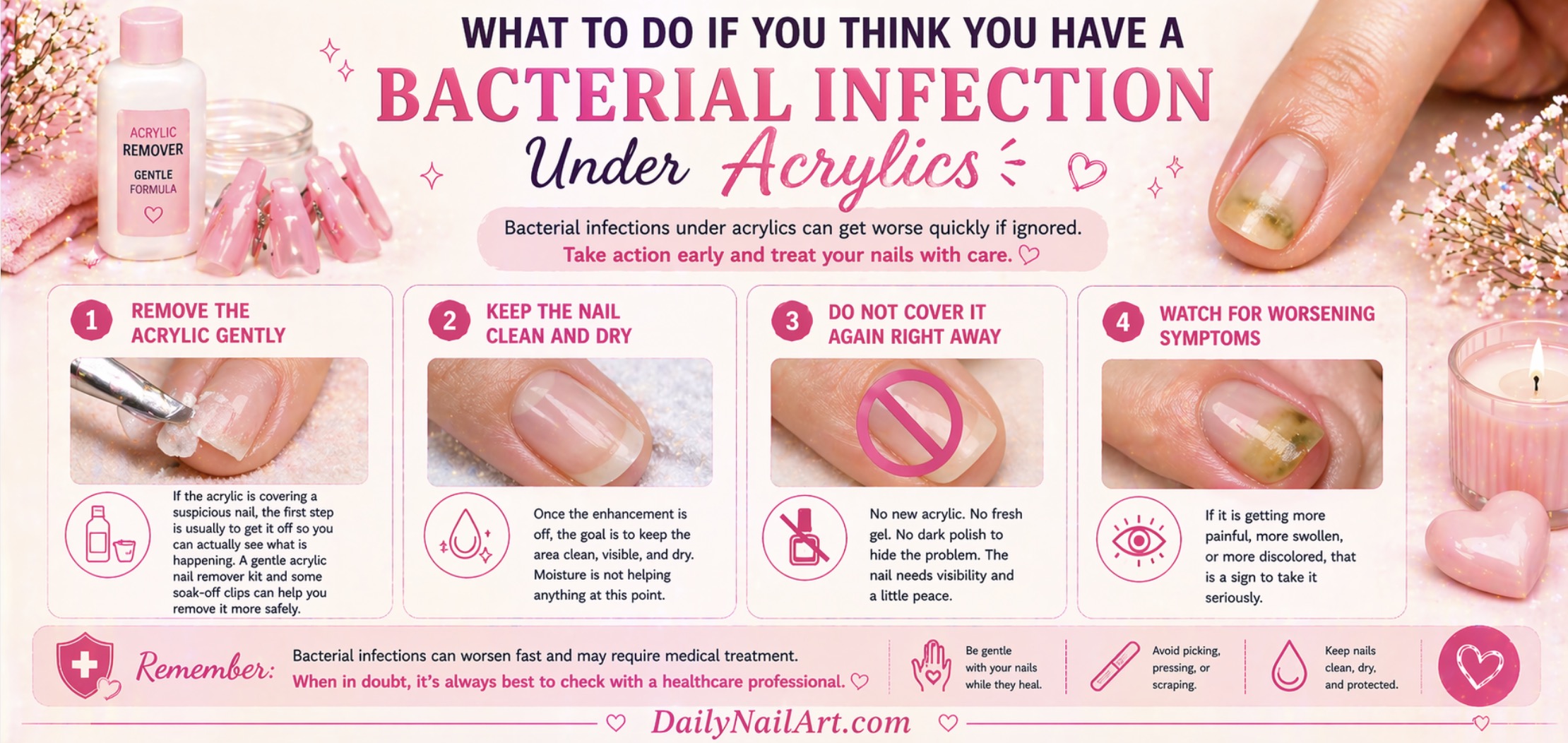
What to Do If You Think You Have a Bacterial Infection Under Acrylics
Remove the Acrylic Gently
If the acrylic is covering a suspicious nail, the first step is usually to get it off so you can actually see what is happening. A gentle acrylic nail remover kit and some soak-off clips can help you remove it more safely.
Keep the Nail Clean and Dry
Once the enhancement is off, the goal is to keep the area clean, visible, and dry. Moisture is not helping anything at this point.
Do Not Cover It Again Right Away
No new acrylic. No fresh gel. No dark polish to hide the problem. The nail needs visibility and a little peace.
Watch for Worsening Symptoms
If it is getting more painful, more swollen, or more discolored, that is a sign to take it seriously.
When to See a Doctor
You should think about getting medical advice if:
- the nail is painful
- the surrounding skin is red and swollen
- you notice pus
- the green or dark discoloration is spreading
- the nail is lifting a lot
- you are not sure whether it is bacterial, fungal, or something else
Honestly, if it has moved beyond “hmm, weird” and into “okay, this feels medically suspicious,” that is your sign.
Can You Treat It at Home?
Mild situations sometimes improve once the acrylic is removed and the nail is kept clean and dry. But the safest move is usually not trying to play salon-doctor-girlboss all by yourself if the nail looks truly infected.
What you can do at home is:
- remove the enhancement carefully
- keep the nail dry
- avoid new product
- monitor the area closely
A gentle nail cleaning brush and a simple nail care kit can help with everyday maintenance once the nail is uncovered and you are being very gentle.
How to Prevent Bacterial Infections With Acrylic Nails
This is where the real nail-life wisdom lives: do not ignore lifting.
Deal With Lifted Acrylics Early
If a nail lifts, fix it or remove it. Do not wear it for another week while moisture keeps slipping underneath.
Do Not Glue Down a Loose Acrylic
This is one of those shortcuts that can make everything worse. If moisture is already trapped there, gluing it down just seals in the problem.
Choose Clean Tools and Salons
A clean salon and cleaner tool handling matter way more than people think.
Be Gentle With Prep and Removal
Over-filing and rough removal weaken the nail and make future problems easier.
Keep Hands Dry After Washing
Especially if you notice even a tiny bit of lifting, dry your nails well and do not ignore repeat moisture exposure.
Give Suspicious Nails a Break
If one nail keeps having issues, do not keep forcing it through endless acrylic cycles without checking what is really going on.
How to Help Nails Recover After an Acrylic-Related Infection Scare
Once the acrylic is off and the nail is no longer actively dealing with moisture or obvious infection, recovery is all about being boring and gentle for a bit. Which is not glamorous, but it is effective.
Some people like using:
- a nourishing cuticle oil
- a simple nail strengthener treatment once the nail is ready for cosmetic support again
- a good hand cream for the surrounding skin
The real goal is not instantly making the nail pretty again. It is getting it healthy again first.
Frequently Asked Questions
Can acrylic nails cause a bacterial infection?
Yes. Acrylic nails can increase the risk of bacterial infection, especially when they start lifting and trap moisture or debris underneath.
What does a bacterial infection under acrylic nails look like?
It may look like green or dark discoloration under the nail, a bad smell, tenderness, lifting, or redness and swelling around the nail.
Is green under acrylic nails a bacterial infection?
Often, yes. Green staining under acrylics is commonly linked to bacterial growth, especially when moisture has been trapped under a lifted area.
Should I put a new acrylic over a suspicious nail?
No. It is best to remove the enhancement, keep the nail visible, and avoid covering up discoloration or soreness with more product.
How can I prevent bacterial infections with acrylic nails?
Deal with lifting early, keep nails dry, avoid gluing loose acrylics back down, choose clean salons, and be gentle with both prep and removal.
Final Thoughts
Yes, you absolutely can get a bacterial infection from acrylic nails, especially when lifting, trapped moisture, poor hygiene, or damaged nails are part of the story. The acrylic itself is not the villain. The hidden damp little environment underneath a loose acrylic is usually the real troublemaker.
If something looks off under your enhancement, do not ignore it, glue it down, or cover it with a fresh set and hope for the best. The sooner you uncover the nail and deal with the issue properly, the better.
Because honestly, there is something very satisfying about recognizing a nail problem early, breaking up with the bad acrylic before it gets worse, and choosing healthy nails over a cute cover-up that was never going to fool your nail bed anyway.
Nail Allergies - Essentials: A quick fact-based guide. Spot it, stop it, handle it - read the whole thing before your next client.

Beetles 15ml HEMA-Free Nail Glue Gel, TPO Free UV Nail Glue
Love easy Hema Free Builder Gel - Hypoallergenic Strong Base Coat | Long-Lasting Adhesion (30+ Days) for Professional Nails Gift for Women
