
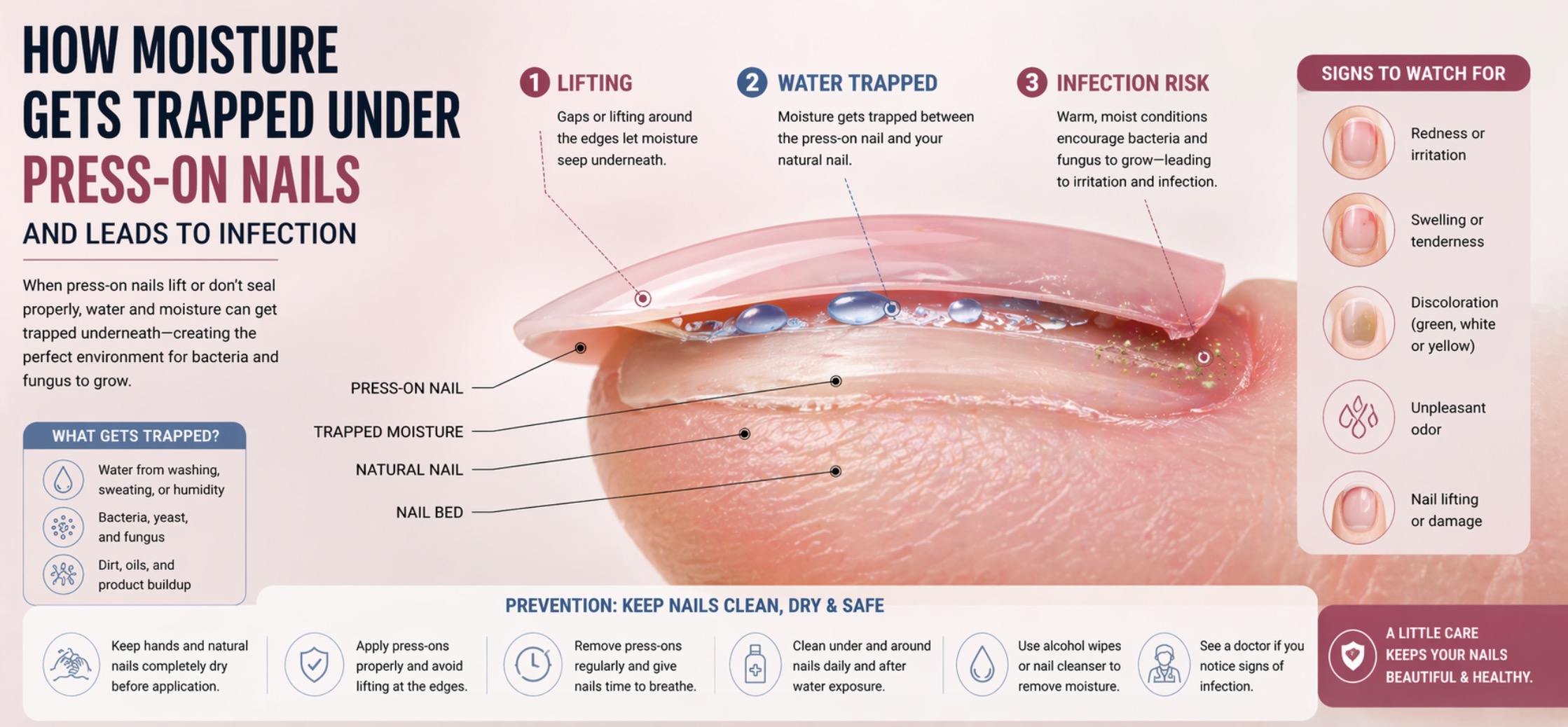
Press-on nails can be such a cute little lifesaver. They are fast, pretty, beginner-friendly, and honestly kind of magical when you want salon-looking nails without the full salon-level commitment. But if you have ever taken off a press-on and noticed weird discoloration, lifting, smell, soreness, or a suspicious little patch underneath, you already know there is one not-so-cute downside people do not talk about enough: moisture getting trapped under press-on nails.
And yes, trapped moisture can absolutely lead to nail problems. Not every press-on mishap turns into a full infection, obviously, but when water, soap, sweat, or other moisture gets stuck between the press-on and the natural nail, it can create a tiny damp environment where bacteria or other issues have a much easier time showing up. Very pretty manicure on top. Tiny swamp underneath. Not ideal.
If you have been searching for how moisture gets trapped under press-on nails and leads to infection, this guide is here to explain what is actually going on in a simple, not-too-scary way. We’re going to talk about how moisture gets trapped, what kinds of problems it can cause, what signs to watch for, how to tell if something is wrong, what to do if you think moisture has gotten under a press-on, and how to prevent it in the future without giving up cute nails entirely.
Because press-ons should be giving glossy little main-character energy, not mystery moisture and nail drama.
Cute little essentials for a cleaner press-on routine
If you want your press-on routine to feel cleaner, gentler, and less likely to turn into a moisture mess, these are the kinds of basics worth looking at:
- Short press-on nails for a lighter, easier-to-manage everyday option
- Press-on nail adhesive tabs if you want a lower-commitment option that is easier to remove and check
- Nail cleaning brushes for gentle nail hygiene during wear and after removal
- Cuticle oil for gentle aftercare once the natural nail is clean and calm again
- Nail strengthener treatments if your natural nails need a little recovery after removal
Why Moisture Under Press-On Nails Is Such a Problem
Press-ons are meant to sit flush against the natural nail. When they fit well and are applied neatly, there is less chance for anything to sneak underneath. But once there is a small gap, a lifted edge, or an imperfect seal, moisture can get trapped between the press-on and your natural nail.
That trapped dampness is a problem because the natural nail cannot just air out properly under a sealed press-on. Instead, the moisture can sit there and create the kind of little hidden environment where bacteria, debris, and irritation have a much easier time causing trouble.
Basically, it is not just the water itself. It is the fact that the water gets in and then does not dry out well.

SILKA Max Strength Antifungal Liquid for Toenail Health with Brush Applicator, Results in 1 Week, Nail Fungus Treatment for Damaged Toenails, Athlete's Foot Treatment, Tolnaftate 1% 0.45 Fl Oz
Kerasal Fungal Nail Renewal, Restorative Repair for Damaged Nails, .33 oz | Restorative nail repair with Urea helps improve the appearance of damaged, discolored nails with quick visible results.

Nail-Aid - 5-in-1 Damaged Nails Multi-Repair for Fingernails or Toenails

Toenail Fungus Treatment : Extra Strength 25% Undecylenic Acid Toe and Fingernail Fungus Removal - Fast Acting Fungal Nail Revitalizer with Tea Tree Oil (0.5 Fl Oz (Pack of 2))
How Moisture Gets Trapped Under Press-On Nails
This can happen in a few very normal, very common ways.
The Press-On Starts Lifting
This is the biggest one. Once the edge of a press-on lifts even a little bit, water can sneak underneath during hand washing, showering, dishwashing, cleaning, or just normal life. That tiny opening is all it takes.
The Nail Was Not Fitted Properly
If the press-on is too big, too curved, too flat, or just not sitting flush with the natural nail, it may leave tiny little spaces where moisture can creep in.
Too Much Glue or Uneven Adhesive
Sometimes too much glue can actually make things messier, not better. Uneven adhesive placement or overflow can make the press-on sit in a weird way instead of sealing cleanly.
Adhesive Tabs Start Breaking Down
Adhesive tabs can be super cute and convenient, but over time they can loosen, especially with water exposure. That can make moisture problems more likely if you keep wearing the set after the fit starts slipping.
You Keep Wearing the Set Too Long
Press-ons are not meant to survive forever. Once they start loosening, the risk of trapped moisture goes way up. Sometimes the problem is not the initial application at all. It is just wearing them way past their safe little window.
What Can Happen When Moisture Gets Trapped?
Not every trapped-moisture situation becomes a full infection, but it can definitely create problems. Common issues include:
- bacterial growth under the nail
- green staining, often called green nail syndrome
- nail lifting or separation
- softening or weakening of the natural nail
- irritation of the surrounding skin
- odor or buildup
Sometimes the nail just looks a little weird afterward. Other times you get actual discoloration, tenderness, or obvious signs that something was definitely not right under there.
Can Press-On Nails Cause Infection?
Yes, they can increase the risk of infection if moisture gets trapped and stays there. The press-on itself is not evil, obviously. The issue is the hidden damp environment created when the seal breaks and water gets stuck underneath.
That can make it easier for bacteria to grow. It can also irritate the natural nail and make it harder to notice a problem right away, because the whole thing is covered.
So no, press-ons do not magically cause infection on their own. But trapped moisture under a loose press-on absolutely can create a situation where infection becomes more likely.
What Moisture Damage or Infection Might Look Like
If moisture has been trapped under a press-on, you might notice:
- a press-on that feels loose or weirdly lifted
- water-like movement or soft spots under the nail
- an odd smell when you remove it
- green, yellow, or dark discoloration
- a nail that looks dull or softened
- tenderness or soreness
- redness around the skin if the irritation spread
One of the biggest warning signs is when the press-on no longer feels securely attached but you keep wearing it anyway. That is usually when the moisture risk starts climbing.
Green Nails After Press-Ons: What It Usually Means
If you remove a press-on and see a green stain, that often points more toward bacterial growth than classic nail fungus. A lot of people instantly say “fungus,” but green nails are often linked to trapped moisture and bacteria instead.
That green staining can range from pale green to dark olive or even green-black. Not very cute, but very helpful as a sign that the nail needs a break and some attention.
How to Tell if Moisture Is Trapped Under a Press-On
Sometimes you can literally feel that something is off before you even see it. Common clues include:
- the nail sounds or feels hollow
- the press-on moves slightly when pressed
- you feel a subtle squishiness or looseness
- the edge lifts after showering or hand washing
- the press-on catches on your hair or clothing
If a press-on feels suspiciously loose, do not keep pretending it is fine because it still looks cute from far away. That is how tiny problems turn into annoying ones.
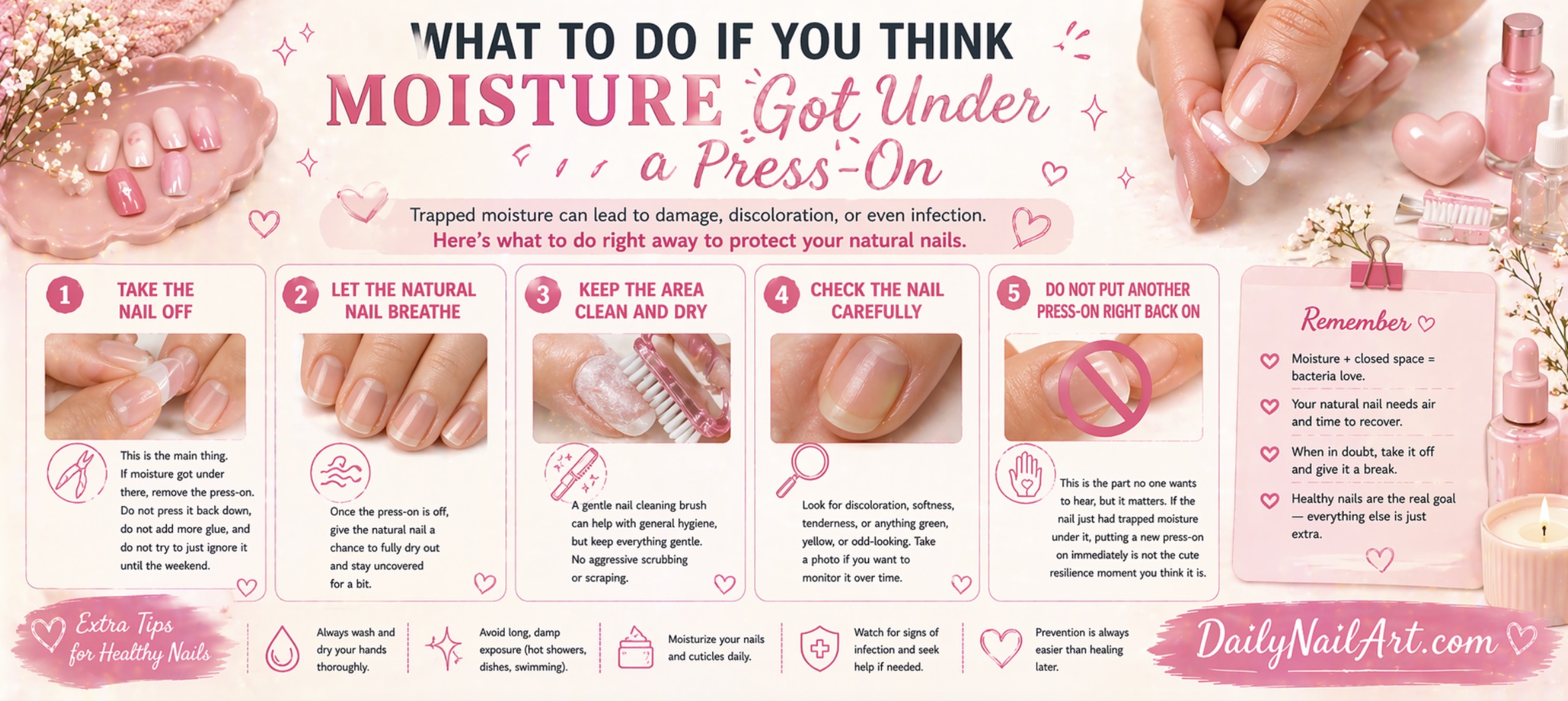
What to Do If You Think Moisture Got Under a Press-On
Take the Nail Off
This is the main thing. If moisture got under there, remove the press-on. Do not press it back down, do not add more glue, and do not try to just ignore it until the weekend.
Let the Natural Nail Breathe
Once the press-on is off, give the natural nail a chance to fully dry out and stay uncovered for a bit.
Keep the Area Clean and Dry
A gentle nail cleaning brush can help with general hygiene, but keep everything gentle. No aggressive scrubbing or scraping.
Check the Nail Carefully
Look for discoloration, softness, tenderness, or anything green, yellow, or odd-looking. Take a photo if you want to monitor it over time.
Do Not Put Another Press-On Right Back On
This is the part no one wants to hear, but it matters. If the nail just had trapped moisture under it, putting a new press-on on immediately is not the cute resilience moment you think it is.
When Moisture Turns Into a Bigger Problem
You should be more concerned if you notice:
- green or black discoloration
- pain or tenderness
- odor
- redness or swelling around the nail
- the natural nail lifting or separating
- the problem getting worse over time
If the nail looks very wrong or starts feeling painful, this is not the time to play nail detective for three weeks straight. It may be worth getting medical advice.
How Long Should You Wait Before Wearing Press-Ons Again?
This depends on what happened underneath. If the nail just got a little damp but looks totally fine after removal and drying, you may not need a super long break. But if there is discoloration, softness, lifting, irritation, or any sign of trouble, it is smarter to wait until the nail looks normal again.
If the natural nail seems stressed, a gentle nail strengthener treatment and a little cuticle care can help support recovery while you take a break from press-ons.
How to Prevent Moisture From Getting Trapped in the First Place
This is where the real little press-on wisdom happens.
Pick the Right Size Press-On
If the nail is too big or does not sit flush, you are already asking for trouble. The fit should feel neat and close to the natural nail, not awkward and lifted from day one.
Apply to Clean, Dry Nails
Press-ons go on best when the nail surface is totally clean and dry. Any leftover moisture, oil, or product can affect the seal.
Do Not Overdo the Glue
More glue is not always more secure. A neat, even application is usually much better than a giant blob situation.
Take Off Loose Nails Promptly
If a press-on starts lifting, do not keep wearing it just because it still mostly looks fine.
Be Careful With Water Exposure
You do not need to fear hand washing, obviously, but long soaks, frequent soaking, and constantly wet hands can shorten wear time and increase lifting.
Use Lower-Commitment Options When Needed
Sometimes shorter wear is smarter. Adhesive tabs can be great when you want something easier to remove and check sooner.
What Press-On Choices May Feel Safer or Easier
If you are worried about moisture problems, a few choices can make the routine feel easier to manage.
- short press-on nails are usually easier to wear and monitor
- adhesive tabs are easier to remove and check sooner
- lighter nails can feel less stressful on the natural nail
- shorter wear cycles are often smarter than stretching one set way too long
Can Moisture Under Press-Ons Cause Fungus?
It can contribute to problems under the nail, but green staining after trapped moisture is often more related to bacteria than classic nail fungus. That said, if the nail becomes damaged, chronically damp, or unhealthy, it can create the kind of environment where other nail issues become easier too.
Basically, trapped moisture under press-ons is not something to ignore just because you cannot see it from the top.
Frequently Asked Questions
Can water get trapped under press-on nails?
Yes. If the press-on lifts even slightly or the fit is not secure, water and moisture can absolutely get trapped underneath.
Can trapped moisture under press-ons cause infection?
Yes, it can increase the risk of infection or bacterial problems because the moisture creates a damp hidden environment under the nail.
What does trapped moisture under a press-on feel like?
It may feel loose, hollow, soft, or slightly squishy, and the press-on may lift or shift more than it should.
Should I glue a lifted press-on back down?
No. If a press-on has lifted enough for moisture to get under it, it is usually best to remove it and check the natural nail.
How do I prevent moisture problems with press-ons?
Use the right size, apply to clean dry nails, avoid wearing loose nails too long, and remove suspicious or lifted nails early instead of trying to stretch the wear time.
Final Thoughts
Moisture gets trapped under press-on nails when the seal stops being secure, and once that happens, the natural nail can end up sitting in a damp hidden environment that makes bacterial growth and irritation way more likely. It is not always dramatic right away, which is exactly why people miss it.
If a press-on feels loose, hollow, or suspicious, the best thing you can do is remove it, check the natural nail, and let that area dry out instead of pretending it will magically fix itself.
Because honestly, there is something very satisfying about learning the difference between “this set is still cute” and “this set needs to come off immediately” before your nails end up dealing with a much bigger problem underneath.
Nail Allergies - Essentials: A quick fact-based guide. Spot it, stop it, handle it - read the whole thing before your next client.

Beetles 15ml HEMA-Free Nail Glue Gel, TPO Free UV Nail Glue
Love easy Hema Free Builder Gel - Hypoallergenic Strong Base Coat | Long-Lasting Adhesion (30+ Days) for Professional Nails Gift for Women
