
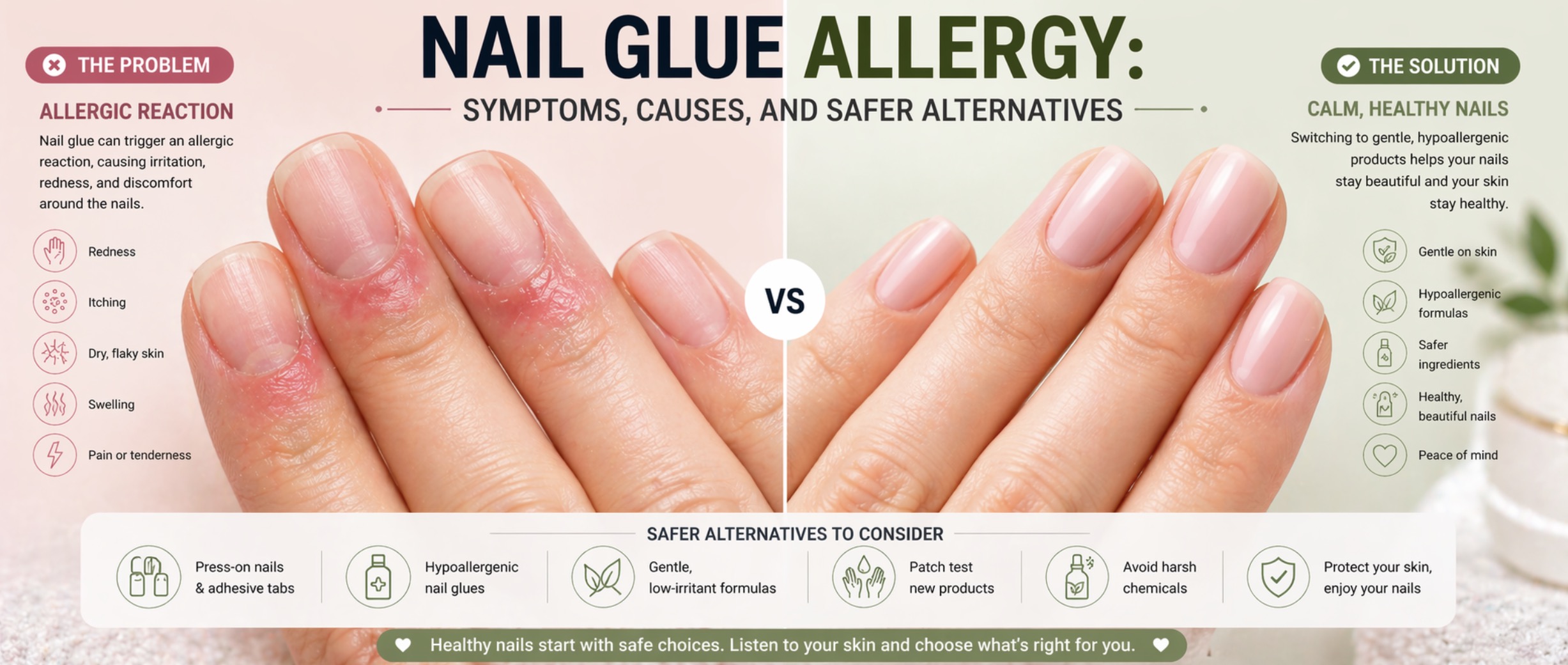
If your fingers start itching, burning, swelling, or getting weirdly rashy after using nail glue, you are absolutely not imagining it. A nail glue allergy is a very real thing, and unfortunately it can turn a cute press-on moment or quick nail fix into a tiny skin drama you did not ask for.
Sometimes the reaction is mild at first. Maybe your cuticles feel itchy. Maybe the skin around one nail gets red and puffy. Maybe your fingertips feel sore and irritated after a set of press-ons. And then suddenly you are wondering if you are allergic to the glue, the nails, the gel, or literally the concept of beauty itself. Very fair question.
If you have been searching for nail glue allergy: symptoms, causes, and safer alternatives, this guide is here to break it all down in a simple, helpful, not-too-scary way. We’re going to talk about what a nail glue allergy actually is, what symptoms to watch for, why it happens, how to tell it apart from irritation, what to do if it happens to you, and what alternatives might feel gentler if your skin is clearly not in the mood for glue anymore.
Because pretty nails are fun. Angry fingers? Deeply unnecessary.
Cute little basics for gentler press-on and nail care routines
If you are trying to avoid harsh glue drama or just want a softer nail routine, these are the kinds of basics worth looking at first:
- Press-on nail adhesive tabs if you want a gentler glue-free option
- Short press-on nails for lower-maintenance wear with less pressure on the natural nail
- Regular nail polish sets if you want to take a break from glue and still have cute nails
- Cuticle oil for gentle aftercare once the irritated skin has calmed down
- Hand cream for dry cracked skin to support the skin barrier around the nails
What Is a Nail Glue Allergy?
A nail glue allergy is usually a type of allergic contact dermatitis. That means your immune system reacts to one or more ingredients in the glue after the product touches your skin. Instead of just sitting there and minding its business, your skin basically says, “Absolutely not, babe,” and responds with redness, itching, swelling, rash, or irritation.
Nail glues often contain fast-bonding adhesive ingredients, and for some people, repeated exposure can lead to sensitization. That means you may use a glue several times with no obvious problem and then one day your skin suddenly decides it is over it.
So yes, it can feel like it came out of nowhere. That part is actually pretty common.
Nail Allergies - Essentials: A quick fact-based guide. Spot it, stop it, handle it - read the whole thing before your next client.

Beetles 15ml HEMA-Free Nail Glue Gel, TPO Free UV Nail Glue
Love easy Hema Free Builder Gel - Hypoallergenic Strong Base Coat | Long-Lasting Adhesion (30+ Days) for Professional Nails Gift for Women

Dr. G's Clear Nail Antifungal Treatment, 0.5 Fluid Ounce
What Causes a Nail Glue Allergy?
The short version is: the glue ingredients themselves can irritate the skin or trigger an allergy, especially when the product touches the skin instead of staying neatly between the nail and the press-on.
Some of the most common reasons reactions happen include:
- the glue touches the cuticle or surrounding skin
- you use glue often and become sensitized over time
- the skin barrier is already dry, cracked, or irritated
- you use too much glue and it spreads beyond the nail plate
- you wear glued nails while the surrounding skin is damaged
- you react not only to the glue, but also to other nail chemicals nearby
Basically, once the glue gets onto the skin or the skin is already vulnerable, the chances of drama go way up.
Nail Glue Allergy Symptoms to Watch For
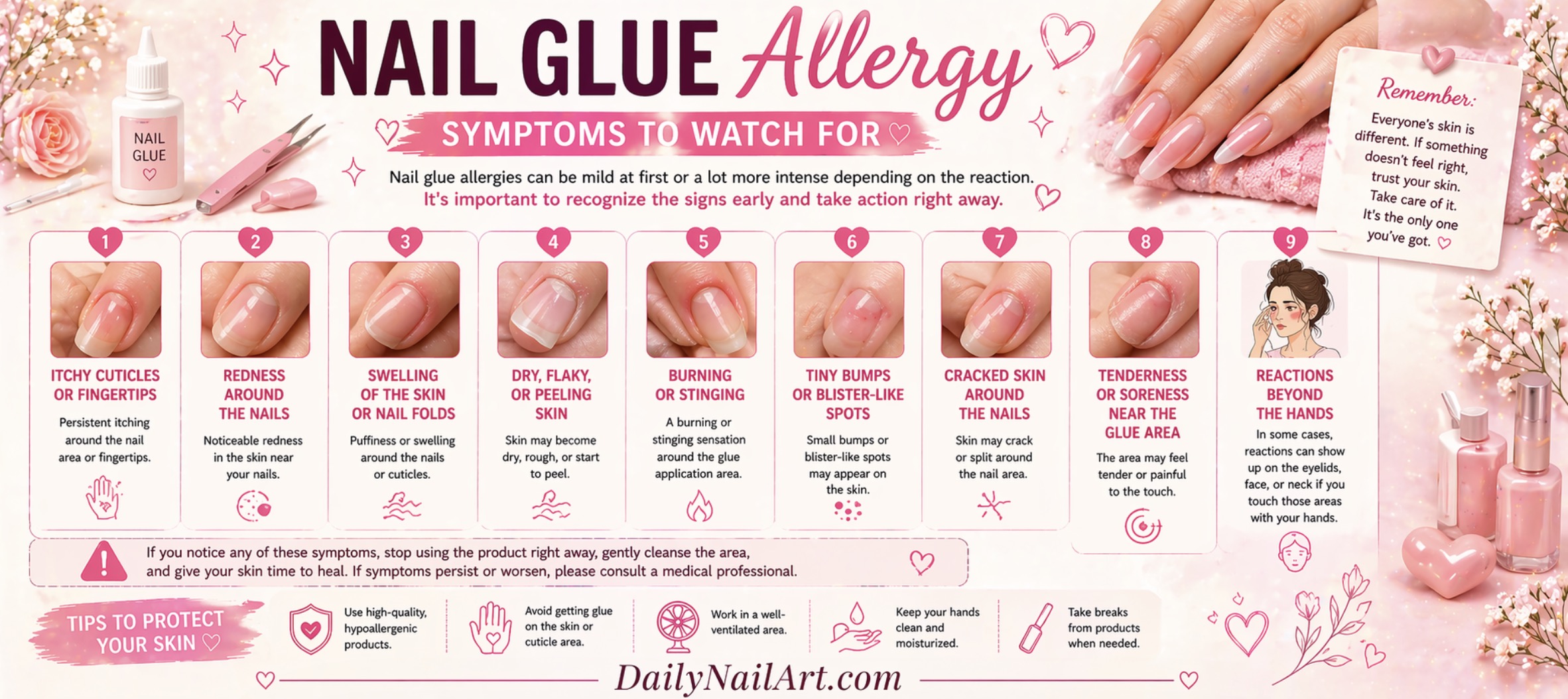
Nail glue allergy symptoms can be mild at first or a lot more intense depending on the reaction. Common signs include:
- itchy cuticles or fingertips
- redness around the nails
- swelling of the skin or nail folds
- dry, flaky, or peeling skin
- burning or stinging
- tiny bumps or blister-like spots
- cracked skin around the nails
- tenderness or soreness near the glue area
In some cases, the reaction can even show up on the eyelids, face, or neck if you touch those areas with your hands. Which is honestly rude, but yes, that can happen.
What a Nail Glue Reaction Can Look Like in Real Life
Sometimes it starts tiny and easy to dismiss, like:
- a little itchiness after press-ons
- slight redness near one or two cuticles
- a fingertip that feels more sensitive than normal
And sometimes it escalates into:
- puffy swollen skin
- intense itching
- raw, peeling fingertips
- small blisters
- cracking around the nail folds
If the reaction keeps happening every time you use glue, that is a very big clue that your skin is not loving the situation.
Nail Glue Allergy vs Simple Irritation
This is one of the biggest questions people have, because not every uncomfortable reaction means you are truly allergic.
Simple irritation might look like:
- mild redness where glue touched the skin
- a little stinging that fades quickly
- dryness without much itching
An allergy is more likely if:
- it itches a lot
- the reaction keeps happening again
- the symptoms get worse over time
- you get swelling, rash, bumps, or blistering
- the skin reacts beyond the exact spot where the glue touched
That said, even “just irritation” is not something to ignore if it keeps happening. Repeated irritation is still your skin asking for a better routine.
Why Press-Ons Can Make It Worse Sometimes
Press-ons are adorable. No argument there. But when glue is involved, a few extra things can make reactions more likely:
- the glue spreads out under pressure when you press the nail down
- extra glue leaks into the cuticle area
- trapped product stays against the skin longer
- removal can damage the surrounding skin even more
If the press-on is too large or the glue application is messy, the skin around the nail gets way more exposure than it should.
What to Do If You Think You’re Allergic to Nail Glue
Remove the Press-Ons Carefully
If the skin is clearly reacting, it is usually best to take the nails off instead of leaving the glue on longer. Do it gently though. Do not rip them off in a dramatic little rage spiral. That just makes the skin and natural nail more upset.
Stop Using the Glue
If a specific glue seems to be causing the problem, stop using it. And honestly, if the reaction seems obvious, do not keep “testing” it on yourself over and over to confirm it. Your fingers have already shared their opinion.
Wash Your Hands Gently
Use a gentle cleanser and lukewarm water to remove residue. Skip harsh scrubbing.
Baby the Skin
Once the skin is no longer actively exposed to the glue, a rich hand cream can help support the skin barrier while things calm down.
When You Should See a Doctor
You should seriously think about getting medical advice if:
- the swelling is significant
- the skin is blistered or cracking badly
- the reaction spreads beyond the fingers
- your hands are very painful
- you are not sure if it is allergy, infection, or something else
- the reaction keeps coming back
A dermatologist may recommend patch testing if they think you have developed a contact allergy to the glue or another nail product ingredient.
Can Nail Glue Cause a Reaction on the Eyelids or Face?
Yes, surprisingly, it can. If you touch your face after handling glue or after the skin on your fingers is reacting, you can sometimes get symptoms on the eyelids, face, or neck too. This is one of those weird little allergy clues that really catches people off guard.
So if your eyelids are suddenly itchy and flaky and you also just did a fresh set of glued press-ons, that connection is worth thinking about.
Safer Alternatives to Nail Glue
If your skin clearly hates glue, that does not mean your nail life is over. It just means you may need a different kind of cute.
Adhesive Tabs
A lot of people like press-on nail adhesive tabs because they can feel gentler and less messy than liquid glue. They may not always last as long, but they are often a much better choice for sensitive people.
Regular Nail Polish
If you want a break from all the adhesive drama, a pretty regular nail polish set can still give you a cute manicure without glue at all.
Short Press-Ons With Tabs
If you still want press-ons, short press-on nails with tabs can feel a little easier and lower-pressure than long heavy nails with lots of glue.
Simple Natural Nail Looks
Honestly, sometimes the most healing thing is just letting your nails be cute and simple for a while while your skin gets its life back together.
How to Lower the Risk in the Future
If you are not reacting right now but want to be more careful, a few habits can help lower your chances of trouble.
Keep the Glue Off the Skin
The glue should stay on the nail, not all over the cuticle line and sidewalls.
Use Less Product
You do not need a giant blob. Too much glue is one of the easiest ways to end up with overflow and skin contact.
Do Not Apply Press-Ons Over Broken Skin
If the cuticle area is irritated, cracked, or freshly picked at, this is not the time to add glue.
Be Gentler With Removal
Ripping nails off damages the nail and surrounding skin, which can make future reactions more likely and more annoying.
Support the Skin Barrier
Healthy skin is generally happier skin. A nourishing cuticle oil and rich hand cream can help the area stay less dry and less prone to irritation overall.
Common Mistakes People Make
Thinking It Is Just Dry Skin Every Time
If the same thing keeps happening after glue use, it is probably not random.
Reusing the Same Glue Anyway
If your fingers clearly hate it, stop giving it chances.
Applying More Glue to Make Nails Last Longer
More glue usually just means more skin exposure and more risk of overflow.
Ignoring Reactions Outside the Nail Area
Eyelid or facial irritation can still be connected to nail product allergies.
Frequently Asked Questions
What are the symptoms of a nail glue allergy?
Common symptoms include itching, redness, swelling, burning, peeling skin, bumps, blistering, and soreness around the nails or fingertips.
Can I suddenly become allergic to nail glue?
Yes. You can use nail glue multiple times before your skin becomes sensitized and starts reacting more obviously.
Are adhesive tabs safer than nail glue?
For many people, yes. Adhesive tabs can feel gentler and involve less messy chemical exposure than liquid glue, though they may not always last as long.
Should I keep wearing press-ons if the glue made my fingers itch?
It is usually best to remove them carefully and stop using the glue for now. Repeated exposure can make the reaction worse.
When should I see a dermatologist for a nail glue reaction?
If the swelling is strong, the rash keeps coming back, the skin is cracked or blistered, or the reaction spreads beyond the fingers, it is a good idea to get professional advice.
Final Thoughts
Nail glue allergy is very real, and it can show up as itching, redness, swelling, burning, or flaky irritated skin around the nails and fingertips. If your hands keep reacting after glue use, do not ignore it just because the nails themselves still look cute.
The sooner you stop the triggering product, let the skin calm down, and switch to gentler alternatives if needed, the better your fingers will probably feel. Adhesive tabs, regular polish, and simpler natural nail routines are all still very valid little beauty paths.
Because honestly, there is something very satisfying about figuring out what your skin actually hates, breaking up with it, and moving on to a nail routine that is cute and peaceful.
Nail Allergies - Essentials: A quick fact-based guide. Spot it, stop it, handle it - read the whole thing before your next client.
Beetles 15ml HEMA-Free Nail Glue Gel, TPO Free UV Nail Glue
Love easy Hema Free Builder Gel - Hypoallergenic Strong Base Coat | Long-Lasting Adhesion (30+ Days) for Professional Nails Gift for Women