
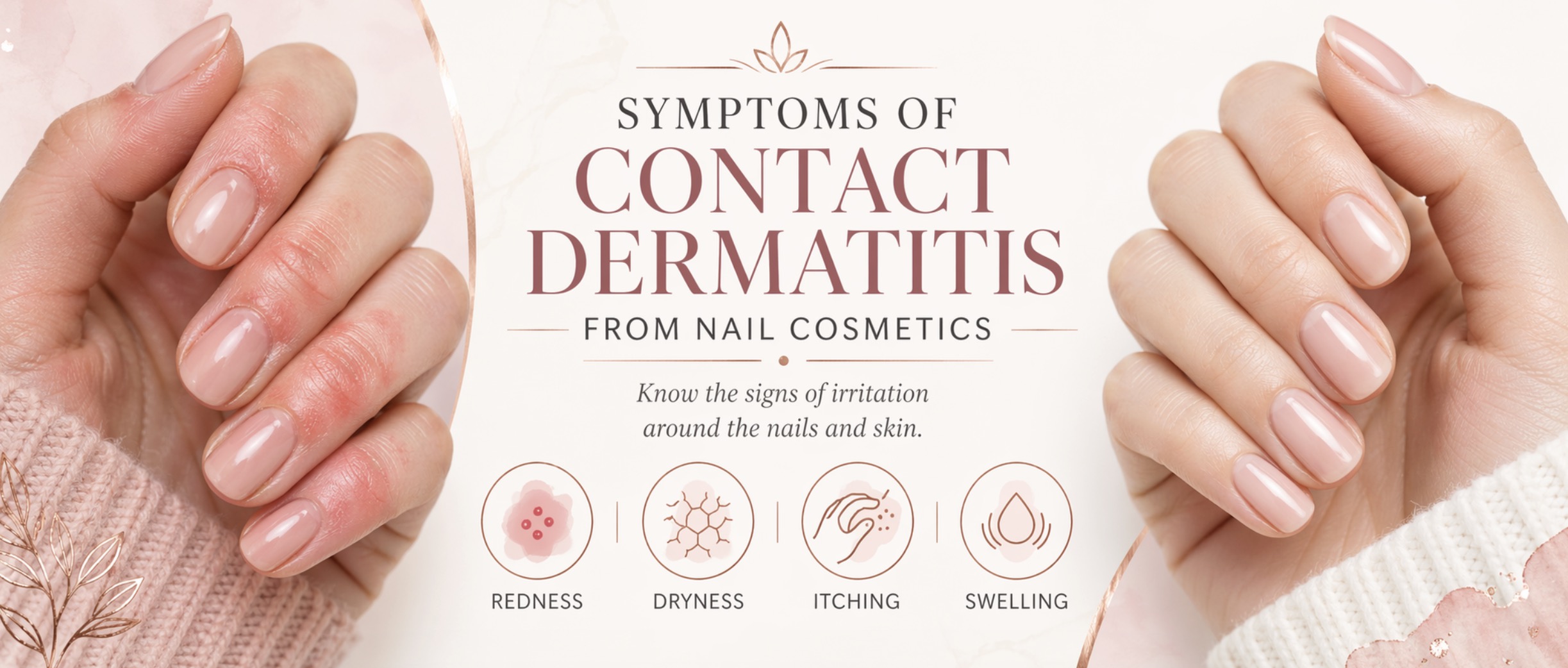
Nail cosmetics can make your hands look polished, glossy, sparkly, and totally put together. But sometimes, the same products that give us dreamy manicures can also make the skin around our nails very unhappy. If your fingertips are itchy, your cuticles look red, your eyelids randomly flare up, or your hands feel irritated after using nail products, you might be dealing with contact dermatitis.
Contact dermatitis from nail cosmetics is basically your skin saying, “Bestie, I do not like this.” It can happen after using gel polish, acrylic products, nail glue, dip powder systems, regular polish, press-ons, removers, primers, cleansers, fragrances, or other manicure products. The tricky part is that symptoms do not always appear only around the nails. Sometimes they show up on your eyelids, face, neck, wrists, or other places you touch after doing your nails.
This guide breaks down the symptoms of contact dermatitis from nail cosmetics, what it can look and feel like, how to tell the difference between irritation and allergy, when to stop using products, and what to do if your cute manicure turns into a not-so-cute skin reaction.
Gentle little essentials for sensitive nail days
If your skin is feeling reactive, these product categories can help you keep your routine cleaner, gentler, and more organized while you figure out what is going on:
- Fragrance-free hand creams for dry, irritated-looking hands
- Cuticle oils for sensitive skin to support dry skin around the nails
- HEMA-free gel polish options for shoppers comparing lower-HEMA formulas
- Nitrile gloves for nail work to reduce direct product contact during messy steps
- Gentle gel removal kits to help avoid peeling and over-scraping
What Is Contact Dermatitis from Nail Cosmetics?
Contact dermatitis is a skin reaction that happens when something touches your skin and causes irritation or an allergic response. With nail cosmetics, that “something” might be gel polish, acrylic liquid, nail glue, regular polish, remover, primer, cleanser, fragrance, resin, or another ingredient in your manicure routine.
There are two main types: irritant contact dermatitis and allergic contact dermatitis. They can look similar, but they happen for different reasons.
Irritant contact dermatitis happens when a product directly irritates or damages the skin barrier. Think dryness, stinging, burning, cracking, or redness after harsh exposure. Allergic contact dermatitis happens when your immune system becomes sensitized to a specific ingredient and starts reacting to it. Once sensitized, even small exposures can trigger symptoms.
Nail cosmetics are a common source of contact dermatitis because many products are designed to bond, harden, cure, adhere, dissolve, or remove. Those jobs are useful for manicures, but they can be rough on skin when products touch the cuticles, sidewalls, fingertips, or hands repeatedly.

Exederm Flare Control Hydrocortisone Cream for Eczema & Dermatitis 2oz

Nail Contact Dermatitis (Dermatology)

Fungi-Nail Anti-Fungal Liquid Solution, 1 Fl Oz

Domeboro Medicated Soak Rash Relief Powder, 12 Count
The Most Common Symptoms
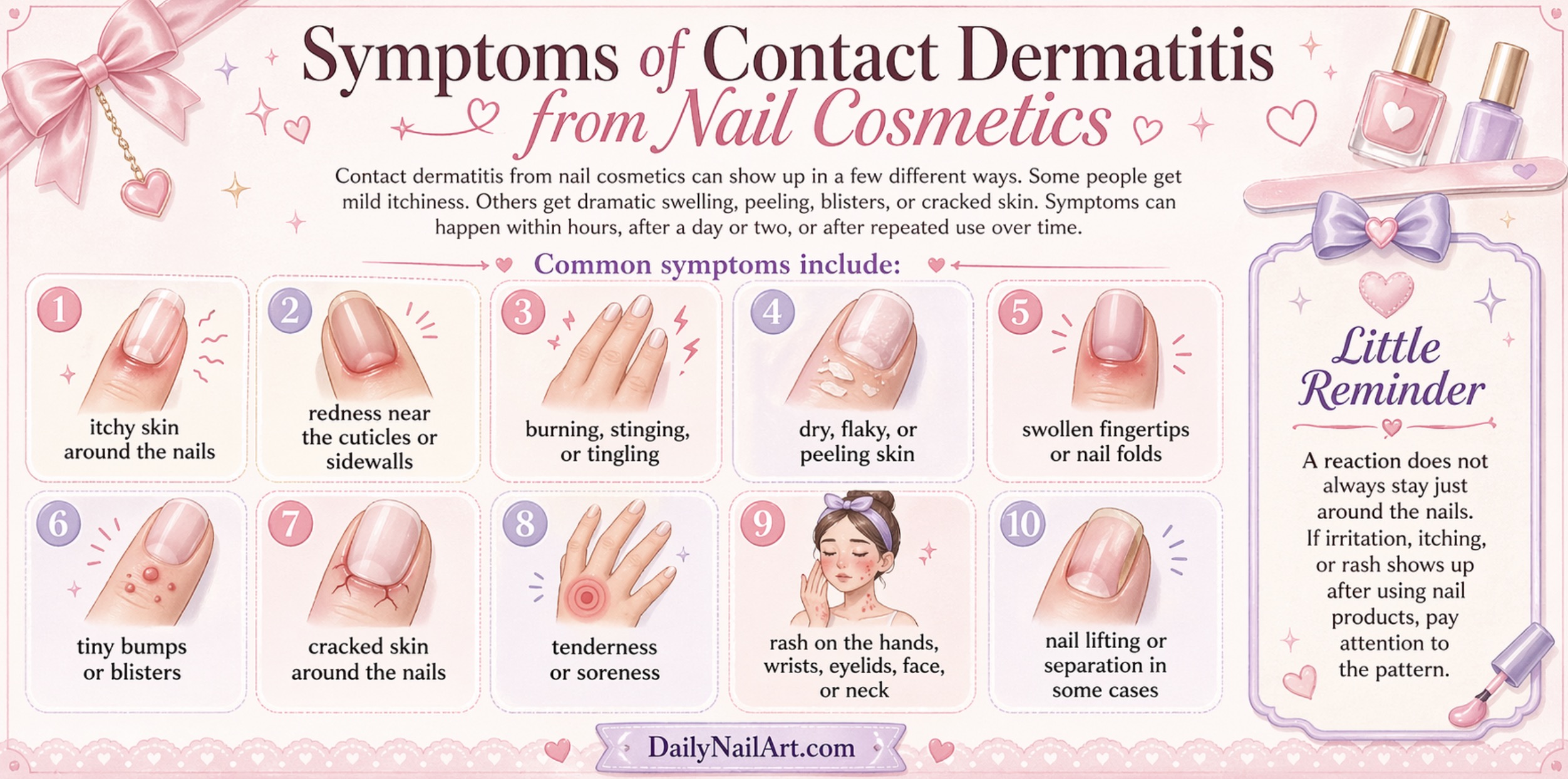
Contact dermatitis from nail cosmetics can show up in a few different ways. Some people get mild itchiness. Others get dramatic swelling, peeling, blisters, or cracked skin. Symptoms can happen within hours, after a day or two, or after repeated use over time.
Common symptoms include:
- itchy skin around the nails
- redness near the cuticles or sidewalls
- burning, stinging, or tingling
- dry, flaky, or peeling skin
- swollen fingertips or nail folds
- tiny bumps or blisters
- cracked skin around the nails
- tenderness or soreness
- rash on the hands, wrists, eyelids, face, or neck
- nail lifting or separation in some cases
The biggest clue is timing. If symptoms appear after a manicure, after using a new nail product, or after repeated gel or acrylic exposure, nail cosmetics may be involved.
Itching Around the Nails
Itching is one of the classic early signs. It may start around the cuticle, under the free edge, along the sidewalls, or on the fingertips. Sometimes the itch feels mild and annoying. Other times it feels intense enough that you cannot stop rubbing or scratching.
If your fingers itch after gel polish, acrylics, dip powder, press-ons, nail glue, or nail primer, do not ignore it. A little itch can be the first sign of an allergic reaction, especially if it happens every time you use certain products.
Itching that repeats after manicures is not just a random beauty inconvenience. It is your skin giving you a warning. Very tiny, very dramatic, very worth listening to.
Redness and Swelling Around the Nail Fold
Redness around the nail fold can happen when product touches the skin or when the skin reacts after exposure. You might notice the cuticle area looking pink, red, shiny, puffy, or inflamed.
Swelling may happen at the fingertips, sidewalls, or cuticle line. In some cases, the skin feels tight or tender. This can look similar to an infection, which is why it is important to watch for other symptoms like pus, warmth, throbbing, or worsening pain.
If swelling is severe, spreading, painful, or paired with discharge, get medical advice. Contact dermatitis and infection can sometimes overlap or look alike from the outside.
Burning or Stinging Skin
Burning and stinging can happen with both irritant and allergic reactions. Harsh removers, primers, dehydrators, acetone, uncured gel, acrylic monomer, and nail glue can all make sensitive skin feel hot or prickly.
A little warmth during gel curing can happen from product chemistry, especially with thicker gel layers. But burning skin around the nails is different. If the skin, cuticles, or fingertips burn during or after application, pause and clean the area. Do not cure product that is sitting on the skin.
Burning that continues after a manicure, especially with redness or swelling, is a sign to stop using the product and monitor your skin closely.
Peeling, Flaking, and Dry Patches
Peeling skin around the nails can happen after irritation, allergy, over-washing, acetone exposure, or repeated product contact. The skin may look dry, rough, scaly, or flaky. Sometimes it peels in little sheets around the cuticle or fingertips.
This can be easy to mistake for simple dryness. But if peeling shows up after a manicure or keeps returning after nail products, it may be more than just dry hands.
A gentle fragrance-free hand cream for sensitive skin can help support the skin barrier, but moisturizer does not solve an allergy if the trigger is still being used.
Tiny Bumps or Blisters
Some contact dermatitis reactions create tiny bumps or fluid-filled blisters. These may appear around the fingers, cuticles, palms, or sides of the fingers. They may be itchy, tender, or stingy.
Blistering can be a stronger reaction and should not be covered with more nail product. If you have blisters, open cracks, or raw skin, skip gel, acrylic, glue, dip, and polish until the skin has healed and you have a better idea of what caused it.
Do not pop blisters or pick at irritated skin. That can increase the risk of infection and make healing take longer.
Cracked Skin Around the Nails
When dermatitis dries out the skin barrier, cracks can form around the nails or fingertips. These little splits can hurt more than they look like they should. They can sting when you wash your hands, use sanitizer, apply acetone, or touch nail products.
Cracked skin also makes it easier for irritants to get in. That is why doing another gel set over angry, cracked cuticles is not a good idea. Give the skin time to calm down and protect it from harsh products.
For general comfort, you can look at hand creams for cracked fingers, but seek medical advice if cracks are deep, bleeding, infected-looking, or not improving.
Rash on the Eyelids, Face, or Neck
This is one of the sneakier signs. Nail cosmetic allergy can show up away from the nails because your hands touch your face throughout the day. If allergens or uncured product residue are on your fingers, they can transfer to delicate areas like the eyelids, cheeks, lips, or neck.
Eyelid dermatitis may look like redness, itching, swelling, dryness, flaking, or irritation around the eyes. It can be confusing because you may blame eye cream, mascara, skincare, or seasonal allergies when the trigger is actually your nail products.
If you keep getting eyelid rashes after manicures, especially gel or acrylic services, mention your nail products to a dermatologist. That little detail can be surprisingly important.
Nail Lifting or Separation
Some reactions can affect the nails themselves. You may notice the nail plate lifting from the nail bed, product lifting from the natural nail, or the nail looking separated, cloudy, or tender.
Nail lifting can have many causes, including trauma, infection, over-filing, allergic reaction, product lifting, or moisture trapped under enhancements. Because the causes can overlap, it is best not to guess.
If your natural nail is separating, painful, discolored, or changing shape, stop applying products and get it checked. Covering the area with more gel or acrylic can hide the problem and may make things worse.
Where Symptoms Usually Show Up
Symptoms can appear anywhere nail products touch directly or indirectly. The most common areas include:
- cuticles
- fingertips
- sidewalls of the nails
- under the free edge
- backs of the hands
- wrists
- eyelids
- face
- neck
Nail techs may also develop symptoms on the hands, fingers, wrists, or areas exposed to dust and product residue. DIY users may notice reactions where gel or glue accidentally touched the skin.
Irritant vs Allergic Contact Dermatitis
Irritant and allergic dermatitis can look very similar, which is why self-diagnosing can be tricky.
Irritant Contact Dermatitis
Irritant dermatitis happens when a product is harsh on the skin barrier. It can happen to anyone if exposure is strong enough or frequent enough. Common triggers include acetone, alcohol-based cleansers, detergents, over-washing, filing dust, primers, and repeated wet work.
Irritant symptoms often include dryness, burning, stinging, cracking, redness, and rough skin. It may improve when you reduce exposure and protect the skin barrier.
Allergic Contact Dermatitis
Allergic dermatitis happens when the immune system reacts to a specific ingredient. Once you are sensitized, future exposure can cause symptoms even with a small amount of product.
Allergic symptoms often include itching, redness, swelling, bumps, blisters, peeling, or rash. The reaction may spread beyond the exact contact area, especially if allergens are transferred by touch.
The only way to know your exact allergen is usually patch testing with a dermatologist or allergy specialist.
Common Nail Cosmetic Triggers
Many different nail products can trigger contact dermatitis. Some are more commonly discussed than others, but almost any cosmetic ingredient can irritate sensitive skin or cause allergy in the right circumstances.
Possible triggers include:
- gel polish ingredients such as acrylates and methacrylates
- HEMA and related adhesion ingredients
- acrylic liquid monomer
- nail glue ingredients
- dip powder liquids
- primer and dehydrator
- top coats and base coats
- formaldehyde or formaldehyde resin in some nail products
- fragrance in hand products or cuticle oils
- preservatives and dyes
- acetone and removers as irritants
If you are trying to narrow down a trigger, keep a list of every product used during the manicure. Include base coat, color, top coat, cleanser, primer, glue, remover, cuticle oil, hand cream, and even gloves.
Why Gel and Acrylic Products Get So Much Attention
Gel and acrylic systems often contain acrylates or methacrylates, which are ingredients that help products bond, harden, or cure. These ingredients can be strong sensitizers for some people, especially when uncured product touches the skin repeatedly.
With gel polish, the risk can increase when product gets on the cuticles or sidewalls, is applied too thickly, is cured with an incompatible lamp, or remains under-cured. With acrylics, skin contact with liquid monomer can be a major issue.
This is why clean application matters so much. Gel and acrylic should be placed on the nail, not painted onto the surrounding skin like lotion. Cute nails, clean margins, happy cuticles.
DIY Manicures and Contact Dermatitis
DIY manicures can be fun and budget-friendly, but beginners are more likely to flood the cuticle, cure gel on the skin, mix incompatible products, use a weak lamp, or remove product too aggressively.
If you do your nails at home, take your time. Use thin coats, keep product away from skin, clean up mistakes before curing, and follow cure times carefully. A small gel nail cleanup brush can be super helpful for removing polish from the cuticle area before the hand goes into the lamp.
Also, do not peel gel off. Peeling damages the nail plate and can leave the area more sensitive for future product exposure.
Could It Be an Infection Instead?
Sometimes dermatitis and infection can look similar. Redness, swelling, tenderness, and warmth can happen with both. That is why you need to watch for infection warning signs.
Possible infection signs include:
- pus or fluid
- throbbing pain
- increasing swelling
- skin that feels hot to the touch
- redness that spreads
- bad odor
- fever or feeling unwell
- green, yellow, brown, or dark discoloration under a nail
If those symptoms are present, do not treat it as a normal rash. Contact a healthcare professional. Nail infections can need proper care, and covering them with polish or enhancements is not the move.
What to Do When Symptoms First Appear
If you notice itching, redness, burning, swelling, peeling, or rash after using nail cosmetics, pause all nail products on the affected area. That means no gel, acrylic, glue, dip liquids, primer, polish, or remover until the skin calms down.
Gently wash the area with mild soap and water. Avoid scrubbing. Keep the skin dry and protected. Do not pick, peel, or pop blisters. Skip fragrance-heavy lotions and use a bland moisturizer if your skin tolerates it.
If the reaction is mild, it may improve after avoiding the trigger. If symptoms are severe, spreading, blistering, painful, near the eyes, or recurring, get medical advice.
When to Remove Nail Product
If product is sitting on irritated skin, lifting, causing burning, or you suspect an allergic reaction, removal may be needed. But removal should be gentle. Ripping or peeling off product can damage the nail and skin more.
For soak-off gel, a gel nail removal kit can help make the process more controlled. These often include wraps, clips, files, and tools for safer removal. For hard gel, acrylic, or painful nails, professional removal may be better.
If the skin is very swollen, blistered, open, or infected-looking, contact a healthcare professional before doing aggressive removal at home.
When to See a Dermatologist
See a dermatologist or qualified healthcare professional if symptoms keep coming back after nail products, affect your eyelids or face, include blisters, cause nail lifting, are painful, or do not improve after stopping the suspected trigger.
A dermatologist may recommend patch testing. Patch testing is different from guessing based on symptoms. It can help identify specific ingredients that your skin reacts to, such as acrylates, methacrylates, resins, fragrances, preservatives, or other allergens.
This matters because once you know your trigger, you can avoid it more carefully. Without testing, you may keep switching products and accidentally choosing formulas with similar allergens.
Can Contact Dermatitis Spread?
The rash itself is not contagious, so you cannot spread it to someone else like a cold. But symptoms can appear in multiple areas if the allergen touches multiple places or transfers from your hands to your face, neck, or eyelids.
That is why washing hands after nail product exposure matters. It is also why nail techs should be careful with dust, uncured product, gloves, and cleaning routines.
Can You Become Allergic Suddenly?
Yes. Allergic contact dermatitis can develop after repeated exposure. You may use gel polish or acrylic products many times without symptoms and then suddenly react. That does not mean the reaction is fake or random. Sensitization can build over time.
This is also why mild symptoms should not be ignored. If your skin starts itching after every gel set, continuing exposure may make reactions worse.
Are HEMA-Free Products Safer?
HEMA-free products may be helpful for some people trying to avoid one commonly discussed gel allergen, but they are not guaranteed allergy-proof. Other acrylates, methacrylates, resins, preservatives, pigments, or fragrances can still cause reactions.
If you are browsing HEMA-free gel polish for sensitive skin, read product details carefully and remember that careful application still matters. HEMA-free gel that touches your skin or is under-cured can still be a problem for some people.
How to Reduce Your Risk
You cannot make nail cosmetics completely risk-free, but you can reduce avoidable exposure.
- Keep gel, acrylic, glue, primer, and dip liquids off the skin.
- Clean product from cuticles and sidewalls before curing.
- Use thin gel coats and proper cure times.
- Use a compatible lamp for gel products.
- Do not peel or rip off enhancements.
- Wear gloves when handling products if you are sensitive or working often.
- Choose fragrance-free hand care if fragrance irritates you.
- Stop using products that repeatedly cause symptoms.
For messy product handling, nitrile gloves for nail techs may help reduce direct skin contact, though gloves are not a perfect shield against every chemical and should be changed if contaminated.
What to Avoid During a Flare-Up
When your skin is already irritated, keep your routine very simple. Avoid gel polish, acrylic products, nail glue, dip liquids, acetone soaks, scented cuticle oils, fragrance-heavy creams, harsh scrubs, and anything that stings.
Do not apply a fresh set over inflamed skin. Do not cover a rash with press-ons. Do not paint over cracked cuticles and pretend everything is fine. Your nails can have a comeback era after your skin has calmed down.
Gentle Nail Care During Recovery
While your skin recovers, keep nails short and clean. Use mild soap, dry your hands gently, protect your hands during cleaning, and moisturize with a fragrance-free product if tolerated.
A gentle fragrance-free cuticle oil may be helpful once skin is not open, raw, or infected-looking. If even gentle products sting, pause and ask a healthcare professional what is safe for your skin.
Beginner Symptom Checklist
Use this cute little reality-check list if you are unsure whether nail cosmetics may be causing your skin reaction:
- Did itching start after a manicure?
- Did redness appear around the cuticles or sidewalls?
- Did your fingertips swell or feel tight?
- Did skin peel, crack, or blister after product use?
- Did your eyelids or face flare after touching your nails?
- Does it happen every time you use gel, acrylic, glue, or dip?
- Does it improve when you stop nail products?
- Are symptoms worse with a specific product or brand?
If you answered yes to several, nail cosmetics may be involved. That does not replace a medical diagnosis, but it is a sign to pause and pay attention.
Frequently Asked Questions
What does contact dermatitis from nail cosmetics look like?
It may look like itchy, red, swollen, dry, peeling, cracked, bumpy, or blistered skin around the nails, fingertips, hands, eyelids, face, or neck.
Can nail products cause a rash on my eyelids?
Yes. Nail product allergens can transfer from your fingers to your eyelids or face, causing dermatitis away from the nails.
Is contact dermatitis from nail cosmetics contagious?
No. Contact dermatitis is not contagious. It is a skin reaction to an irritant or allergen, not something you pass to another person.
Can I keep using gel polish if the rash is mild?
It is better to stop until you know what is causing the reaction. Mild symptoms can become worse with repeated exposure, especially if you are developing an allergy.
Does HEMA-free gel prevent contact dermatitis?
Not always. HEMA-free products remove one commonly discussed ingredient, but other ingredients can still irritate the skin or trigger allergies.
When should I see a doctor?
See a healthcare professional if symptoms are severe, painful, blistering, spreading, near your eyes, recurring, infected-looking, or not improving after stopping nail products.
Final Thoughts
Contact dermatitis from nail cosmetics can be frustrating because it can look like simple dryness, an infection, eczema, or a random rash. But if itching, redness, swelling, peeling, blisters, cracked skin, eyelid irritation, or nail lifting keeps showing up after manicures, your nail products may be part of the problem.
The prettiest thing you can do is listen to your skin early. Stop using products that trigger symptoms, avoid curing gel on the skin, remove products gently, keep your routine simple during flare-ups, and see a dermatologist if reactions keep happening.
Nail art should feel fun, creative, and confidence-boosting — not itchy, swollen, or stressful. Healthy skin first, cute nails second, sparkle always when it is safe.
Love easy Hema Free Builder Gel - Hypoallergenic Strong Base Coat | Long-Lasting Adhesion (30+ Days) for Professional Nails Gift for Women

Beetles 15ml HEMA-Free Nail Glue Gel, TPO Free UV Nail Glue

Beetles HEMA-Free Builder Gel with Base and No Wipe Top Coat 3PCS 15ML
