
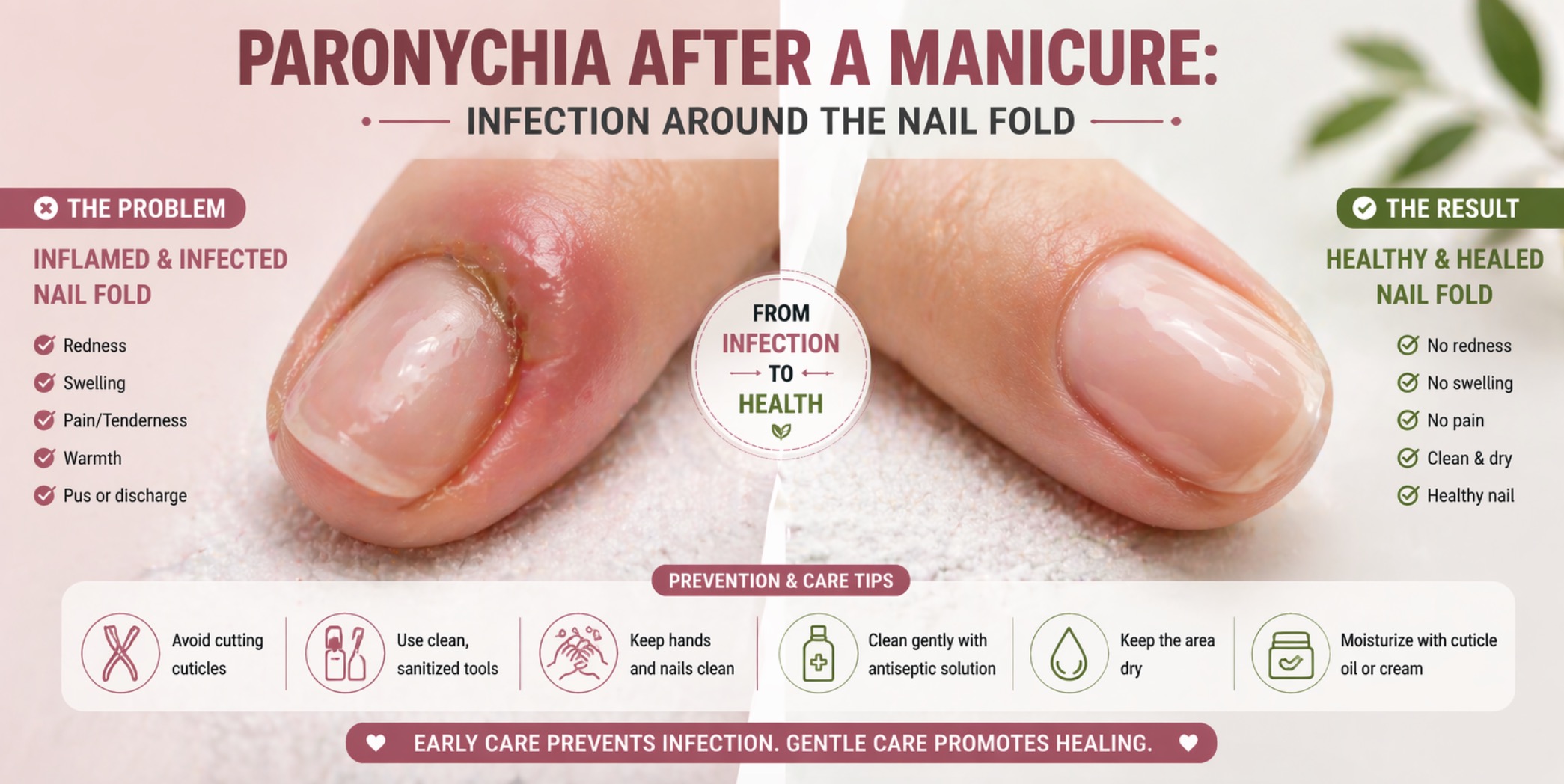
If the skin around your nail suddenly gets red, swollen, sore, or weirdly angry after a manicure, you are definitely not overreacting for wondering what is going on. One very common reason is paronychia, which is basically an infection or inflammation around the nail fold. Cute name? No. Common after manicures, cuticle trauma, picking, or trapped moisture? Unfortunately yes.
Paronychia can start out looking like “just a little irritation” and then turn into something a lot more uncomfortable if it gets ignored. Sometimes it feels warm and tender. Sometimes it throbs. Sometimes it looks puffy and irritated. And sometimes it can even collect pus, which is deeply not the manicure outcome anyone was hoping for.
If you have been searching for paronychia after a manicure: infection around the nail fold, this guide is here to walk you through what it is, what causes it, what symptoms to watch for, what you can do at home, when it is time to get medical help, and how to help prevent it from happening again. We’re keeping it simple, helpful, and not too scary, because the goal is healthy nails, not a stress spiral.
Cute little basics for gentler nail care and cleanup
If you are trying to be more careful with irritated cuticles or want a cleaner manicure routine in general, these are the kinds of basics worth looking at:
- Cuticle oil for gentle aftercare once the area is calm and healing
- Nail cleaning brushes for keeping hands and nails cleaner without rough scrubbing
- Cuticle stick sets if you want a gentler option than aggressive cuticle cutting
- Hand cream for dry cracked skin to support the skin barrier around the nails
- Nail care kits for a cleaner and more controlled manicure setup at home
What Is Paronychia?
Paronychia is an infection or inflammation around the skin that borders the nail, usually the nail fold or cuticle area. It can affect fingernails or toenails, but after manicures it usually shows up around a fingernail where the skin barrier has been irritated, cut, picked at, or exposed to too much moisture.
There are two general types:
- Acute paronychia, which tends to come on suddenly and feel painful, swollen, red, and sometimes filled with pus
- Chronic paronychia, which is more ongoing and often linked to repeated irritation, moisture exposure, or skin barrier damage
After a manicure, the version people usually notice is acute paronychia. It is often the one that shows up fast and makes you think, “Why is this one finger suddenly so mad at me?”

SILKA Max Strength Antifungal Liquid for Toenail Health with Brush Applicator, Results in 1 Week, Nail Fungus Treatment for Damaged Toenails, Athlete's Foot Treatment, Tolnaftate 1% 0.45 Fl Oz
Kerasal Fungal Nail Renewal, Restorative Repair for Damaged Nails, .33 oz | Restorative nail repair with Urea helps improve the appearance of damaged, discolored nails with quick visible results.

Nail-Aid - 5-in-1 Damaged Nails Multi-Repair for Fingernails or Toenails

NONYX Fungal Nail Clarifying Gel | Clinically Proven for Discolored, Thick, Brittle, Yellow, Lifted, and other signs of Fungus-Damaged Toenails | 90% of Nails Improve | Over 8 million sold
Why Paronychia Can Happen After a Manicure
The skin around your nail is tiny, but it matters so much. The cuticle area acts like a little seal that helps protect the nail unit from bacteria, yeast, moisture, and random outside chaos. If that seal gets broken or irritated, germs can sneak in way more easily.
That can happen after a manicure when:
- the cuticle gets cut too aggressively
- there is over-trimming or picking
- the skin gets nicked by tools
- acrylic, gel, or glue irritates broken skin
- moisture gets trapped around damaged skin
- you bite, pick, or peel the skin around the nail afterward
Basically, once the skin barrier around the nail fold gets damaged, bacteria or yeast can move in and start causing problems.
What Paronychia Looks Like
Paronychia usually shows up around one nail at first, though more than one can be affected sometimes. Common symptoms include:
- redness around the nail fold
- swelling or puffiness
- pain or tenderness
- warmth in the area
- throbbing discomfort
- a shiny, tight-looking swollen edge of skin
- sometimes a visible pocket of pus
Sometimes it starts very small, like a tender little red edge near the cuticle. Then by the next day it is noticeably swollen and much more uncomfortable.
Early Signs You Should Not Ignore
Paronychia can get worse quickly, so it is smart to pay attention early. The most commonly missed warning signs are:
- one nail suddenly feeling sore after a manicure
- a puffy cuticle that keeps getting more swollen
- redness that does not calm down after a day
- pain when touching the side of the nail
- warm skin around the nail fold
Those are not just “a little sensitivity.” They can be the start of an actual infection around the nail fold.
What Causes It: Bacteria, Yeast, or Just Irritation?
Acute paronychia after a manicure is often linked to bacteria getting into broken skin. That is why it tends to show up after nicks, torn cuticles, picking, or aggressive trimming.
Chronic paronychia can be more complicated and may involve repeated moisture exposure, irritation, or yeast. But if it happened suddenly after a manicure, the bigger concern is usually acute irritation or bacterial infection.
That said, not every red sore cuticle is instantly a full infection. Sometimes the area starts as irritation and then becomes infected if the skin stays damaged.
Paronychia vs a Normal Sore Cuticle
This is one of the biggest questions people have, because sometimes the cuticle area can feel a little sore after a manicure without becoming infected.
A normal irritated cuticle might:
- feel a little tender
- look slightly pink
- calm down fairly quickly
- not keep getting more swollen
Paronychia is more likely if:
- the redness gets worse instead of better
- the skin becomes swollen and warm
- it hurts more over time
- you see pus or a yellowish pocket
- it starts throbbing
If the area keeps escalating, do not brush it off as “just a rough manicure.”
What to Do Right Away If You Think You Have Paronychia
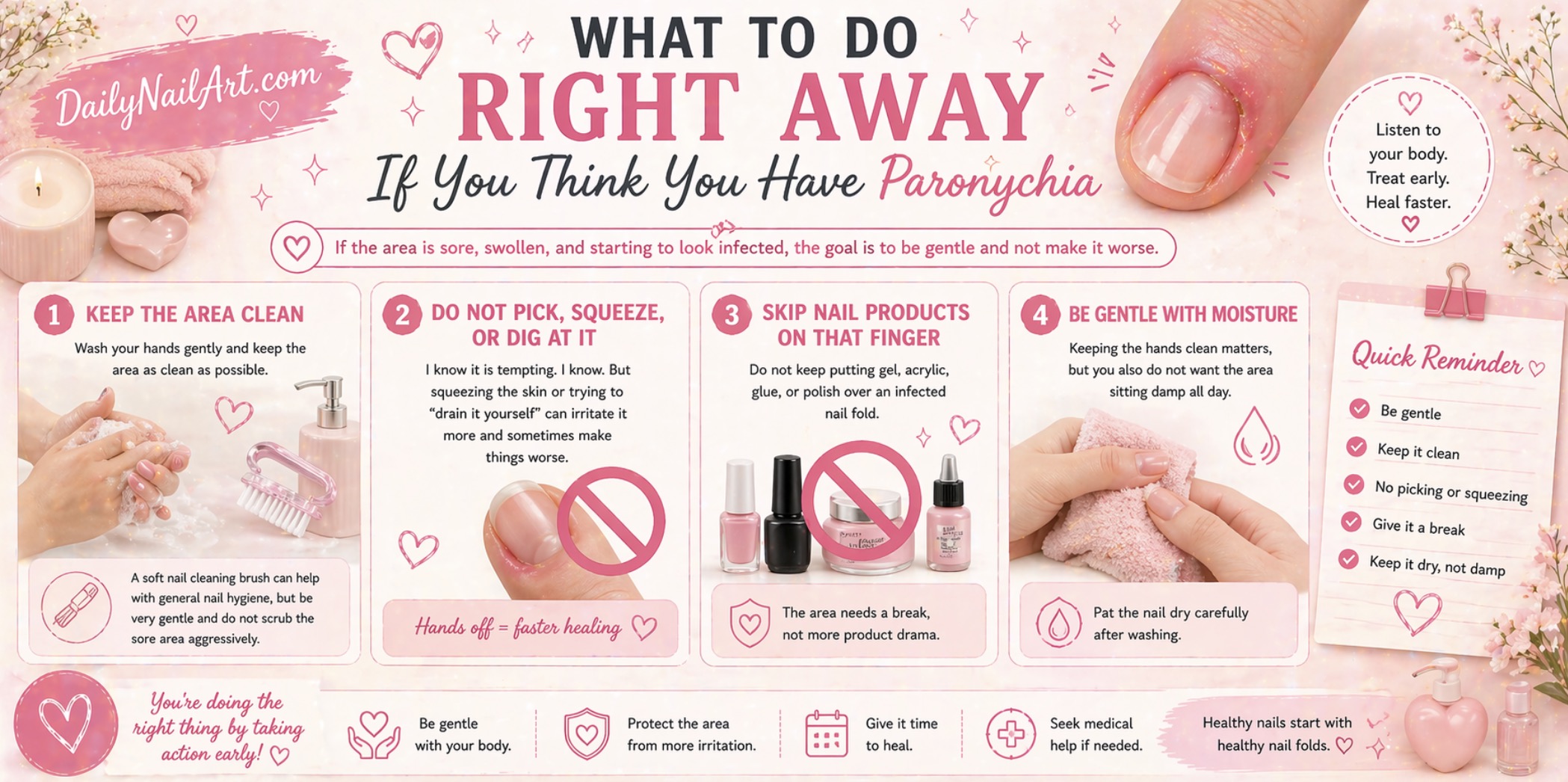
If the area is sore, swollen, and starting to look infected, the goal is to be gentle and not make it worse.
Keep the Area Clean
Wash your hands gently and keep the area as clean as possible. A soft nail cleaning brush can help with general nail hygiene, but be very gentle and do not scrub the sore area aggressively.
Do Not Pick, Squeeze, or Dig at It
I know it is tempting. I know. But squeezing the skin or trying to “drain it yourself” can irritate it more and sometimes make things worse.
Skip Nail Products on That Finger
Do not keep putting gel, acrylic, glue, or polish over an infected nail fold. The area needs a break, not more product drama.
Be Gentle With Moisture
Keeping the hands clean matters, but you also do not want the area sitting damp all day. Pat the nail dry carefully after washing.
At-Home Care for Mild Cases
If the case seems mild and there is no major pus pocket or severe pain, gentle home care may help while you monitor it closely.
Basic at-home care usually means:
- keeping the area clean
- keeping it dry after washing
- avoiding more trauma to the skin
- not using nail enhancements on that nail
- watching closely for worsening swelling, pain, or pus
Once the area is no longer actively irritated or infected, gentle aftercare with a nourishing cuticle oil and a soft hand cream can help support the skin barrier again.
When to See a Doctor
This is important. You should get medical advice if:
- the swelling is getting worse quickly
- the pain is strong or throbbing
- you see pus
- the redness is spreading
- you have trouble using the finger normally
- it is not improving after a short time with gentle care
- you have repeated infections around the nails
If there is a visible pus pocket or a more serious infection, this is not the moment to play dermatologist in your bathroom. It is okay to let a medical professional handle it.
Can You Get Paronychia From a Nail Salon?
Yes, it is possible, especially if the cuticle area gets injured during a manicure or if tools are not handled cleanly. But it can also happen from DIY manicures at home, especially if you over-trim, pick, or use tools too aggressively.
It is not always about “dirty salon equals infection.” Sometimes it is simply that the skin barrier got broken, and then normal everyday bacteria had an opportunity to cause trouble.
Can Gel, Acrylic, or Press-Ons Make It Worse?
Yes. If the skin around the nail fold is already irritated or infected, putting more product on top can absolutely make the whole situation more annoying. Enhancements can trap moisture, hide what is going on, or keep the area from getting the quiet little healing moment it needs.
If the nail fold is inflamed, swollen, or suspicious, take a break from enhancements on that nail.
How Long Does Paronychia Last?
Mild cases can improve fairly quickly if the irritation stops and the area is cared for gently. More serious cases can hang around longer, especially if there is pus, ongoing trauma, or repeated moisture exposure.
Basically, the sooner you stop irritating it and get help when needed, the better the healing process usually goes.
How to Help Prevent Paronychia After Future Manicures
This is where the little nail-life lesson happens. The biggest prevention tip is this: be gentler with the cuticle area than most people think.
Do Not Over-Cut the Cuticles
The cuticle is part of the barrier protecting your nail. Taking too much off can leave the area more vulnerable.
Use Gentler Tools
A basic nail care kit with a gentle cuticle stick set can be a better choice than aggressive cutting and picking.
Do Not Pick at the Skin After a Manicure
That tiny torn edge of skin is not an invitation. Leave it alone, babe.
Keep Hands Moisturized
Dry, cracked skin is more likely to split and get irritated. A nourishing cuticle oil and a good hand cream can help keep that area healthier overall.
Be Careful With Aggressive DIY Prep
Just because you can trim every little thing does not mean you should. The goal is neat nails, not a cuticle crime scene.
What to Avoid While It Heals
If you are dealing with paronychia, try to avoid:
- picking at the skin
- applying more gel, acrylic, or glue on that nail
- rough scrubbing
- cutting the cuticle area more
- constant moisture sitting on the finger
This is the time for gentle, boring, responsible nail behavior. I know. Not glamorous. Still important.
Frequently Asked Questions
What does paronychia look like after a manicure?
It often looks like redness, swelling, tenderness, and inflammation around the nail fold or cuticle area. In more obvious cases, there may be a visible pocket of pus.
Can a manicure cause paronychia?
Yes. If the cuticle area gets cut, irritated, or damaged during a manicure, bacteria or yeast can sometimes get in and cause paronychia.
Should I put gel or acrylic on a nail with paronychia?
No. It is best to avoid enhancements on that nail while the skin is irritated or infected.
When should I worry about paronychia?
You should take it seriously if the swelling is worsening, the pain is strong, you see pus, or the redness is spreading.
How can I prevent paronychia after manicures?
Be gentle with the cuticle area, avoid over-trimming, keep the skin moisturized, and do not pick at torn edges of skin after a manicure.
Final Thoughts
Paronychia after a manicure is one of those things that can start small and become very not-cute if it gets ignored. If the skin around your nail is red, swollen, warm, sore, or starting to look infected, pay attention to it early. Your nail fold is tiny, but it deserves respect.
The best thing you can do is be gentle, keep the area clean, stop piling more nail products on top, and get medical help if it looks like a true infection is settling in.
Because honestly, there is something very satisfying about catching a nail problem early, handling it properly, and protecting your nails before one swollen little cuticle turns into a much bigger headache.
Nail Allergies - Essentials: A quick fact-based guide. Spot it, stop it, handle it - read the whole thing before your next client.

Beetles 15ml HEMA-Free Nail Glue Gel, TPO Free UV Nail Glue
Love easy Hema Free Builder Gel - Hypoallergenic Strong Base Coat | Long-Lasting Adhesion (30+ Days) for Professional Nails Gift for Women
