
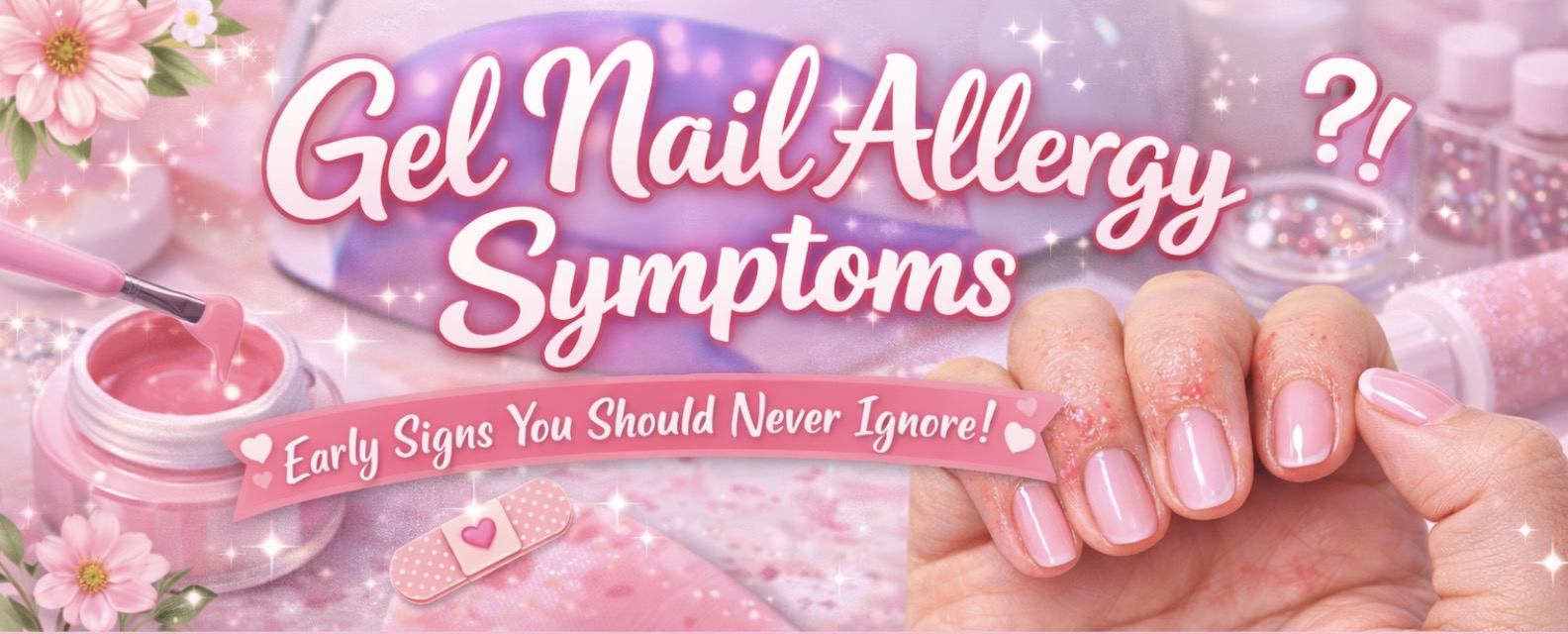
Gel manicures can be glossy, pretty, and super convenient, but if your skin starts acting weird after a set, it might not be “just dryness.” A gel nail allergy is something you never want to brush off, especially because the early signs can look small at first and then get much worse with repeated exposure.
If your fingers have ever felt itchy, puffy, sore, or strangely irritated after a gel manicure, this guide is for you. We’re going to talk through the early gel nail allergy symptoms, what causes them, how to tell the difference between an allergy and simple nail damage, and what to do next.
What Is a Gel Nail Allergy?
A gel nail allergy usually happens when your skin becomes sensitive to chemicals used in gel products, especially ingredients called acrylates or methacrylates. One ingredient you may have seen mentioned a lot is HEMA. These chemicals can trigger allergic contact dermatitis, which is basically your skin saying, “Absolutely not, babe.”
The tricky part is that you may use gel products a few times with no issue at all, and then suddenly one day your skin reacts. Once your body becomes sensitized, the reaction can keep happening or get worse every time you’re exposed.
Love easy Hema Free Builder Gel - Hypoallergenic Strong Base Coat | Long-Lasting Adhesion (30+ Days) for Professional Nails Gift for Women

Beetles 15ml HEMA-Free Nail Glue Gel, TPO Free UV Nail Glue

Beetles HEMA-Free Builder Gel with Base and No Wipe Top Coat 3PCS 15ML

Dr. G's Clear Nail Antifungal Treatment, 0.5 Fluid Ounce
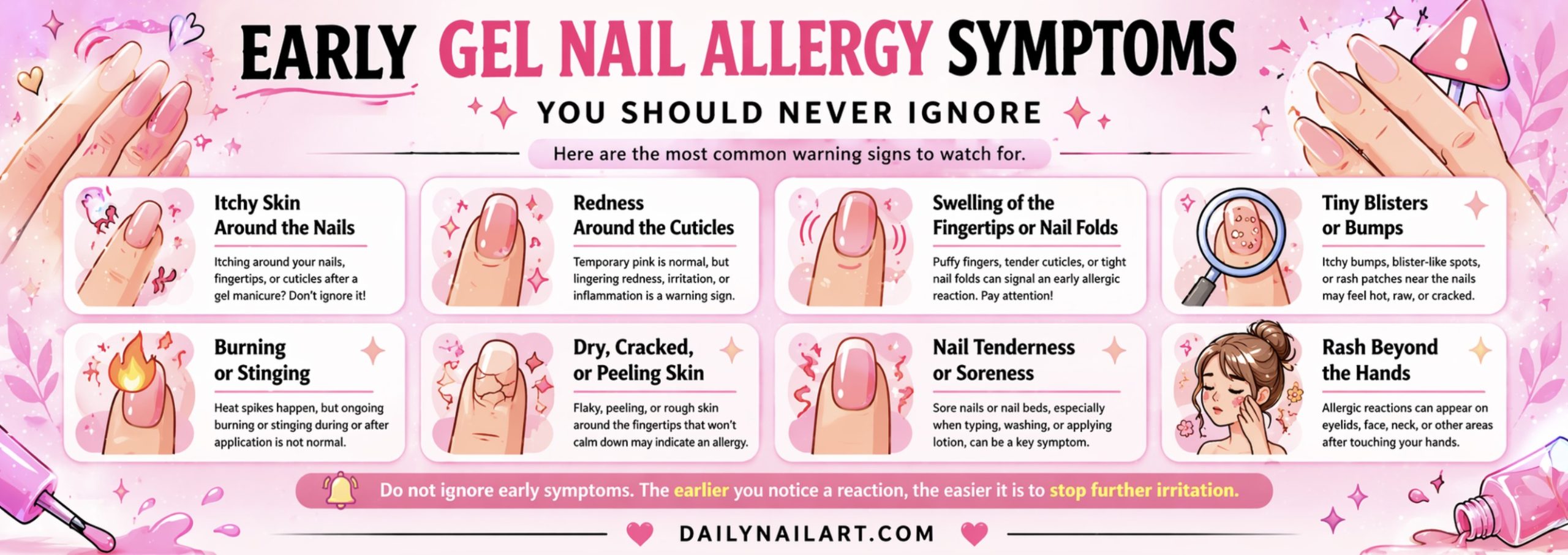
Early Gel Nail Allergy Symptoms You Should Never Ignore
Here are the most common warning signs to watch for.
Itchy Skin Around the Nails
This is one of the biggest early signs. If the skin around your nails, fingertips, or cuticles starts itching after a gel manicure, don’t ignore it. Itchiness is often one of the first clues that your skin is reacting.
Redness Around the Cuticles
A little temporary pinkness right after a manicure can happen from filing or cuticle work, but lingering redness is different. If the skin stays red, irritated, or inflamed, it may be more than normal salon sensitivity.
Swelling of the Fingertips or Nail Folds
Puffy fingers, swollen cuticles, or tenderness around the nail folds can be a major warning sign. This can feel uncomfortable, tight, or even a little throbbing.
Tiny Blisters or Bumps
Some people develop tiny itchy bumps, blister-like spots, or a rash around the nails. In more noticeable reactions, the skin may feel hot, raw, or cracked.
Burning or Stinging
If your fingers burn during application or later that day, pay attention. A heat spike under the lamp can happen sometimes, but ongoing burning or stinging around the skin is not something to shrug off.
Dry, Cracked, or Peeling Skin
An allergy does not always look dramatic. Sometimes it shows up as dry patches, flaky skin, peeling around the fingertips, or rough irritated cuticles that will not calm down.
Nail Tenderness or Soreness
Your nails or nail beds may feel sore, especially if the surrounding skin is inflamed. Some people also notice discomfort when typing, washing hands, or applying lotion.
Rash Beyond the Hands
This is the sneaky one. A gel nail allergy can sometimes show up on your eyelids, face, neck, or other areas because you touch your face with your hands. So if you have a random itchy eyelid rash and also wear gel nails, there may be a connection.
What a Gel Nail Allergy Can Look Like in Real Life
Sometimes the symptoms are mild and annoying at first, like:
- slightly itchy cuticles
- redness around one or two nails
- dry skin near the fingertips
- mild soreness after a fresh set
But sometimes it escalates into:
- intense itching
- swelling
- blistering
- cracked or bleeding skin
- lifting or tenderness around the nail area
- rash spreading to the face or eyelids
That is why the early stage matters so much. Catching it early can help you avoid a much bigger reaction later.
Why Gel Nail Allergies Happen
Usually, the problem is not the fully cured gel itself. It is uncured or under-cured product touching the skin. This can happen when:
- gel floods into the cuticle area
- the product is not cured properly
- the lamp is weak or not compatible with the gel
- DIY application is messy
- you use low-quality products
- you get repeated skin exposure over time
This is why proper tools matter so much. If you do your own nails, using a reliable UV LED nail lamp, a neat set of nail art brushes, and a quality HEMA-free gel polish may help reduce accidental skin contact.
Is It an Allergy, Irritation, or Just Damaged Nails?
This is where things get confusing.
It May Be an Allergy If:
- the skin is very itchy
- you have redness, rash, bumps, or swelling
- symptoms show up around the skin, not just the nail plate
- it keeps happening after gel manicures
- the reaction seems worse each time
It May Be Simple Nail Damage If:
- the nails feel thin after removal
- there is peeling on the nail surface only
- there is soreness mostly from over-filing or picking
- the skin is not rashy or itchy
It May Be Irritation If:
- the product touched the skin once and caused mild redness
- the area feels dry or stingy but not deeply itchy
- the reaction settles quickly after removal
Still, if you are unsure, it is safest to treat it like a possible allergy until you know otherwise.
The Most Commonly Missed Early Signs
Some signs are easy to dismiss because they seem tiny. Please do not ignore these:
- your cuticles itch every time after gel
- your eyelids get irritated after doing your nails
- one finger swells after every manicure
- your skin peels around the nails for days
- your hands feel worse with each new gel set
Those little patterns matter.
What to Do Right Away If You Think You Have a Gel Nail Allergy
1. Remove the Gel Carefully
If you think you are reacting, it is best to remove the gel as soon as you safely can. Do not keep wearing it and hope it magically gets better.
Use gentle removal methods and avoid ripping, peeling, or scraping aggressively. If you need supplies, a soft gel nail remover kit and a pack of soak-off clips can make removal a lot less chaotic.
2. Stop Using Gel Products for Now
This includes gel polish, builder gel, Gel-X, gel glue, and any product that contains acrylates.
3. Wash Hands Gently
Wash off any residue with a gentle cleanser and lukewarm water. Avoid harsh scrubbing.
4. Baby the Skin
Keep the skin moisturized and protected. A rich cuticle oil or fragrance-free hand cream for dry cracked skin can help support the skin barrier while you figure out what is going on.
5. Do Not Keep Testing Products on Yourself
This is a big one. Once you suspect an allergy, do not keep trying “just one more gel” or switching randomly between brands. Repeated exposure can make the reaction worse.
When to See a Doctor
Please get medical help if:
- swelling is significant
- you have blistering or weeping skin
- the rash spreads beyond the hands
- your fingers are painful or hot
- the skin cracks badly or bleeds
- you are not improving after removing the product
- you are not sure whether it is an allergy, infection, or something else
A dermatologist may recommend patch testing to figure out exactly which ingredient you are reacting to.
Can You Still Do Cute Nails If You Have a Gel Allergy?
Maybe, but you need to be careful. Some people do better switching away from traditional gel systems and focusing on options with less skin exposure.
Safer-feeling alternatives people often explore include:
- regular air-dry nail polish
- press-on nails with careful wear
- HEMA-free options if specifically tolerated
- minimalist manicures with less product contact
If you want to skip gel for a while, cute short press-on nails, gentle regular nail polish sets, and nourishing nail strengthener treatments can help you still have pretty nails without jumping right back into gel.
Tips to Help Prevent Gel Nail Allergy Problems in the Future
If you are not currently reacting but want to be extra careful, here are some smart habits:
Keep Product Off the Skin
The gel should stay on the nail plate, not on your cuticles or fingertips.
Cure Properly
Use a compatible lamp and follow cure times exactly. Under-cured product is a major problem.
Choose Better-Quality Products
Not all products are created equal. Many people prefer looking into HEMA-free builder gel and higher-quality gel systems.
Do Not Overdo DIY Sets
Doing your nails every week with messy application can mean more exposure over time.
Use Precise Tools
A clean application makes such a difference. Helpful basics include a slim gel polish cleanup brush, lint-free nail wipes, and a tidy cuticle stick set to keep application neat.
Frequently Asked Questions
Can a Gel Nail Allergy Start Suddenly?
Yes. You can use gel products multiple times and then suddenly develop symptoms after becoming sensitized.
Does Itchy Skin After Gel Nails Always Mean Allergy?
Not always, but itchiness is one of the most important early warning signs. If it keeps happening, do not ignore it.
Can HEMA-Free Gel Still Cause a Reaction?
Yes, it can. HEMA-free does not always mean allergy-proof. It simply removes one commonly discussed ingredient.
Can a Gel Nail Allergy Go Away on Its Own?
Symptoms may calm down after exposure stops, but once you are sensitized, future exposure can trigger reactions again.
Should I Keep Doing Gel Nails If the Symptoms Are Mild?
That is usually not a cute little risk worth taking. Mild reactions can become bigger reactions.
Final Thoughts
Pretty nails should never come with itchy fingers, puffy cuticles, or mystery rashes. If your skin is trying to tell you something after gel manicures, listen to it early. Those first little signs, especially itchiness, redness, swelling, and peeling, are not something to just “deal with.”
The sooner you stop exposure and take care of your skin, the better. Your nails can absolutely still be adorable without pushing through a product reaction.
Love easy Hema Free Builder Gel - Hypoallergenic Strong Base Coat | Long-Lasting Adhesion (30+ Days) for Professional Nails Gift for Women
Beetles 15ml HEMA-Free Nail Glue Gel, TPO Free UV Nail Glue
Beetles HEMA-Free Builder Gel with Base and No Wipe Top Coat 3PCS 15ML